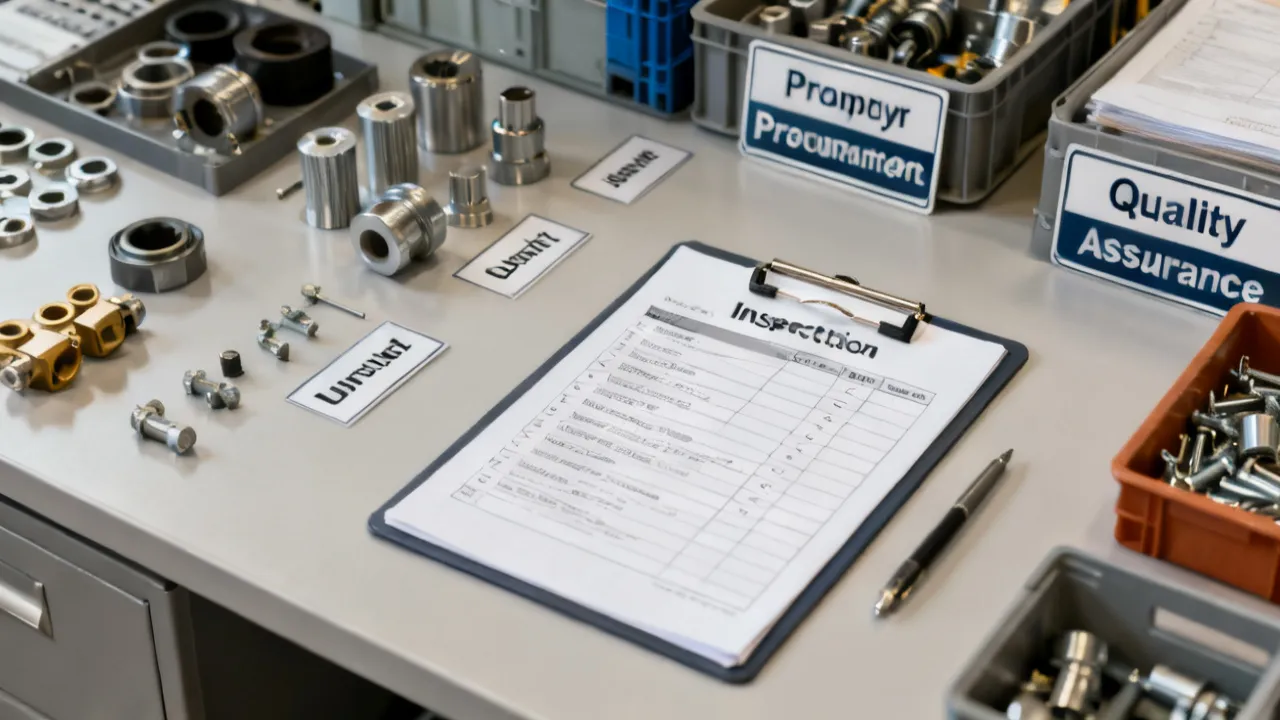
Jeidima Guide for Smarter Supplier and Value Decisions
This guide explains how Jeidima considerations can improve sourcing quality and decision-making. Objectively, “Jeidima” is treated here as a product or brand reference used in procurement discussions. Background context covers buyer evaluation factors—specs, provenance, lead times, and compliance—so you can compare options with clarity while managing costs and expectations.

Priority Overview: What to Check First for Jeidima
If you’re evaluating Jeidima in a purchasing or sourcing context, the most important starting point is to verify what exactly is being supplied—its technical scope, quality controls, and the supplier’s documentation. Many procurement disputes come not from the item itself, but from unclear definitions (model variant, material grade, tolerances, packaging requirements, and acceptance criteria). In other words, when there is ambiguity in procurement documents, there is often ambiguity in what arrives at your dock.
In an evidence-oriented sourcing process, the “best value” typically emerges from the combination of: (1) consistent quality, (2) traceable supply practices, (3) dependable lead times, and (4) a pricing structure that matches your ordering cadence and risk tolerance. Even when “price” looks attractive at first glance, you should still align cost with measurable requirements such as inspection standards, warranty/return terms, and corrective-action processes.
It’s useful to think of procurement as a chain: requirements define acceptance; acceptance defines quality evidence; quality evidence defines whether you can confidently operate without interruption. If any link is missing—such as no defined inspection plan or no traceability requirement—then “savings” from a lower unit price can quickly evaporate into rework, downtime, or operational delays.
Because Jeidima is referenced as a brand or product label within procurement discussions, you should treat each supplier offer as a unique claim until you verify it against your exact needs. If suppliers use similar naming but refer to different sub-variants, you may receive items that appear close but fail downstream testing or compatibility checks. Therefore, the first priority is not “which supplier is cheapest,” but “which quotation is technically aligned and verifiably deliverable.”
Understanding “Jeidima” in Buyer Evaluations
Jeidima is used here as a referenced brand or product label within procurement discussions. In practice, buyers typically encounter Jeidima through supplier catalogs, quotation sheets, or technical documentation packets. Since “Jeidima” can appear across different listings depending on region or vendor, the objective way to proceed is to treat each quotation as a unique offer until verified.
From an industry expert’s perspective, the most effective approach is to request a line-item breakdown tied to deliverables: specification sheet, batch/lot traceability (if applicable), quality assurance documentation, and packaging/handling requirements. This reduces the risk of receiving an item that is “similar” but not conforming to your intended use. A common failure mode occurs when a quotation references a brand name but omits the variant, revision level, certification level, or performance grade. The brand label alone often does not carry enough information to ensure compatibility.
When you evaluate procurement offers, you can reduce uncertainty by translating supplier claims into explicit procurement language. Instead of accepting phrases like “meets requirements,” request confirmation of measurable parameters: dimensions, composition/grade, performance characteristics, allowable tolerances, acceptable defect limits, and required documentation. If the item is used in a system where interchangeability matters, include a cross-reference requirement such as part number equivalency rules or revision control expectations.
Additionally, “Jeidima” may be referenced differently in different contexts: sometimes as a finished product label, sometimes as a component designation, or sometimes as a marketing name used for multiple underlying manufacturing configurations. For that reason, you should always ask the supplier to identify:
- Exact model/variant designation and revision level (if applicable)
- Material grade or composition statement (if the item is material-based)
- Applicable standards (internal, customer-specific, or external)
- Test or inspection basis at the time of shipment
- Any packaging level (unit packaging, bulk packaging, palletization)
From a buyer perspective, this is not bureaucratic overhead—it is the minimum information needed to ensure you are not paying for an ambiguous claim. If the supplier cannot provide these details early in the process, you should treat that as a risk indicator and consider restricting the scope of the trial order or requiring additional evidence before scaling.
Pricing: How to Interpret Cost Without Overlooking Hidden Drivers
Because you asked to integrate price information, it’s crucial to clarify the role of price in sourcing Jeidima. In most B2B purchasing scenarios, “price” is rarely the true cost. Total cost often includes:
- Unit price (the headline number)
- Minimum order quantity (MOQ) and whether it forces excess inventory
- Freight/handling and packaging level
- Inspection/testing requirements at receipt
- Lead time and the cost of production scheduling or downtime
- Return/replacement terms if quality issues arise
To keep decisions objective, request comparable quotations from at least two suppliers. Then compare offers based on the same technical requirements, not on price alone. If one quote is lower but uses a different grade, different tolerance, or different acceptance criteria, the price difference can reflect higher downstream risk.
It can be helpful to convert pricing into a “landed cost + risk-adjusted cost” model, even if you keep it simple. Landed cost includes freight, customs/duties (if relevant), handling, storage (if lead time requires buffering), and the cost of receiving inspection. Risk-adjusted cost includes expected costs associated with nonconformance: the cost of sorting, rework, replacement freight, production stoppage, and administrative time. Even a rough estimate can prevent you from selecting an offer that is cheap only on paper.
Also pay attention to quotation structure details that can distort comparison:
- MOQ structure: A supplier offering a low unit price may require high MOQ that increases inventory holding cost.
- Price validity period: If the quotation is valid for only a few days, market fluctuation risk may require faster decisions or lock-in terms.
- Freight assumptions: Incoterms (EXW/FOB/CIF/DDP) materially affect what you pay and when.
- Packaging spec: Insufficient packaging can cause damage claims or quality failures, adding replacement costs.
- Documentation included: Some suppliers price in certification/test reports; others charge separately or omit documents.
When negotiating, consider asking suppliers to quote both (a) a standard commercial package and (b) a “quality-protected” package aligned to your handling environment. For example, if your warehouse has strict conditions (humidity control, temperature limits, careful storage), packaging requirements can change the probability of damage and nonconformance.
If you’re comparing pricing across suppliers, it can be beneficial to ask for a unit-price breakdown with a consistent scope. For instance: “Quote unit price, packaging cost, freight assumption, and documentation cost separately.” This creates a more transparent basis for you to decide whether savings come from efficiencies or from reduced documentation/QA rigor.
Supplier Details: What “Good” Looks Like on Paper
When dealing with Jeidima, supplier due diligence should cover more than responsiveness. Look for supplier evidence that they can consistently deliver to your requirements, including:
- Company identity and operational footprint (legal entity, responsible contact, established processes)
- Quality management approach (documented inspections, batch controls, corrective action)
- Specification alignment (the supplier can confirm compatibility with your intended application)
- Clear lead-time commitments (production and shipping timelines)
- Terms you can enforce (acceptance criteria, warranty/return handling)
From the standpoint of procurement best practices, a supplier who can provide a structured quotation—complete with measurable deliverables—usually reduces your uncertainty. Conversely, vague promises (“meets requirements” without documentation) are a red flag.
To expand on “good on paper,” consider the supplier’s ability to provide evidence at the time of shipment (or earlier). Many quality programs depend on documented control points: what they inspect, how they inspect, acceptance thresholds, and what they do when a batch fails. If a supplier cannot explain those elements, it becomes difficult to enforce quality requirements contractually.
Here are additional supplier signals you can request for stronger confidence:
- Quality certifications relevant to the product category and risk (if applicable)
- Batch release documentation or equivalent records showing what was tested
- Corrective and preventive action process summary (CAPA approach)
- Calibration statement for measuring equipment used for inspections (if inspections are critical)
- Change control behavior: whether specifications can change without notice and how they manage revisions
Additionally, consider the supplier’s responsiveness around edge cases. Ask: “If we receive nonconforming units, what is the remediation process and timeline? Do you replace, credit, or arrange return shipment?” A supplier that quickly provides a practical, contract-aligned response indicates maturity in supplier quality management.
You can also validate supplier capability by asking for a sample quality plan. Even if you don’t require full formal documentation, a short quality plan describing inspection stages (incoming, in-process, final) provides a meaningful signal. For some procurement teams, requesting a “first article inspection” (FAI) report for the pilot batch can also reduce the probability of later disputes.
Local Context and Practical Selection (Using “nearby” Where Location Is Referenced)
When a buyer’s search is described as taking place in “nearby” areas, expectations often differ from purely global procurement. In many markets, nearby sourcing can be motivated by reduced shipping variability, faster sampling, and easier follow-up on documentation. Buyers near well-known commercial hubs may also prioritize suppliers who can respond quickly to specification questions or provide replacement lots sooner.
Practically, if your procurement process supports local sampling, you can strengthen your decision quality by requesting an early pilot batch and performing receipt inspection before scaling. This is especially relevant when Jeidima is being selected for production use, where consistency matters more than first impressions.
Nearby sourcing can also provide operational leverage. When logistics is shorter, you typically gain flexibility: you can adjust order quantities based on early test outcomes, and you can perform “stop-the-line” actions sooner if quality issues emerge. The ability to quickly audit packaging condition upon arrival—whether labels are correct, whether units remain protected—can prevent larger downstream problems.
That said, “nearby” is not automatically a quality guarantee. Local suppliers might still substitute materials, change packaging, or fail to provide adequate documentation. Therefore, your evaluation criteria should remain consistent regardless of distance. The difference with “nearby” is usually speed and the ease of collaboration—not a reduction in the need for evidence.
When you use local sourcing as a strategy, consider additional tactics:
- Set a short sampling timeline with clear shipment milestones so you can test and decide quickly.
- Plan for expedited returns by identifying how defective units will be collected and credited.
- Document communication with version control for specifications (avoid informal changes without paperwork).
If your internal operations allow it, you can also negotiate onsite inspection access for the pilot batch. Even a limited inspection visit can clarify how the supplier manages quality control and traceability.
Quality and Compliance Considerations for Jeidima
Even when buyers are focused on a specific item label like Jeidima, quality assurance typically determines outcomes. Industry processes commonly emphasize:
- Specification conformity: confirming dimensions, grades, or performance characteristics against your requirement sheet.
- Traceability: ability to identify batch/lot information and relevant documentation.
- Packaging integrity: ensuring protective packaging aligns with transport conditions.
- Testing/inspection plan: defining what will be checked at receipt and what constitutes acceptance.
For compliance, the appropriate depth depends on the application sector. If the Jeidima item relates to regulated contexts (for example, regulated industrial components, medical-related workflows, or safety-critical use), your supplier should provide relevant documentation and support audits where appropriate. Always evaluate compliance through objective documentation rather than marketing claims.
To expand quality considerations in a buyer-friendly way, consider the “quality evidence” lifecycle. Quality evidence usually comes from (1) design and specification documents, (2) manufacturing and batch control records, (3) inspection and test results at release, and (4) packaging and shipment records. When one or more parts of that evidence chain is missing, you can end up with inconsistent product behavior or disputes over what went wrong.
Here are practical quality questions you can ask for Jeidima procurement:
- What exact measurements define acceptance? Request the acceptance criteria table or equivalent.
- How are units inspected? Is there a sampling plan? 100% inspection? Automated measurement? Manual inspection?
- What is the defect classification? How do they define a nonconformance and what thresholds trigger rejection?
- What records are provided? CoC (certificate of compliance), CoA (certificate of analysis), test report, inspection record, or lot release documentation.
- How is traceability maintained? Do they track by batch/lot number through production and shipping?
Packaging matters for quality too, not just convenience. For example, some products degrade with humidity or temperature exposure, or their performance can be compromised if units are damaged during handling. If your storage conditions differ from the supplier’s assumptions, packaging must be aligned to your environment.
Also consider whether the supplier can provide packaging test evidence such as drop test results or packaging validation reports—if your product sensitivity requires it. Even if not required, at least confirm packaging type and labeling requirements (including carton labeling, batch IDs, and any hazard labels if applicable).
For regulated sectors, compliance is often more than a certificate. It may involve documented manufacturing controls, audit readiness, material declarations, or controlled use of approved suppliers. If compliance is critical, consider building compliance requirements into your purchase agreement with specific deliverables, not just general statements.
An Expert’s Step-by-Step Procurement Approach
To integrate Jeidima into a procurement plan responsibly, follow a structured workflow. This is designed to minimize ambiguity and keep supplier comparisons fair.
Step 1: Define the Jeidima Requirements Precisely
Prepare a short requirements document that includes: the intended use case, must-have specifications, optional features, acceptance criteria, packaging needs, and any constraints related to your production timeline. If you do not define tolerances and acceptance standards, comparisons among Jeidima offers will be unreliable.
“Precisely” should include both technical and operational requirements. Technical requirements specify performance and physical properties; operational requirements specify handling and documentation deliverables. Many procurement failures occur because buyers define only technical parameters and forget operational details like labeling, packaging, and inspection evidence.
To make requirements actionable, you can structure them into categories:
- Scope: what exactly is being purchased (product type, variant, revision)
- Technical specs: measurable attributes, tolerances, and performance expectations
- Quality requirements: inspection points, defect definitions, acceptance criteria
- Traceability: lot/batch identification and documentation requirements
- Packaging and labeling: protection level, labeling content, palletization
- Documentation deliverables: certificates, reports, test results, packing list
- Commercial terms: lead time expectations, Incoterms, warranty/returns
If Jeidima will be used in a production line or a safety-critical environment, include “operational constraints” such as maximum allowable lead time variability, required documentation at receipt, and any mandatory incoming inspection steps. This ensures you don’t discover compatibility issues too late.
Step 2: Request a Quotation That Mirrors Your Requirements
Ask suppliers to quote against the same requirement list. A well-formed quote should include: item identification, unit price, MOQ, lead time, shipping method assumptions, payment terms, and any standard inspection documentation. If a supplier cannot provide these, treat it as a risk factor.
When requesting quotations, it can be useful to ask for a “quote-to-spec” response: suppliers confirm each requirement explicitly or flag deviations. This is often called a compliance matrix in some industries. It can dramatically reduce ambiguity and prevents later arguments that “the supplier thought you meant something else.”
Additionally, ensure the quote specifies:
- What is included in the price (testing documents, packaging level, labeling)
- What is excluded (special inspections, custom labeling, special packaging upgrades)
- Lead time structure: production time vs shipping time vs processing time
- Assumptions: Incoterms, shipment mode, address validity checks
If any requirement is uncertain, ask clarifying questions immediately. Procurement teams often lose time by waiting until after quotations are returned. Better to fix ambiguity at the quotation stage.
Step 3: Request Supporting Evidence
Request specification sheets, quality plans, and (where relevant) batch or lot traceability documentation. For many buyers, this is where Jeidima procurement becomes concrete: the offer either supports validation or it doesn’t.
Supporting evidence can include more than documents. Depending on the product and risk level, you might request:
- Certificate of compliance or certificate of analysis
- Inspection and test records or summary reports
- Traceability documentation linking lot number to production records
- Material certifications for relevant components (if the item is material-based)
- Test method references (what standard or method was used)
If your internal quality team performs acceptance testing, ask the supplier whether they follow the same or comparable test methods. Mismatched test methods can lead to scenarios where both parties “passed,” but the results are not comparable. Aligning test methods or at least understanding differences prevents misunderstandings.
Also request evidence about deviations and exceptions. For example: If a supplier can only partially meet a requirement due to material availability, ask how they document the deviation and how it affects performance. You may decide that a deviation is unacceptable, or you may decide on an alternate acceptance method—but you should make that decision with facts, not assumptions.
Step 4: Conduct a Controlled Sample or Pilot Batch
Use a limited trial order to verify real-world characteristics and packaging integrity. Then document results using the acceptance criteria you set earlier. If results deviate, you can negotiate remediation before scaling.
A controlled sample should be treated like a mini procurement program, not like a casual “test order.” Plan it with:
- Defined acceptance criteria (the same as your final purchase requirements, or a staged version)
- Defined testing plan (what you will measure, when, and by whom)
- Defined traceability checks (verify batch/lot labels match documentation)
- Packaging and handling verification (confirm packaging integrity upon receipt)
Document everything: photographs of packaging, labeling verification results, test outcomes, and any deviations. If you foresee scale procurement, your pilot results provide negotiation leverage and technical justification. They can also be used internally to approve supplier status.
If pilot results are not acceptable, request a structured corrective action. Ask whether the issue is isolated to a batch or indicates a systemic problem. If the issue is systemic, you may need a deeper supplier quality review rather than simply rejecting that one pilot batch.
Also consider whether you need “repeatability” evidence. A single successful pilot does not always prove consistency. If feasible, consider ordering a second pilot batch at a later date or batch cycle. This is particularly important if supply varies due to production scheduling, seasonal material variation, or changing subcontractors.
Step 5: Finalize Supplier Selection Based on Total Risk-Adjusted Value
Instead of picking the lowest price, compute a risk-adjusted comparison: compare unit cost alongside lead-time reliability, documented quality processes, and return/replace mechanisms. Over time, consistent delivery reduces hidden costs such as rework and schedule disruption.
To make risk-adjusted selection practical, define a scoring rubric that includes both objective and subjective criteria. Objective criteria might include whether a supplier provides documentation deliverables, lead time commitments, and compliance evidence. Subjective criteria might include responsiveness, clarity of communication, and willingness to provide transparent corrective actions.
Here is an example of how a procurement team might think about risk-adjusted value:
- Quality risk: based on acceptance rates and evidence of control processes
- Documentation risk: likelihood you will receive the correct batch records and certificates
- Delivery risk: probability of late delivery or incomplete shipments
- Remediation risk: whether supplier will accept responsibility and provide timely replacements
- Commercial risk: price changes, MOQs, restrictive terms
When you sign an agreement, ensure it includes enforceable terms for remediation. Without enforceable terms, “goodwill” becomes the only remedy. For serious procurement programs, define the timeline for replacement and the responsibility for inspection costs. Clarify whether nonconforming items can be refused, returned, or quarantined, and how credits are handled.
Finally, consider ongoing supplier performance monitoring. Even after selection, you should track performance metrics such as on-time delivery rate, defect rate, documentation accuracy, and time-to-resolution for nonconformance cases. This helps you decide whether to scale purchasing or to diversify suppliers.
Comparative Supplement: Decision Conditions and Requirements (No Links)
| Evaluation Area | What You Should Require for Jeidima | Quality Signals to Look For | Common Failure Modes |
|---|---|---|---|
| Specification Match | Written specification confirmation aligned to your use case | Documented tolerance/grade details; consistent part naming | “Compatible” wording without measurable details |
| Quality Assurance | Inspection/QA documentation relevant to the deliverable | Defined acceptance criteria and corrective-action process | No inspection plan; unclear responsibility if issues occur |
| Traceability | Batch/lot identification procedures (if applicable) | Ability to provide lot references and records | Missing trace information for received items |
| Pricing Structure | Unit price plus MOQ, shipping assumptions, and total quote scope | Transparent scope; comparable offer formats across suppliers | Low unit price offset by hidden surcharges or restrictive terms |
| Lead Time and Reliability | Production + shipping timeline commitments | Clear dates, escalation path, and contingency handling | Unclear “estimated” schedules; frequent rescheduling |
| Returns and Remediation | Defined replacement/credit and timeline for issue resolution | Documented process; reasonable corrective actions | Ambiguous remedies or refusal to acknowledge defects |
Expanding the Table into Practical “What to Ask” Prompts
Sometimes procurement checklists feel abstract until you translate them into questions. Below are practical prompts you can send to suppliers during Jeidima evaluation. These prompts are designed to elicit actionable responses and reduce the chance of vague assurances.
| Topic | Supplier Question | Why It Matters | What a Strong Answer Includes |
|---|---|---|---|
| Variant Definition | “Which exact Jeidima variant/model/revision is quoted, and what documentation supports that identification?” | Prevents receiving a “nearby” product that fails application fit. | Model/part number, revision level, and spec sheet match |
| Quality Evidence | “Which tests/inspections are performed before shipment, and what records will we receive?” | Ensures you can validate quality claims at receipt. | Inspection plan and shipment documents (CoC/CoA/test record) |
| Acceptance Criteria | “What are the acceptance criteria for this Jeidima item, and how are nonconformities handled?” | Allows your team to decide pass/fail consistently. | Clear defect thresholds, sampling plan, and disposition process |
| Traceability | “How do you maintain batch/lot traceability through production and shipping?” | Enables root-cause analysis if problems occur. | Lot labeling method and ability to provide lot references |
| Packaging Integrity | “What packaging configuration will be used, what labeling will be included, and what damage risks are considered?” | Reduces damage claims and ensures units arrive as expected. | Packaging type, labeling content, palletization, and protective materials |
| Lead Time Structure | “Please break lead time into production time, processing/QA time, and shipping time assumptions.” | Improves schedule reliability and planning. | Specific timelines with responsibility for each phase |
| Remediation | “If a lot fails acceptance, what is your replacement timeline, credit policy, and who pays for inspection/return?” | Determines your real cost and recovery speed. | Defined remedies, timelines, and cost responsibility |
| Change Control | “Will you notify us of any specification/process changes that could affect the Jeidima deliverable?” | Prevents silent changes that break compatibility. | Change notification process and approval expectations |
By asking these questions consistently, you convert procurement into a structured evaluation rather than a back-and-forth negotiation. This also reduces internal debate later, because decisions are tied to documented responses.
Source Notes (Methodological Basis)
This article’s approach reflects widely used procurement and supplier evaluation practices described in professional operations and purchasing frameworks. When discussing quality management and supplier systems, it aligns conceptually with established standards and commonly referenced guidance from organizations such as the ISO (International Organization for Standardization) ecosystem and mainstream supply management research. For empirical claims about industry performance or market statistics, buyers should rely on official reports; this article avoids unverified numerical claims.
In practical terms, this means the focus remains on verifiable inputs to procurement decisions: specification clarity, evidence of quality controls, enforceable remediation terms, and measurable delivery commitments. These are the elements that, in many procurement environments, determine whether a supplier relationship is stable and whether purchases can be scaled without operational risk.
It also reflects the principle that procurement outcomes are shaped by contractual and procedural design. If the procurement agreement defines what constitutes acceptance, who inspects, what documentation is provided, and what remedies apply, disputes become easier to resolve because expectations were set in advance.
FAQ: Jeidima Sourcing, Pricing, and Supplier Selection
1) What does “Jeidima” refer to in procurement?
In this guide, Jeidima is treated as a product or brand label referenced in supplier offerings. Because the same label can be used across different variants, buyers should confirm the exact specification, model, grade, and deliverable scope for each quotation.
If you want to eliminate ambiguity quickly, ask suppliers to provide the full technical name as it appears on their internal manufacturing records, along with the associated specification sheet revision. That approach is often more reliable than relying solely on the label used in marketing or general catalogs.
2) How should I compare prices for Jeidima fairly?
Compare offers using the same technical requirements and acceptance criteria. Evaluate unit price together with MOQ, shipping assumptions, lead time, and inspection or testing expectations. A lower unit cost can be misleading if it comes with different grades, weaker documentation, or less reliable fulfillment.
To improve fairness, request a comparable quote format from each supplier. If one supplier includes documentation/test reports and another charges separately, you should compare “like for like.” Similarly, if one supplier’s lead time is estimated and another provides a confirmed production schedule, you should treat those differently in your cost model.
3) What supplier information is most important?
Request documentation that supports consistent delivery: specification confirmation, quality/inspection plan, traceability approach (if applicable), lead-time commitments, and defined remediation/returns terms. A structured quotation is often a sign the supplier can manage delivery risk.
Additionally, consider asking for evidence of how they manage nonconformance. Supplier maturity is often best reflected in what happens after something goes wrong: do they respond quickly, investigate root causes, and prevent recurrence?
4) Should I start with a sample order for Jeidima?
For application-critical use, a controlled sample or pilot batch is strongly advisable. It helps validate real-world characteristics and packaging integrity before you scale purchasing volumes.
When doing a pilot, set up your internal testing and documentation process in advance. Decide who will inspect, which tests will be performed, and what “pass” and “fail” mean. If your internal procedures are not ready, you risk wasting the pilot by not being able to interpret results consistently.
5) What conditions should be included in the purchase agreement?
Include acceptance criteria, inspection steps at receipt, batch/lot traceability requirements (if applicable), delivery timelines, documentation deliverables, and clear remediation terms for nonconforming items.
It is also beneficial to specify:
- What happens to nonconforming units (quarantine, return eligibility, disposal requirements if hazardous)
- Who pays for re-inspection or sorting
- How quickly replacement or credit must be issued
- Whether partial shipments are allowed and how they are reported
- How specification changes are communicated
6) Does “nearby” sourcing automatically mean better outcomes?
Not automatically. “Nearby” sourcing can reduce shipping variability and improve follow-up speed, but quality outcomes still depend on specifications, supplier processes, and enforceable terms. Evaluate using the same criteria regardless of distance.
The advantage of nearby sourcing often shows up in operational agility—faster sampling, quicker replacement shipments, and easier clarification of documentation. But it does not replace quality evidence. A supplier that is geographically close can still fail traceability or fail to match tolerances if process control is weak.
7) How do I ensure compliance for Jeidima-related procurement?
Determine your sector’s regulatory or industry compliance requirements first. Then request relevant documentation from suppliers and validate through objective inspection or testing steps appropriate to your application.
If compliance is critical, ensure that your procurement agreement includes the specific documentation deliverables you need for audits. Many compliance failures arise not from product nonconformance, but from missing or insufficient documentation. Plan for how you will store documents (certificates, CoAs/CoCs, batch records) so you can respond quickly if regulators or internal audit teams request evidence.
Conclusion: Build Certainty Around Jeidima Through Evidence
Choosing Jeidima is most successful when the process is grounded in evidence rather than assumptions. Begin by defining requirements precisely, request quotations that match those requirements, and confirm supplier capability through documentation and controlled sampling. When price is evaluated alongside lead time reliability, quality assurance, and enforceable remediation terms, procurement decisions become clearer, safer, and more defensible.
If you’d like, tell me your Jeidima use case (industry or application), your target specifications, and whether you’re sourcing nearby or internationally. I can help you draft a requirements checklist and a supplier comparison template tailored to your scenario.
To make that follow-up easier, consider sharing details such as the intended performance targets, packaging constraints (including storage environment), and any internal acceptance testing capabilities. With those inputs, the supplier evaluation becomes more concrete and less dependent on interpretation.
Ultimately, procurement success is about reducing uncertainty. With Jeidima, that means insisting on clarity: the right variant, verified documentation, controlled pilot validation, and contractual remedies that protect your operational continuity.
-

A Guide to Cost-Efficient Small Electric Cars for Seniors
-
Mastering Debt Consolidation: Boost Your Credit Score and Manage Interest Rates
-
Your Guide to Loans, Credit Checks, and Interest Rates
-
Affordable Independent Living: Finding the Right Senior Housing
-
Guide to Senior Living Apartments: Affordable and Comfortable Environments