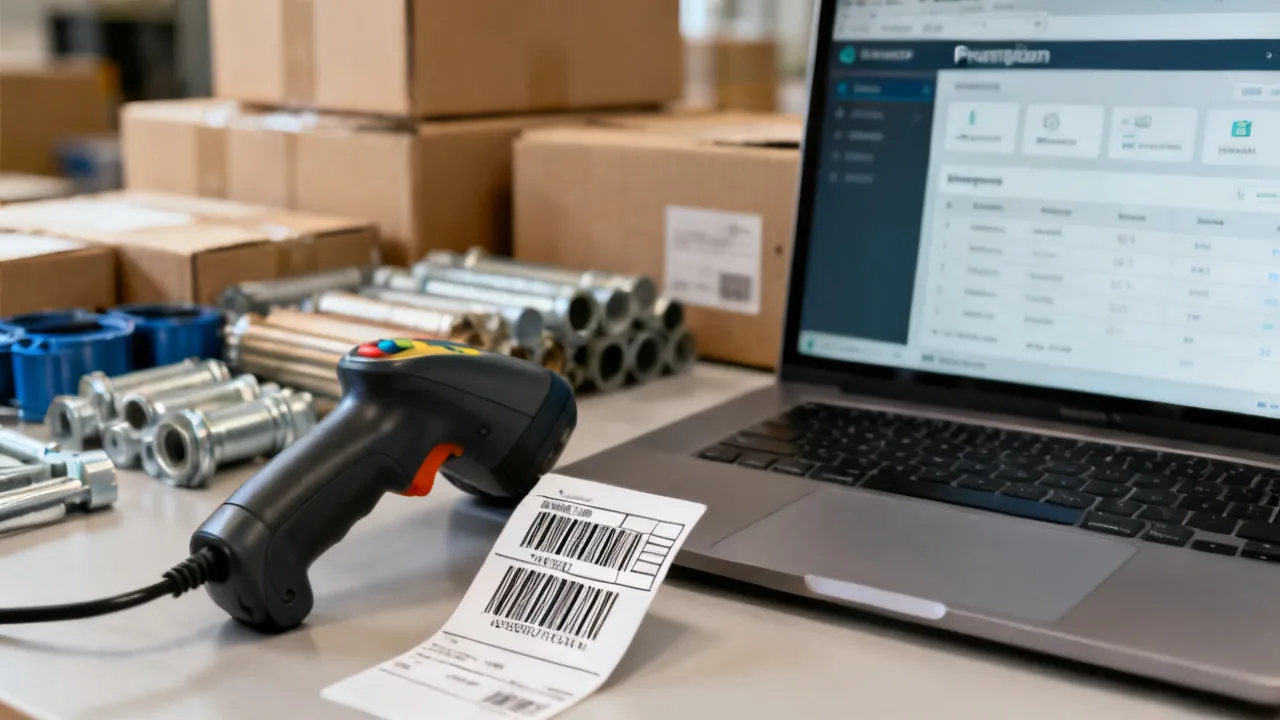
Poriso Guide: Sourcing, Use, and Quality Checklist
This guide explains how to evaluate Poriso for consistent performance—from understanding what it is, to selecting a responsible supplier, checking specification fit, and planning practical next steps. Objectively, the term “Poriso” is discussed as a product brand or catalog entry within procurement contexts, where buyers prioritize documentation, traceability, and verified handling instructions.
Poriso at a Glance: What Buyers Should Verify First
When procuring Poriso, the most critical early step is not price comparison—it’s verification. Buyers should confirm the exact product specification, intended use-case, and handling conditions before ordering. In procurement practice, the difference between “it works” and “it consistently performs” often comes down to documented requirements, batch traceability, and supplier transparency. From an industry perspective, a short due-diligence checklist can prevent mismatched formulations, packaging incompatibility, or unrealistic expectations about results.
This article provides a structured, objective framework for evaluating Poriso with an emphasis on quality signals, supplier readiness, and practical buying conditions. Where relevant, it also discusses how to interpret supplier information, what “spec fit” means in real projects, and which questions to ask before shipment.
Note: Because the keyword input did not include explicit numeric pricing, supplier names, or a defined location, this guide focuses on evaluation methodology rather than quoting unverifiable figures.
Understanding “Poriso” in Procurement and Product Evaluation
The term Poriso often appears as a product name or catalog identifier in buyer research—meaning the same label may correspond to different variants, grades, or packaging formats. In professional sourcing, that ambiguity matters. A buyer’s objective task is to determine which exact Poriso version is referenced by the supplier’s listing or technical sheet.
In practical terms, a “Poriso” listing can be interpreted through three lenses:
- Variant identity: Ensure the correct model/grade/format is being ordered.
- Use-case alignment: Confirm that the product is suitable for the buyer’s application constraints (environment, process, time window).
- Handling and documentation: Require clear instructions on storage, shelf life, and compatibility considerations.
Professional buyers treat product labels as starting points, not conclusions. Before committing, they verify the product through documentation and supplier communication, especially when the item’s performance depends on formulation, materials, or controlled handling conditions.
Why Buyers Often Misjudge “It’s the Same Product” Assumptions
One of the most common procurement errors is the assumption that a shared name implies a shared specification. With many industrial or specialty goods, the “name” may function like a brand umbrella. Under that umbrella may exist multiple sub-identities—different concentrations, different base materials, different particle size distributions, different packaging sterilization methods, different viscosity ranges, different allowable tolerances, or different environmental compliance profiles.
For Poriso, buyers should expect that the supplier’s “Poriso” label might cover several configurations. Even if the supplier is well-meaning, a buyer can still receive the wrong variant if they do not confirm the full chain of identity: product code, grade, documentation version, packaging description, and batch traceability format.
To mitigate this, buyers should develop a habit of treating the supplier’s listing as incomplete until it is corroborated by primary documentation. A strong buyer approach is “name + specification + handling + traceability.” If any of those components are missing or unclear, uncertainty rises quickly.
Supplier Selection: The Most Reliable Quality Indicators
When evaluating suppliers for Poriso, focus on signals that correlate with repeatability and supply reliability. In many industries—whether manufacturing inputs, specialty materials, or branded goods—quality issues tend to show up as process variability rather than obvious defects. Therefore, choose suppliers who can provide evidence and clarity.
Key supplier factors commonly used by procurement and quality teams include:
- Documentation readiness: Technical data sheets, specification tables, and handling guidance.
- Traceability: Batch/lot identification and traceability support.
- Clear lead times: Predictable processing and shipping schedules.
- Packaging integrity: Appropriate packaging for the product’s storage and transport needs.
- Responsible communication: Transparent answers to clarifying questions, not vague assurances.
From an industry standpoint, the “best” supplier is not the one who makes the most claims—it’s the one who can demonstrate how the product meets defined requirements for your application and constraints.
Supplier Readiness Signals Buyers Should Actually Look For
Supplier readiness is often visible long before a delivery arrives. Buyers should assess readiness using signals that show process maturity. Examples include:
- Version control and document consistency: A supplier who provides a technical sheet with a revision date and clear version identifier demonstrates disciplined documentation. Buyers should confirm that the revision aligns with the product variant they are ordering.
- Ability to provide batch-level details: When asked for lot numbers and associated records, suppliers should be able to respond promptly and consistently.
- Packaging descriptions with constraints: Suppliers should explain packaging suitability (e.g., humidity barrier, light protection, temperature sensitivity, or shock resistance) rather than simply stating that packaging is “standard.”
- Operational transparency: If lead times change, a mature supplier communicates early and explains drivers. If they cannot meet deadlines, they propose alternatives (e.g., different pack sizes or earlier batch release schedules).
A buyer can treat these readiness signals as “quality proxies.” They are not proof of performance by themselves, but they correlate with the likelihood that the supplier can execute consistently.
Price Considerations: How to Evaluate Cost Without Overreliance
Even without explicit price figures, it’s important to explain how pricing should be interpreted for Poriso. In procurement, cost is not just the unit price. The total cost of acquisition depends on handling, shipping conditions, potential rework, and acceptance testing outcomes.
An objective approach is to evaluate:
- Unit price vs. delivered value: Compare based on correct grade/format and documented specs.
- Shipping and storage requirements: Products that require careful handling can shift true cost upward.
- Lead time risk: Reliable delivery can reduce downtime or project delays.
- Quality assurance costs: Acceptance tests and inspection requirements should be anticipated.
Procurement teams typically reduce risk by requesting samples (when appropriate), verifying documents early, and aligning on acceptance criteria. This method avoids paying for the wrong variant and helps prevent “hidden” costs.
Total Cost of Ownership (TCO) Thinking for Poriso
For many buyers, the temptation is to optimize unit price and ignore downstream impacts. A more robust approach uses total cost of ownership logic. Even if Poriso has multiple variants, the “cheapest” unit can become the most expensive when:
- Waste increases: If batches do not meet the required parameters, material may be scrapped or downgraded.
- Process adjustments are needed: Some mismatched variants require re-tuning a process, adding labor, downtime, or additional consumables.
- Storage requirements are stricter than expected: If Poriso requires controlled temperature storage, the buyer may need specialized infrastructure, energy costs, or additional labor for monitoring.
- Acceptance testing fails: If testing reveals nonconformities, the buyer may incur retesting, replacement shipping, or dispute-resolution costs.
Therefore, buyers should consider acceptance criteria, delivery schedule, packaging quality, and document completeness as part of the pricing context. When suppliers provide transparent data and traceability, acceptance becomes more objective—which reduces the probability of expensive surprises later.
Quality Checklist for Poriso: What to Confirm Before Ordering
Before your first purchase, confirm the following items. Treat this as a general quality checklist—adapt it to your industry’s compliance requirements.
- Exact product identity: Confirm the precise Poriso variant/grade/format referenced by the supplier listing.
- Specifications: Validate key parameters against your internal requirements or expected performance conditions.
- Handling conditions: Check storage temperature range, humidity sensitivity (if applicable), and shelf life expectations.
- Packaging compatibility: Ensure packaging is appropriate for transport duration and storage environment.
- Traceability documentation: Request batch/lot details and any relevant quality records.
- Intended use constraints: Verify that the product is appropriate for your process and timeline.
- Supplier responsiveness: Ask clarifying questions and assess whether answers are specific and consistent.
If a supplier cannot provide structured information—such as specifications or handling guidance—buyers should pause. In most professional settings, absence of documentation correlates with increased uncertainty.
Deep-Dive: How to Validate “Specifications Fit” in Real Projects
“Spec fit” can sound straightforward, but in real projects it involves mapping supplier data to internal performance requirements. Buyers should be careful with specification interpretation. For Poriso, spec alignment might include:
- Measurable parameter mapping: Identify which supplier metrics correspond to the buyer’s internal thresholds. For example, if your process requires a viscosity range, ensure the supplier provides a viscosity measurement method and conditions (temperature, test apparatus, measurement duration).
- Tolerance and variability: Confirm allowable tolerances. A product that “usually works” may not meet narrow tolerances needed for precision work.
- Test method references: Verify that the supplier’s test methods match or are compatible with your acceptance testing. If the supplier uses a different standard, the buyer may need to adapt or renegotiate.
- Environmental and operational context: Some performance parameters are conditional (e.g., performance changes with humidity, temperature, exposure time, or substrate compatibility).
A practical buyer approach is to create a “spec translation” document: a table that shows each internal requirement, the supplier’s corresponding data, the test method, and the verification status. This reduces ambiguity and prevents late-stage misunderstandings.
Interpreting Supplier Information: Avoiding Common Misunderstandings
When reviewing Poriso product materials provided by a supplier, it’s easy to misread a label. Common misunderstandings include:
- Assuming “brand name” equals “exact grade”: Many products have multiple variants under one umbrella name.
- Confusing “marketing claims” with specifications: Marketing language should be mapped to measurable parameters.
- Ignoring handling instructions: Some performance outcomes depend on storage and timing.
- Skipping acceptance criteria: Without a clear test/inspection plan, disputes can arise after delivery.
Industry professionals mitigate these risks by writing requirements clearly and requesting documentation that can be compared against internal standards.
What to Ask When the Supplier’s Documentation Is Ambiguous
Ambiguity is not always intentional. Sometimes suppliers provide generalized documents or legacy formats. Buyers should know how to respond by asking for specific clarifications. Examples of high-value clarifying questions include:
- “Which Poriso variant corresponds to SKU/part number X?” This forces alignment between listing and identity.
- “Can you provide a batch/lot traceability example for a recent shipment?” This checks operational capability.
- “What are the recommended storage conditions and maximum allowable holding time after receipt?” This ensures handling requirements are actionable.
- “Are there any known compatibility limitations with substrates or processing conditions?” This helps avoid process failures.
- “What test methods and standards underpin your specification values?” This enables acceptance testing compatibility.
Buyers should record answers in writing and attach them to the purchase record. Written confirmations reduce disputes if circumstances change.
Practical Next Steps for Buyers
If you’re evaluating Poriso for purchase, consider a phased approach. Start with document verification, then move to trial quantities (where appropriate), and finally expand based on acceptance results. Even when the product is familiar, this workflow reduces variability and supports consistent outcomes.
A reasonable procurement sequence typically looks like this:
- Request the supplier’s technical documentation for the exact Poriso variant.
- Align on storage/handling and delivery conditions (including timing constraints).
- Define acceptance criteria for first deliveries.
- Consider sample testing or a pilot order if the stakes are high.
- Confirm traceability documentation for each batch/lot.
This approach is widely used across regulated and non-regulated purchasing contexts because it balances speed with risk control.
Pilot Orders: A Buyer’s Guide to Getting Meaningful Results
When buyers decide to run a pilot order, the goal should be decision-quality evidence, not merely a “try and see” purchase. To make pilot results meaningful for Poriso procurement decisions, buyers should:
- Choose acceptance metrics upfront: Define what success means (e.g., parameter thresholds, performance outcomes, compatibility checks, or batch-to-batch consistency).
- Control variables: Use the same process setup, equipment, and environmental conditions as production.
- Plan for batch diversity: If possible, request batches that represent normal production variability rather than only the most recent or most ideal lot.
- Document handling: Record receiving time, storage conditions, and any deviations. Handling deviations often explain performance issues.
- Confirm traceability at receipt: Ensure the batch/lot number is recorded correctly and linked to test results.
By structuring a pilot properly, buyers can reduce uncertainty and justify scaling decisions with defensible evidence.
Comparison Table: Buying Conditions, Requirements, and Supplier Readiness
The following table summarizes practical conditions buyers should apply when sourcing Poriso. It is designed as a supplement to the main guidance and should be tailored to your industry standards and project needs.
| Evaluation Area | What “Good” Looks Like | What to Request/Confirm | Typical Requirement/Condition |
|---|---|---|---|
| Product Identity | Exact Poriso variant/grade and format are clearly specified | Part number/model, grade, packaging format, SKU mapping | Order only after variant verification |
| Specifications Fit | Measurable parameters match your use-case constraints | Technical data sheet, specification table, measurable limits | Match against internal requirements before purchase |
| Handling & Storage | Clear storage conditions and shelf-life expectations are provided | Storage temperature guidance, shelf-life statement, handling notes | Do not accept unknown storage requirements |
| Traceability | Batch/lot details can be linked to delivery | Batch/lot labels, traceability documentation | Require traceability for every batch |
| Acceptance Criteria | Objective inspection/test criteria are defined in advance | Quality inspection plan, test method references | Agree on acceptance before shipment |
| Packaging & Logistics | Packaging supports safe transport and storage integrity | Packaging description, shipping constraints, documentation for transport | Align delivery conditions with storage needs |
| Supplier Communication | Answers are consistent, specific, and documented | Written clarifications for ambiguous points | Request written confirmations when needed |
Source and Evidence Principles (Objective, Not Sales-Driven)
Because Poriso appears to be a product label rather than a universally standardized term, buyers should rely on primary documentation from the supplier—such as technical data sheets, handling instructions, and traceability records—while aligning acceptance testing with internal standards. Where broader purchasing and quality principles are needed, the following evidence sources are commonly used in industry practice:
- ISO standards for quality management and documentation principles (e.g., ISO 9001) are widely referenced for process discipline and traceability concepts.
- Regulatory and safety frameworks relevant to your industry may define documentation expectations and storage/handling responsibilities.
- Procurement and quality management best practices from recognized industry bodies emphasize acceptance criteria, supplier qualification, and risk-based verification.
Recommended references to consult (general principles): ISO 9001 quality management system guidance; any industry-specific regulations applicable to your product category. (This article does not cite any specific Poriso performance claims or numbers.)
How to Build an Evidence File for Poriso Procurement
A mature procurement process creates an evidence file. This is not bureaucracy for its own sake; it is risk control and decision support. Buyers should consider assembling an internal package (digital folder or controlled document set) containing:
- Supplier documents: Technical data sheet, handling instructions, packaging guidance, and any certificates or declarations.
- Purchase record: Purchase order details, SKU/part number mapping, variant confirmation notes, and delivery schedule.
- Traceability records: Batch/lot labels, receiving records, and documentation linking each lot to the delivery.
- Acceptance plan: Agreed test methods, inspection steps, acceptance thresholds, and sampling plans.
- Pilot results (if applicable): Test results, observations, handling logs, and decision rationale.
When a dispute arises—such as performance not meeting expectations—an evidence file makes resolution faster and more objective. It also supports internal audits and continuous improvement.
Step-by-Step Guide: How to Buy Poriso Responsibly
Below is a practical, step-by-step workflow that procurement teams commonly use to reduce risk and improve outcome consistency when sourcing Poriso.
- Define your requirement: Write down the specification you need (variant, intended use, compatibility constraints).
- Request the supplier’s technical documentation: Ask for the technical data sheet for the exact Poriso variant you intend to buy.
- Confirm handling and storage: Validate storage conditions, shelf-life expectations, and any special handling requirements.
- Verify traceability: Ask how batch/lot information will be provided and linked to your delivery.
- Agree on acceptance criteria: Define what “pass” means before goods arrive (inspection methods, timing, and documentation).
- Evaluate logistics fit: Confirm shipping constraints and whether packaging protects integrity during transit.
- Order a controlled initial quantity: Where feasible, start with a pilot order and evaluate against acceptance criteria.
- Document results and decide: If the product meets requirements consistently, scale; if not, reassess variant or supplier fit.
This workflow is intentionally conservative. In sourcing, “fast buying” without verification often leads to higher cost later through returns, waste, or rework.
Requirement Definition: What “Good” Looks Like Before You Contact Suppliers
Buyers sometimes start by asking suppliers what they have, rather than stating what they need. For Poriso procurement, requirement definition is a prerequisite. A well-defined requirement typically includes:
- Variant identity: the exact Poriso model/grade/format, ideally with internal reference codes.
- Performance targets: measurable parameters relevant to the intended application (and the test method assumptions, if known).
- Environmental conditions: operating environment constraints (temperature range, humidity sensitivity, exposure to chemicals or radiation if applicable).
- Processing constraints: timeline, mixing time, application window, equipment compatibility, and any constraints that affect quality.
- Receiving conditions: how goods will be stored and handled upon arrival; ability to meet storage requirements.
When the buyer defines these clearly, supplier responses become more reliable because both sides can map documentation to the same target.
Acceptance Criteria: Turning “Quality” into an Objective Pass/Fail
Acceptance criteria are where buyer skepticism should pay off. If acceptance is vague—such as “looks good” or “seems fine”—quality disputes are likely. Instead, buyers should aim for objective criteria and document them in advance.
Acceptance criteria can include:
- Document verification: checking that delivered documents match the specified variant and lot.
- Physical inspection: verifying packaging integrity, labeling correctness, and visible condition.
- Parameter testing: running tests relevant to your process and comparing results to defined thresholds.
- Functional checks: if Poriso is used in a process where performance can be measured, plan functional evaluations under realistic conditions.
Crucially, acceptance criteria should include the timing of testing. For example, some products should be tested within a certain window after receipt because properties change over time. If the acceptance plan does not account for that, disputes can become complex.
Traceability: Why Batch/Lot Alignment Is Non-Negotiable
Traceability is one of the most important quality systems in procurement for products that may vary by production batch. For Poriso, buyers should require:
- Batch/lot numbers that are printed and readable on packaging and delivery documents.
- Linkage between lot and documentation: the same lot appears on certificates, test reports, and shipping documents.
- Consistent labeling format: so internal receiving processes can record it correctly.
Traceability supports root-cause analysis. If performance issues arise, traceability helps isolate whether the problem is batch-specific (supplier-controlled) or handling/process-specific (buyer-controlled). Without traceability, investigations become guesswork.
Handling and Storage: Confirm You Can Meet the Requirements
Buyers sometimes focus on what the supplier will do and forget the buyer’s responsibilities. For Poriso, handling and storage requirements often determine whether the product performs as expected. Buyers should ensure their facilities can meet:
- Storage environment constraints: required temperature, humidity, light exposure, or ventilation needs.
- Shelf life and expiry management: how stock rotation will be handled (e.g., first-expired-first-out or other discipline).
- Time-to-use expectations: maximum time between receipt and first use, including any staging or quarantine processes.
- Handling procedures: instructions for opening, mixing, transferring, or preparing the product for application.
If the buyer cannot meet these requirements, it is not always the supplier’s fault when performance fails. An objective procurement approach therefore evaluates not only supplier capability but also buyer readiness.
Logistics and Packaging: Preventing Performance Degradation During Transit
Packaging is not just “protection.” For many products, packaging affects temperature stability, moisture exposure, and contamination risk. Buyers should confirm that packaging is appropriate for:
- Transit duration: the shipping time window and whether it matches product stability needs.
- Shipping conditions: whether goods travel in controlled-temperature containers or under typical warehouse conditions.
- Handling during transit: risk of impact, crushing, or exposure to extremes.
Buyers should ask for packaging descriptions and shipping constraints, not just rely on standard packaging statements. If Poriso is sensitive, buyers may need to require specialized packing formats or delivery scheduling to maintain stability.
Controlled Initial Quantity: How to Choose a Pilot Order Strategy
When ordering a controlled initial quantity, buyers should make decisions based on risk level and uncertainty. A pilot order can be:
- Small batch for qualification: sufficient for documentation checks and limited performance testing.
- Representative sample for process integration: enough to run through production-like steps and evaluate real performance.
- Multi-batch evaluation: testing multiple lots to evaluate batch-to-batch variability.
The pilot strategy should reflect how costly failure is. If the downstream process is expensive or safety-critical, the buyer should plan a more rigorous pilot. If the stakes are lower, a lighter pilot might still be useful—especially to confirm documentation and handling assumptions.
Supplier Qualification Beyond Documents: When to Escalate Verification
In some cases, documentation alone is not enough. Buyers may need additional verification if:
- the product is safety-critical or regulated;
- the project tolerances are narrow;
- performance failures have high cost;
- the supplier is new or lacks a proven track record;
- previous shipments had documentation discrepancies or inconsistent results.
Escalation options include third-party testing (if appropriate), enhanced inspection on arrival, or supplier audits (remote or on-site). The goal is not to “distrust”—it is to ensure that evidence supports the decision to scale procurement.
Quality Communication: How to Manage Supplier Interactions Professionally
Procurement communication should be clear, structured, and recorded. Buyers should avoid relying on informal verbal agreements for Poriso. Instead, buyers should:
- Submit written requests: Ask for the exact documentation and clarify the variant and test needs.
- Request written confirmations: especially for ambiguous points or handling constraints.
- Use standardized terms: refer to the variant/grade by the supplier’s part number or internal code mapping.
- Maintain a change log: if the supplier makes changes to documentation revision, formulation, packaging, or shipping method, record and evaluate impact.
Professional communication reduces misunderstandings and helps ensure that supplier accountability is clear.
FAQs About Poriso Sourcing and Use
1) What does “Poriso” refer to?
Poriso typically refers to a named product entry or branded item used in supplier catalogs. Because the same label may cover multiple variants, buyers should confirm the exact variant/grade/format before ordering.
2) How should I compare prices for Poriso?
Compare prices only after confirming you’re comparing the same variant and packaging format. Then consider delivered value: shipping conditions, storage requirements, and the likelihood of meeting acceptance criteria.
3) What documents should I request from the supplier?
Request technical data (specification sheet), handling and storage instructions, traceability/batch documentation practices, and any relevant quality records that support consistent procurement.
4) Do I need to run acceptance testing?
If performance and compatibility matter to your project, acceptance testing is strongly recommended. At minimum, plan an inspection against predefined criteria so that “pass/fail” is objective.
5) How can I reduce risk when ordering Poriso for the first time?
Use a phased approach: verify documentation first, agree on acceptance criteria, and consider a pilot quantity where feasible. Keep batch records and evaluate outcomes against your requirements.
6) Can the supplier “guarantee” performance?
Suppliers can share warranties or performance expectations, but objective due diligence still matters. Buyers should verify that the product variant matches the documented specifications and that your handling and usage conditions align with those instructions.
7) What if my application conditions differ from the supplier’s guidance?
Ask for clarification and confirm compatibility. If the guidance is incomplete or inconsistent, do not proceed without a documented resolution that addresses your specific conditions.
Industry Expert Perspective: Why Verification Often Matters More Than Marketing
In many procurement categories, outcomes depend on how the product is manufactured, stored, transported, and applied. For Poriso, buyers should treat documentation, traceability, and handling guidance as operational “inputs” that shape real-world performance. This is why experienced teams invest time in supplier qualification and acceptance planning rather than relying solely on name recognition.
From a quality-management viewpoint, consistency is achieved through repeatable process discipline: matching the correct variant, controlling storage conditions, validating delivery integrity, and testing against acceptance criteria. When these elements are in place, procurement decisions become measurable and defensible.
Common Buyer Pitfalls (and How to Avoid Them)
Even with a checklist, buyers can fall into repeating patterns. Below are frequent pitfalls seen in procurement cycles—along with practical avoidance strategies.
1) Ordering by name only
If you purchase Poriso using only the product name and not the exact variant/grade/format, you risk receiving an item that is “close enough” in marketing terms but not in performance terms. Avoid this by requiring part number/grade mapping and confirming it against the technical data sheet.
2) Accepting generic documentation
Some suppliers may provide a general brochure or a document that covers multiple variants. Buyers should request documentation that is specific to the variant and revision that corresponds to the ordered Poriso configuration.
3) Treating handling instructions as optional
If Poriso requires special storage conditions, ignoring or approximating those conditions can cause performance degradation. Buyers should confirm storage requirements early and validate that their facilities can meet them.
4) Skipping traceability at receiving
Buyers sometimes focus on delivery acceptance and overlook batch/lot recording accuracy. A misrecorded lot number can undermine the ability to investigate and prove nonconformance later. Avoid this by linking lot labels to internal receiving records immediately.
5) Weak acceptance criteria
Vague criteria lead to subjective decisions and disputes. Avoid this by defining measurable pass/fail conditions and aligning test methods and sampling plans in advance.
6) No pilot or no decision plan
Ordering a small quantity without a defined evidence goal is often not useful. If you conduct a pilot, decide upfront what results will trigger scale, rework, or supplier change.
What to Do If the First Shipment Fails Acceptance
Even with careful planning, not all shipments meet requirements. When Poriso fails acceptance criteria, buyers should treat the incident as a controlled problem-solving event rather than a one-time frustration.
A disciplined response typically includes:
- Document nonconformance clearly: record the lot number, inspection results, test outcomes, and observed handling deviations (if any).
- Verify you received the correct variant: confirm the purchase order mapping and compare received labels to the ordered specification.
- Check documentation alignment: ensure the delivered certificates and test reports correspond to the same batch/lot.
- Assess storage and handling: review receiving time, storage conditions, and any temperature/humidity excursions or delays.
- Engage the supplier with evidence: provide a written description of nonconformance and request corrective action, root-cause analysis, and prevention measures.
- Re-negotiate a controlled resolution: decide whether to replace, retest with a new lot, or stop the order while issues are investigated.
This approach protects both buyer and supplier. It turns failure into learning and prevents recurrence.
Conclusion: A Reliable Poriso Purchase Starts With Requirements
To source Poriso effectively, buyers should begin with verification of the exact variant, confirm specifications and handling requirements, and establish traceability and acceptance criteria. Even without publicly stated pricing or named suppliers, a disciplined procurement workflow reduces uncertainty and supports consistent results. If you apply the checklist, comparison conditions, and step-by-step approach outlined in this guide, you’ll be better positioned to select a supplier and product configuration that aligns with your operational needs.
-

A Guide to Cost-Efficient Small Electric Cars for Seniors
-
Mastering Debt Consolidation: Boost Your Credit Score and Manage Interest Rates
-
Your Guide to Loans, Credit Checks, and Interest Rates
-
Affordable Independent Living: Finding the Right Senior Housing
-
Guide to Senior Living Apartments: Affordable and Comfortable Environments