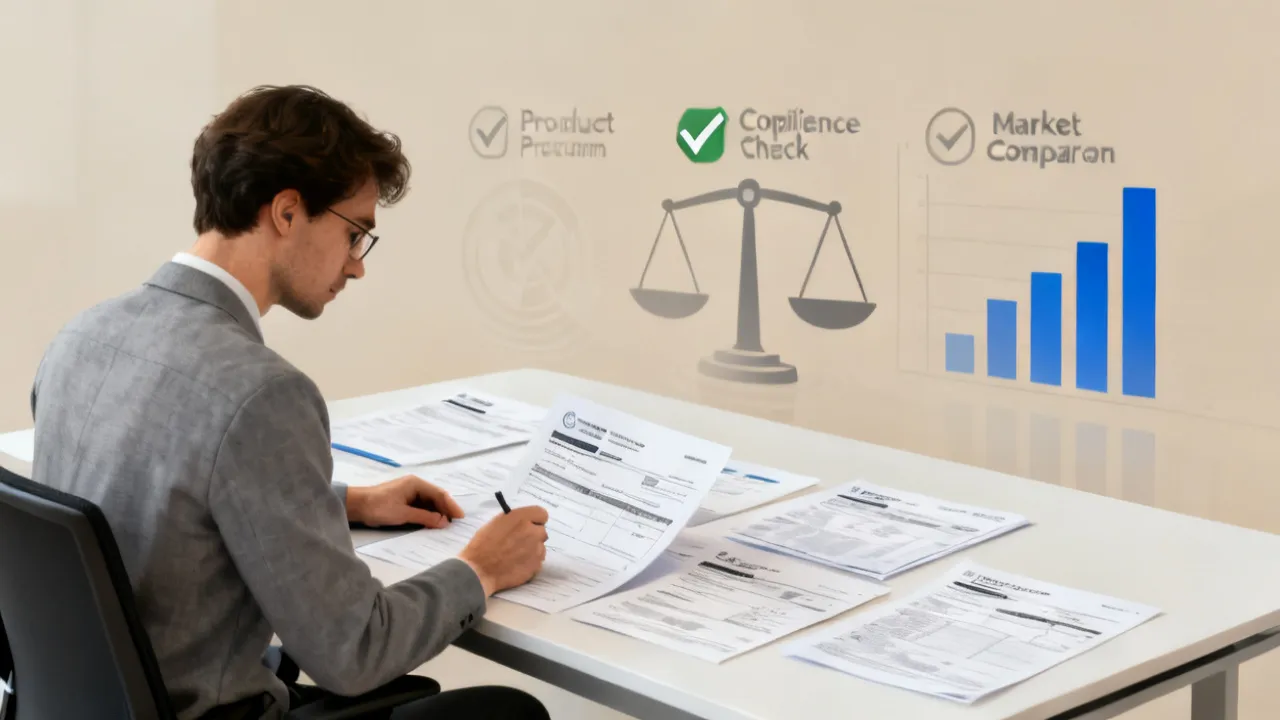
949841yw334: Supplier, Pricing, and Selection Guide
949841yw334 の選定は、価格・供給体制・品質条件を比較しながら進めるのが要点です。本ガイドでは、キーワードの背景を客観的に整理し、購入判断に必要な評価観点(仕様確認、ロット管理、納期、品質保証、返品条件)を専門家視点で解説します。
Why 949841yw334 Selection Matters for Cost, Supply, and Compliance
When evaluating 949841yw334, the most important practical question isn’t only “How much does it cost?”—it’s whether the quoted price, the stated supplier details, and the real-world conditions/requirements align with your technical needs and operational risk tolerance. In procurement terms, the best outcome comes from balancing total cost of ownership (including handling, lead time, and defect recovery) against dependable supply and traceable quality.
In real purchasing decisions, especially those involving production lines, regulated products, or mission-critical operations, the selection of a specific SKU/model code is never just a clerical exercise. A code like 949841yw334 becomes the anchor for a whole chain of responsibilities: correct configuration, correct revision, correct labeling, correct documentation, correct storage, correct delivery commitments, correct acceptance steps, and correct corrective action if something goes wrong. If any link in that chain is weak or unclear, “saving money” on paper can quickly invert into downtime, expedited shipping, customer complaints, audit findings, or a high-friction returns process.
Because your request contains 949841yw334 and general keyword concepts (not an explicit product description, manufacturer name, or region-specific contract clause), this expanded article focuses on the decision logic that buyers should apply to any procurement item identified by a code like 949841yw334. The goal is to help you structure evaluation so that you can determine whether an offered price is truly comparable, whether the supplier details you’re given are credible and operationally accountable, and whether the conditions/requirements are sufficient to protect continuity and compliance.
Context for the Keywords and What They Usually Represent
The provided keywords include 949841yw334 alongside placeholder segments. In many procurement and catalog-driven environments, an identifier like 949841yw334 commonly functions as a model code, SKU-like reference, or internal catalog mapping. Pairing such an identifier with pricing and supplier metadata is typical when buyers need to standardize comparisons across vendors, warehouses, or fulfillment channels.
Because procurement decisions are often made under time pressure, a short code can look deceptively “self-explanatory.” However, codes can hide meaningful differences: revision levels, component substitutions, packaging formats, compliance document sets, test methods, or even the way a supplier defines “equivalent.” Two suppliers might both claim the same identifier, but the effective product you receive can vary in ways that matter for fit, function, safety, or audit readiness.
Because the additional keyword fragments appear as empty placeholders in your input, this article focuses on the core usable token—949841yw334—and treats “price” and “supplier details” as the decision variables buyers should verify directly with each vendor. This keeps the guidance objective and avoids claiming specifics that aren’t included in the prompt.
In other words, the question is not “What is 949841yw334?” in the abstract—it’s “Does the quotation tied to 949841yw334 actually deliver what we need, at the quoted cost, with the accountability and documentation we require?” That difference between assumptions and verification is where most procurement risk lives.
Inverted Pyramid: Critical Buyer Checks Before You Buy
If you take only one approach, use this sequence: confirm the exact item identity (by 949841yw334 code and technical spec), validate commercial terms (the price you’re offered truly reflects your required configuration), verify vendor capability through supplier details, and ensure the conditions/requirements cover packaging, traceability, delivery, and returns.
The “inverted pyramid” concept works well because it pushes you to do the highest-impact checks first. If identity is wrong, no amount of negotiation on price will fix the downstream problem. If identity is correct but the price excludes documentation, testing, or protective packaging, the quote may still fail acceptance. If identity and quote scope are correct but supplier details don’t establish accountability, you may lose time and leverage when issues arise. Finally, even when all the basics look fine, missing or weak conditions/requirements (acceptance criteria, RMA terms, lead time commitments) can turn a manageable defect into a supply chain disruption.
- Item identity: Ensure 949841yw334 matches the product description, not just a partial listing.
- Price validity: Ask what’s included in the quoted price (accessories, testing, packaging level, labeling).
- Supplier details: Confirm who is manufacturing/fulfilling versus who is reselling.
- Conditions/requirements: Verify warranty, RMA process, lead time windows, and documentation.
- Risk control: Demand evidence of quality systems and handling practices appropriate for your use case.
Expert Perspective: How Industry Teams Evaluate SKU-Level Purchases
From an industry procurement and supplier-quality standpoint, items identified by codes like 949841yw334 are often treated as “equivalent” only after verification. Even when two vendors list the same identifier, differences can exist in revision level, packaging configuration, compliance documentation, or test procedures.
Professionals typically apply a two-layer screening:
- Commercial layer: Compare price, payment terms, Incoterms (if applicable), minimum order quantities, shipping responsibility, and delivery schedules.
- Technical and quality layer: Confirm documentation, inspection/acceptance criteria, traceability, and compliance deliverables.
This structure prevents a common failure mode: selecting the lowest price without ensuring the supplier meets the conditions/requirements required for reliable downstream use.
To make this more concrete, consider how internal stakeholders work together in many organizations:
- Procurement ensures that quotes are comparable and that purchasing terms are enforceable.
- Quality ensures that the supplier can provide evidence of conformity and traceability.
- Engineering/Operations ensures technical specifications and fit/function requirements are met.
- Compliance/Audit ensures documentation can satisfy internal audit trails or external regulatory obligations.
If you skip one layer—especially quality documentation or acceptance criteria—your organization might accept the item informally and only discover later that it cannot be used in the intended process, or cannot be defended during an audit.
Pricing: What “Price” Should Include When 949841yw334 Is Compared
Although you didn’t provide a specific figure, any “price” quoted for 949841yw334 must be interpreted through what procurement teams call the “apples-to-apples” lens. In practice, buyers should clarify whether the price includes:
- Unit cost versus bundled costs (kitting, labeling, or protective materials).
- Testing (e.g., inspection reports, batch checks, or certificate of conformity).
- Packaging suitable for your storage and transport conditions.
- Documentation (traceability records, compliance statements, batch/lot information).
If one supplier’s price appears lower, it may be reflecting omissions in these areas, which can later show up as rework costs, delays, or acceptance rejects.
To evaluate quote fairness more systematically, buyers often ask for a quotation scope statement or line-item breakdown that explicitly maps cost drivers to deliverables. For example, a quote might look “cheaper” because it excludes packaging validation or excludes the certificate set required for internal receiving acceptance. If your operation is sensitive—such as needing lot-level traceability, or requiring a particular conformity statement—those exclusions are not minor details; they determine whether the item is actually usable.
It’s also important to consider hidden operational costs that occur even when the item is technically correct. Examples include:
- Receiving time: If the supplier’s documentation is incomplete, receiving teams may spend extra time reconciling batch information or chasing missing certificates.
- Storage costs: Inadequate packaging can cause damage or require special storage handling, increasing labor and material costs.
- Scrap and rework: If acceptance tests fail due to handling or incorrect configuration, replacement and rework costs can exceed the original price difference.
- Scheduling disruption: If lead time is unreliable, the cost shows up as production interruption, overtime to catch up, or lost customer commitments.
Therefore, when comparing price for 949841yw334, treat price as a component of a broader “delivered and acceptable” outcome. A slightly higher quote can be cheaper overall if it includes the deliverables required to meet acceptance and minimize operational disruption.
Supplier Details: Distinguish Manufacturer Capability from Distribution Claims
“Supplier details” should answer: Who controls production quality, who controls storage/handling, and who will be accountable when something fails acceptance criteria. Buyers often separate:
- Manufacturing responsibility: Is the supplier the manufacturer or a reseller?
- Quality management: Do they use a documented process for nonconformities and corrective actions?
- Traceability: Can they provide lot-level information tied to 949841yw334 shipments?
- Logistics control: How do they manage shelf-life, storage conditions, and damage prevention?
Where possible, professionals ask for evidence aligned with recognized quality frameworks. For example, ISO quality management concepts are widely adopted; readers may refer to ISO 9001 for general quality management principles. (Source example: ISO quality management standards, as published by the International Organization for Standardization.)
Even if a vendor provides documentation and appears responsive, it matters whether the party you’re contracting with is able to control the outcome. A reseller might not have direct influence over factory production changes, batch mixing, or revision-level substitutions. In many procurement disputes, this becomes the core issue: you need a contract partner with enough control to initiate corrective action and to provide replacement shipments quickly.
When you review supplier details for a code like 949841yw334, consider requesting:
- Named quality contact for nonconformities and acceptance disputes.
- Named logistics/operations contact for shipment damage claims and handling requirements.
- Clear escalation path so your team knows who to contact when the lead time slips or documentation is incomplete.
- Distribution/manufacturing relationship explaining whether the supplier is the original manufacturer, an authorized distributor, or a reseller.
- Traceability statement describing how lot/batch information is preserved from the factory to your shipment.
From a compliance perspective, the most important supplier detail is the ability to demonstrate chain-of-custody and traceability. From an operational perspective, the most important supplier detail is accountability: who actually resolves issues without forcing you into a slow, multi-party blame game.
Another practical consideration is whether the supplier can handle your volume and delivery variability. For example, if your operations sometimes require faster replenishment due to demand surges, you need to know whether the supplier can allocate inventory or expedite production. A vendor might deliver on time for small orders but become unreliable under larger quantities or during peak seasons. Your procurement risk should reflect that reality.
Conditions/Requirements: The Contractual “How” Behind Reliable Delivery
Even when the price looks right, supply outcomes depend on conditions/requirements that are often hidden in fine print. For a SKU like 949841yw334, key requirements typically include:
- Lead time and delivery windows: When does production/processing start, and what dates are committed?
- Acceptance criteria: How is the product inspected on receipt, and what constitutes a reject?
- Documentation requirements: What certificates, batch/lot records, and labels are delivered with shipments?
- Returns and RMA: Who pays shipping for returns, how quickly replacements are shipped, and what is the eligibility window?
- Packaging and labeling: Requirements for storage safety and traceability during handling.
These elements matter because “conditions” determine how quickly problems are resolved and whether your operation can maintain continuity.
To make conditions/requirements actionable, buyers often translate them into concrete receiving workflows. For example:
- Receiving inspection: Specify what will be checked upon arrival (visual damage, label verification, count verification, batch number verification, conformity documents).
- Sampling vs full inspection: Define whether receiving uses random sampling or full inspection based on the product criticality.
- Disposition rules: State what happens to nonconforming items while you wait for investigation—quarantine, return, rework, or hold with conditional use.
- Response times: Include time expectations for the supplier to respond to an RMA request or an acceptance dispute.
If these points aren’t clearly defined in your contract or purchase order terms, you can end up negotiating during a crisis—when leverage is lower because production schedules are already disrupted and documentation is already delayed.
It can also be valuable to request “what happens if delayed” and “what happens if documents are missing” clauses. In many organizations, schedule and documentation issues are the most common reasons for costly operational work. A clause that explicitly clarifies whether the supplier will ship partial documentation, provide an interim certificate, or pause shipment without penalties can dramatically reduce friction.
Localization: Practical Buyer Considerations for “Nearby” Regions
Your instruction indicates that any {city}/{country} appearing in keywords should be replaced with “nearby.” Since no explicit city/country was provided in the usable keyword fragments, this article treats “nearby” as a general regional procurement concept: buyers often prefer suppliers who can provide shorter lanes for shipping, easier returns handling, and more direct communication. In many regions, local business culture may favor faster issue escalation—especially when delivery timing impacts production schedules.
In practical terms, when you compare vendors for 949841yw334, consider whether the supplier can support:
- Faster inbound logistics for “nearby” distribution needs.
- On-time communication during shortages or batch changes.
- Clear return logistics when acceptance is disputed.
“Nearby” sourcing can offer benefits, but it should not become a shortcut that bypasses technical and compliance requirements. A supplier that is geographically close may still be weak in documentation, traceability, or warranty responsiveness. Therefore, consider location as an advantage that reduces operational friction, not as proof of compliance or quality.
To evaluate “nearby” readiness, buyers often look at:
- Transit time variability (not just the average transit time).
- Carrier relationships and the supplier’s ability to switch carriers when delays occur.
- Return address handling and whether the supplier has a local receiving/inspection process for returns.
- Communication cadence (for example, whether the supplier provides shipment updates and proactive notifications).
In many industries, the cost impact of delays is non-linear. A few days late can be manageable; a few days late on a constrained schedule can cause large downtime. “Nearby” vendors can reduce the likelihood of missing critical windows—but you still must ensure conditions/requirements are enforceable and that documentation is complete.
Step-by-Step Guide: How to Select 949841yw334 Correctly
The following guide is a structured workflow procurement teams often use when selecting an item identified by a code like 949841yw334. It is designed to reduce ambiguity and improve comparability across suppliers.
Comparison Table (No Links): Vendor Approach vs Buyer Requirements
| Evaluation Area | What to Look For (for 949841yw334) | Why It Matters | Buyer Action / Evidence to Request |
|---|---|---|---|
| Identity Match | Clear reference alignment to 949841yw334 (revision/spec) | Prevents non-equivalent substitutions | Request datasheet/spec sheet and revision level confirmation |
| Price Composition | What’s included in the price (testing, packaging, docs) | Stops hidden cost transfers | Ask for line-item breakdown or quotation scope statement |
| Supplier Details | Manufacturer vs distributor clarity, accountability | Improves resolution speed during issues | Ask for supply chain role definition and contact for claims |
| Lead Time Realism | Committed schedule and production/fulfillment basis | Protects operational continuity | Request timeline terms and “what happens if delayed” clause |
| Quality Documentation | Lot/batch traceability and conformity evidence | Enables audits and root-cause analysis | Request certificates, batch records, and inspection reports |
| Conditions/Requirements | Acceptance, warranty, RMA, and return eligibility rules | Defines recovery path after receiving issues | Review RMA process terms and acceptance workflow |
Procedure: A Practical Decision Flow
- Define your technical acceptance needs: List the required specifications that must match the 949841yw334 code.
- Collect quotations consistently: Request quotes with the same scope so the price can be compared fairly.
- Verify supplier details: Identify who is accountable for manufacturing, inspection, and replacements.
- Confirm documentation and traceability: Ask for the deliverables that prove the item’s identity per batch/lot.
- Assess conditions/requirements: Ensure the contract states acceptance criteria, lead time commitment, and return terms.
- Perform a receiving check plan: Define how your team will inspect items tied to 949841yw334 upon arrival.
- Decide on a risk posture: If your use is safety-critical or compliance-sensitive, require stronger evidence before scaling orders.
Deepening the Workflow: What “Good” Evidence Looks Like at Each Stage
To improve your success rate with 949841yw334 procurement, it helps to understand what evidence you should reasonably expect at each stage of the workflow. Different organizations define “evidence” differently, but the underlying goal is consistent: you want proof that the vendor can deliver an item that will be accepted quickly and used without rework.
Below are expanded categories of evidence you can request, framed in practical terms.
1) Identity and Revision Evidence
Because 949841yw334 may function as a catalog model code, you should confirm that the supplier’s listing is not merely a generic label. Evidence often includes:
- Revision level of the item and documentation that corresponds to that revision.
- Specification sheet matching your internal requirements.
- Part number cross-reference if the supplier uses internal manufacturing codes.
- Photographs of the labeled product and packaging (especially if labeling matters for traceability).
If the supplier cannot provide a revision statement, you may need to treat the quote as higher risk, especially if you need consistent performance over long production runs. For many operational contexts, even a “small change” can create significant downstream variability.
2) Pricing Scope Evidence
“Price” is only meaningful when you can interpret it relative to what you receive. Evidence to request includes:
- Quotation scope statement describing what is included.
- Packaging level (e.g., unit packaging vs bulk packaging vs protective transit packaging).
- Label format included (barcode/QR, batch/lot labels, required wording).
- Document deliverables per shipment (e.g., certificate of conformity, batch records, inspection documentation).
If the supplier’s quote is not detailed, you can ask for a “deliverables table” or to have them confirm in writing that specific items are included. This reduces later disputes about whether missing documents were an obligation.
3) Supplier Accountability Evidence
Supplier details should provide clarity about who owns the process end-to-end. Evidence might include:
- Manufacturing site information or at least confirmation of manufacturing responsibility.
- Distribution model (authorized distributor vs reseller).
- Quality escalation contacts and how quickly they respond.
- Warranty and RMA policy with defined service-level expectations.
Accountability clarity matters because you want to avoid a situation where the supplier says, “We don’t manufacture it; contact the manufacturer.” In urgent acceptance situations, that can extend downtime or create uncertainty about replacement responsibility.
4) Conditions/Requirements Evidence
When reviewing conditions/requirements, focus on what happens in the real world when things go wrong. Evidence often includes:
- Lead time terms that distinguish between “estimated” and “committed” delivery.
- Acceptance criteria stated in contract terms (not just informal descriptions).
- RMA steps, including claim initiation timeline, required documentation, and shipping responsibility.
- Replacement shipment policy including delivery timelines for replacements.
- Returns handling conditions (e.g., unused/undamaged requirements, quarantine steps).
If the supplier refuses to define these elements, it may be a signal that you’ll face higher operational friction later. In procurement risk models, absence of clear conditions/requirements is often treated as increased uncertainty rather than acceptable flexibility.
5) Receiving Check Plan Evidence
Finally, even the best supplier can deliver something that does not meet your acceptance standards. Your organization should define receiving checks tied to 949841yw334. Evidence might include:
- Receiving checklist aligned to the spec.
- Verification steps for documentation (batch numbers, certificate authenticity, label match).
- Inspection plan describing sampling, frequency, and criteria.
- Quarantine/disposition procedure for suspected nonconformance.
When receiving checks are defined ahead of time, acceptance disputes become more factual and less subjective. That reduces the time required to establish whether a nonconformity is attributable to the supplier’s delivery quality or to your internal process requirements.
Cost Beyond the Invoice: Total Cost of Ownership for 949841yw334
One of the most important reasons 949841yw334 selection matters is that cost isn’t limited to invoice price. Total Cost of Ownership (TCO) includes the direct purchasing cost and all the downstream costs related to usage, handling, quality resolution, and supply continuity.
To ensure your procurement decision reflects true cost, consider TCO categories tied to price and conditions/requirements:
- Handling and storage costs: Packaging quality, labeling clarity, and protective transit features influence labor and storage efficiency.
- Inspection and testing costs: If the supplier provides robust conformity documentation, you can reduce incoming inspection effort; if not, you may spend more time verifying.
- Nonconformance recovery costs: If you face rejects, the supplier’s RMA responsiveness affects replacement shipping costs and downtime.
- Expedite costs: Delays in lead time often trigger expedited shipping, overtime, and schedule re-planning.
- Audit and documentation costs: For compliance-sensitive operations, missing documentation can trigger internal administrative work and audit remediation costs.
In practice, a vendor who charges a slightly higher price but includes complete documentation, clear RMA terms, and reliable lead time may produce a lower TCO than a low-cost vendor with incomplete support.
This is why procurement teams increasingly calculate not just “unit price” but “delivered and defensible cost.” “Defensible” means you can demonstrate what you received, when you received it, what batch it belonged to, and how you verified it against your acceptance criteria—especially important for compliance audits.
Supply Continuity: Lead Time, Allocation, and Batch Stability
Another critical reason selection matters is supply continuity. When an item is identified by 949841yw334, you are often sourcing it for consistency over time. Therefore, you should evaluate:
- Lead time variability: Not just average lead time—how often delays occur.
- Production/fulfillment basis: Is the supplier shipping from stock, or producing to order?
- Allocation policy: If you order large quantities during demand peaks, will the supplier reserve inventory or prioritize you?
- Batch stability: Will the supplier notify you if there’s a batch change that could affect performance?
Even if the supplier can deliver the first order on time, batch changes can still create differences that matter for your process. Clear conditions/requirements should therefore include notification expectations and documentation for batch changes.
Procurement teams sometimes request a “change notification” clause: if the supplier modifies the manufacturing process, sourcing, or revision, they should inform you before or alongside shipment. That way, your engineering and quality teams can validate whether the change affects your usage requirements.
Compliance Readiness: Traceability, Documentation, and Defensibility
Compliance is not limited to explicit regulatory labeling; it also includes the ability to trace and defend what you purchased and how you verified it. When you choose a product identified by 949841yw334, you want documentation that supports your internal records and any external audit obligations.
Even if you are not dealing with a highly regulated industry, internal governance often requires:
- Traceability to batch/lot numbers associated with the product code.
- Conformity documentation confirming that the product meets specified criteria.
- Quality verification evidence that can be reviewed later.
- Consistent labeling to reduce mix-ups during receiving and storage.
When supplier documentation is incomplete, organizations can struggle to prove what they received. That becomes problematic during investigations, returns, and audit cycles.
Therefore, the “good” compliance posture is not only to receive documents, but to receive documents that are complete, consistent with 949841yw334, and aligned with your acceptance workflow.
In the earlier sections, the article referenced quality management frameworks such as ISO 9001. While the specific certification requirement depends on your industry, adopting a structured quality management approach is a common indicator that supplier processes are less ad hoc and more predictable.
Risk Control: How to Decide When Strong Evidence Is Non-Negotiable
Not every procurement has the same risk profile. Some purchases have low operational impact; others affect safety, performance, or regulatory obligations. A mature procurement approach tailors evidence intensity to risk.
Ask yourself where 949841yw334 will be used:
- Safety-critical or high-impact usage: Require stronger documentation and stricter acceptance criteria.
- Production-line criticality: Prioritize lead time commitments, RMA responsiveness, and traceability.
- Non-critical usage: Evidence requirements might be lighter, but identity match and documentation should still be verified.
A practical method is to create a risk tier for the item code. If your operation is sensitive, you can require:
- additional inspection on arrival
- full traceability documents per lot
- enhanced RMA response times
- documentation as a condition of acceptance (not just “optional”)
This approach prevents “over-procurement” (requesting too much evidence and delaying purchasing unnecessarily) and prevents “under-procurement” (buying cheaply without protecting downstream operations).
Negotiation Tactics: Turning Requirements Into Contract Strength
Procurement negotiation is often viewed as price-focused, but for SKU-level sourcing, you can negotiate terms that reduce risk. When dealing with 949841yw334, you can negotiate:
- Clarified quote scope: Ensure the quoted price explicitly includes all deliverables.
- Document delivery requirements: Make documents part of acceptance, with specified lead time for sending documents.
- Acceptance criteria: Define how nonconformance is determined, including measurement thresholds and sampling plans.
- RMA timelines: Add time windows for supplier response and replacement shipping.
- Return shipping responsibility: Define who pays return freight depending on fault determination.
These negotiations are often more valuable than a small unit price reduction. A vendor who improves RMA responsiveness or provides clearer documentation may reduce your overall cost and operational downtime more than shaving a few percent off the invoice.
If your supplier resists contract terms, treat that resistance as an evidence gap. You can either request alternative assurances (for example, additional documentation or a stronger warranty term) or you can consider switching to suppliers whose conditions/requirements better match your operational risk tolerance.
Scenario-Based Examples: How Things Go Right (and Wrong)
Because your prompt doesn’t define the product context, the examples below are generalized procurement scenarios. They illustrate how the concepts of price, supplier details, and conditions/requirements interact for a code like 949841yw334.
Scenario A: Lowest Price Fails Due to Missing Documentation
Vendor A offers the lowest price for 949841yw334. After delivery, your receiving team discovers that the shipment lacks a required certificate set. The product may be technically correct, but without documentation you can’t complete internal acceptance. Your team spends days chasing paperwork, delaying production use.
What could have prevented it? Requiring documentation deliverables in the quote scope and specifying documentation as a condition of acceptance in conditions/requirements.
Scenario B: Identity Match Is Ambiguous Between Revisions
Vendor B uses 949841yw334 as a general model code but supplies a different revision level. The packaging label looks similar, but the performance characteristics differ slightly. Your engineering team rejects the batch after internal test results.
What could have prevented it? Requesting revision-level confirmation and aligning technical acceptance needs explicitly to the 949841yw334 code.
Scenario C: Supply Delay Causes Production Overtime
Vendor C provides a competitive price and claims a short lead time. However, the quoted delivery date is not a committed date; it’s an estimate. The shipment arrives late. Your operation pays for overtime and expedite shipping for subsequent production planning adjustments.
What could have prevented it? Ensuring committed delivery schedules in conditions/requirements, and including explicit remedies for delays.
Scenario D: Clear RMA Terms Reduce Downtime
Vendor D’s price is slightly higher, but they provide complete documentation, clear acceptance criteria, and a defined RMA process with response timelines. When one shipment arrives damaged, replacement processing is fast and responsibilities are clear. Your downtime remains minimal.
What made it work? Strong supplier details (accountability and escalation contacts) and robust conditions/requirements (RMA terms and response timelines).
Operational Implementation: How to Set Up Your Internal Receiving and Acceptance
Even when procurement selects the best supplier for 949841yw334, the buyer side still has to do its job. The biggest practical improvements often come from making receiving acceptance consistent and documented.
To implement effectively, your internal process should include:
- Receipt verification: Confirm the item code 949841yw334 on the label matches the purchase order and packing documents.
- Documentation verification: Check batch/lot numbers and certificates, ensuring they correspond to the shipment.
- Physical checks: Look for transit damage, packaging integrity, and labeling clarity.
- Test or inspection plan: Determine what tests are required for acceptance based on your internal standards.
- Disposition decision: Quarantine nonconforming units quickly and initiate RMA within the required windows.
This receiving readiness interacts directly with procurement selection. If your receiving team is under-resourced, even a reliable supplier may appear unreliable. Similarly, if receiving is strict but procurement didn’t negotiate clear acceptance and RMA terms, disputes can become slow and costly.
FAQ: Common Questions About 949841yw334 Sourcing
1) What is 949841yw334, and why does it matter?
949841yw334 typically functions as a product identifier used to standardize catalog listings. It matters because procurement decisions should be based on matching technical specifications, revision level, and documentation—not only a short code.
2) How should I compare the price across suppliers?
Compare price only after confirming what each quote includes: packaging, documentation, inspection/testing, and any handling requirements. Request a scope statement or line-item breakdown so the comparison is accurate.
Additionally, consider comparing total cost of ownership: include estimated receiving inspection effort, likely documentation work, and potential nonconformance recovery costs. A lower invoice price can still be a higher total cost if requirements aren’t met or if disputes delay acceptance.
3) What supplier details are most important for risk control?
Prioritize accountability (who manufactures vs who distributes), traceability practices, and the clarity of the claim/RMA contact. Strong supplier details reduce resolution time when issues arise.
It also helps to confirm escalation paths and response expectations. If the supplier cannot provide clear contacts or doesn’t commit to response timelines, you may face longer resolution cycles, which can escalate costs beyond the invoice.
4) What are “conditions/requirements” I should look for in the contract?
Focus on lead time commitments, acceptance criteria on receipt, warranty terms, RMA/returns eligibility, packaging requirements, and required documentation by batch/lot.
If possible, ensure contracts define what happens when documentation is missing or when a shipment is delayed. These “exception path” clauses often determine whether minor issues remain minor or grow into operational disruptions.
5) Should I prioritize “nearby” suppliers?
Not automatically, but it can be advantageous when you need shorter logistics lanes and faster returns handling. The best choice depends on whether the vendor also meets the technical and quality requirements tied to 949841yw334.
As a practical rule: location can improve speed and responsiveness, but compliance and quality evidence should be evaluated the same way regardless of geography.
6) What evidence should I request for quality verification?
Ask for documentation that supports traceability and conformity—such as certificates of conformity, batch/lot records, and inspection reports relevant to your acceptance criteria.
If your operation uses risk-based inspection, request evidence that aligns with your risk tier. For higher-risk uses, require stronger documentation and potentially additional test evidence on arrival.
7) What if the first delivery is rejected?
Your ability to recover depends on the contract’s conditions/requirements for acceptance and RMA. Ensure the process includes replacement timelines, responsibility for return shipping, and documentation correction procedures.
To reduce future repeat issues, request root-cause analysis (RCA) documentation and corrective action evidence, especially if the rejection indicates systemic nonconformance rather than a one-time handling problem.
Conclusion: Make 949841yw334 Decisions Using Verifiable Criteria
Choosing a product identified as 949841yw334 is ultimately a discipline of comparison: interpret the price through quote scope, validate supplier details for accountability and traceability, and confirm the conditions/requirements that govern delivery reliability and recovery after nonconformance. By following the structured workflow and evaluating vendors against the comparison table, you can reduce uncertainty and make procurement decisions that are both objective and operationally sound.
When you treat SKU selection as a system—identity verification, cost scope clarity, accountable supplier relationships, and enforceable acceptance/RMA requirements—you transform procurement from a price negotiation into a risk-managed supply decision. That is the practical difference between “buying a part” and “securing a dependable outcome” for the operations that depend on 949841yw334.
-

A Guide to Cost-Efficient Small Electric Cars for Seniors
-
Mastering Debt Consolidation: Boost Your Credit Score and Manage Interest Rates
-
Your Guide to Loans, Credit Checks, and Interest Rates
-
Affordable Independent Living: Finding the Right Senior Housing
-
Guide to Senior Living Apartments: Affordable and Comfortable Environments