Understanding 123456 Supply, Pricing, and Sourcing
This guide explains how to evaluate 123456-related sourcing and pricing decisions with an expert, documentation-first approach. The background sections objectively define what “supplier” and “price” typically mean in procurement, why specification clarity matters, and how stakeholders reduce risk through verification steps, requirements, and controlled comparisons.

Critical overview: how to assess 123456 supply and pricing with confidence
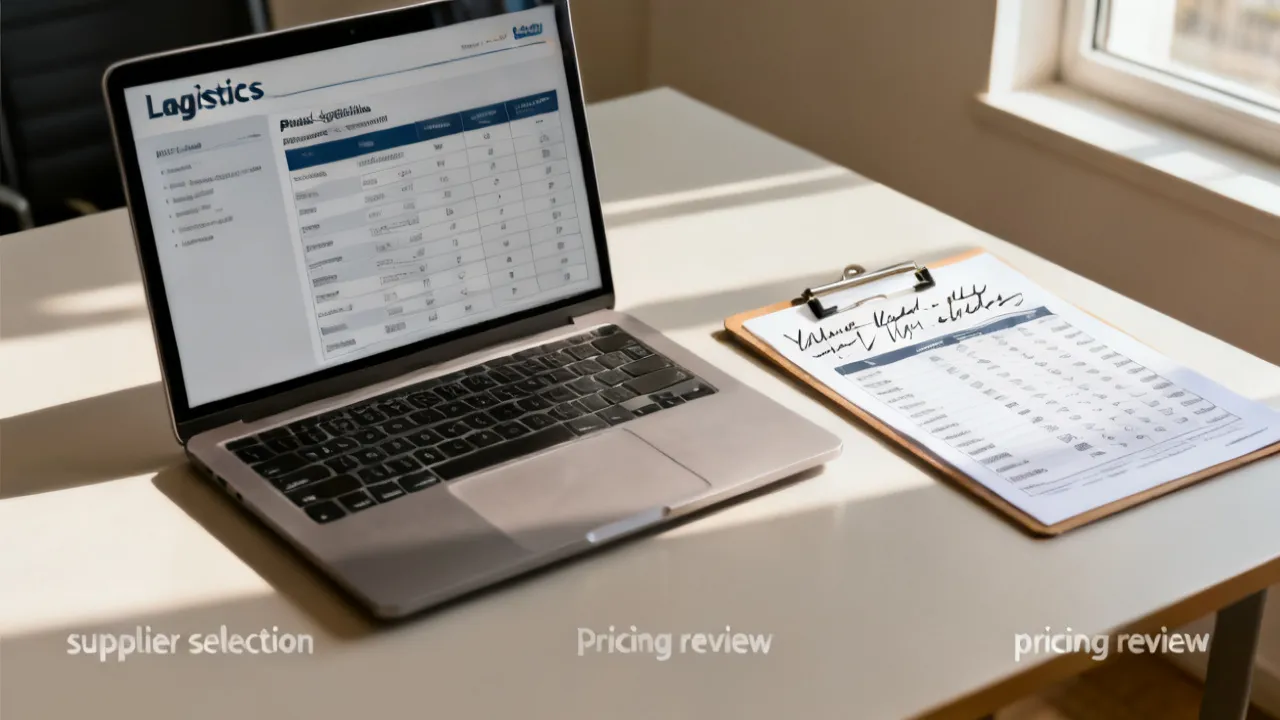
If you’re handling procurement tied to 123456, the most effective way to proceed is to treat pricing and supplier selection as a documentation-driven workflow—starting with exact requirements, then validating supplier capability, and only then comparing cost. In practice, “supplier details” and “price” should be evaluated as parts of a single decision system: lead time, compliance, traceability, tolerances, tolerances of interpretation, documentation obligations, and total delivery conditions. This guide provides a structured method that helps you interpret supplier offers around 123456 while maintaining objective control over risk and scope creep.
Because procurement disputes often originate in mismatched expectations—e.g., unclear scope, incomplete specs, inconsistent terms, unclear acceptance responsibilities, or incomplete documentation delivery—your goal should be to confirm: (1) what exactly is being supplied for 123456, (2) under what commercial and technical conditions, and (3) how supplier performance is evidenced and will be measured. The sections below lay out a practical framework suitable for procurement teams, technical reviewers, compliance specialists, and project managers working on sourcing decisions associated with 123456.
Throughout this guide, the emphasis is on turning ambiguous “quotes” into comparable offers, and turning “supplier claims” into auditable evidence. If done correctly, your team can move quickly while still protecting timelines, budget, and quality outcomes.
Keywords in context: what “supplier” and “price” mean for 123456-related sourcing
Although the keywords you provided do not include explicit product names, the procurement concepts are consistent across industries. When stakeholders reference supplier details and price alongside an identifier like 123456, they typically mean the following:
- Supplier details: the factual record of who will supply—legal entity, production capacity, certifications relevant to the product category, quality processes, delivery reliability, insurance coverage (where relevant), escalation mechanisms, and documented experience. It also includes organizational capability to maintain consistent configuration over time (i.e., the supplier’s ability to “stay the same” across multiple shipments for the same identifier 123456).
- Price: the commercial terms for the specified deliverable, usually including unit pricing, packaging costs (if applicable), logistics, payment terms, any recurring or one-time fees tied to 123456, and importantly the structure of cost adjustments (indexation, remeasurement, rush fees, or changes due to materials or exchange rates). It should also reflect what is and is not included (for example, whether inspection is performed by the supplier or by you, whether shipping is Incoterms-based, and whether documentation is included without extra charge).
- Associated identifiers (e.g., 123456): a reference used in catalogs, quotations, internal part numbering, ERP systems, or procurement tracking. The identifier matters because it should map to a precise technical specification and commercial scope. In many failed procurements, the identifier is treated as “self-explanatory,” but it is not: you must confirm which specification revision and configuration the identifier represents.
In objective procurement practice, price should never be interpreted without the accompanying supplier details, because cost differences may reflect differences in quality assurance, tolerances, inspection method, traceability depth, packaging standards, calibration practices, acceptance tests, or delivery commitments. A “cheap” quote can become expensive if documentation arrives late, if the supplier’s inspection method differs from your acceptance criteria, or if the contract leaves you with the burden of rework or partial replacement.
Conversely, an expensive quote can be cheaper in total delivered terms if it includes better documentation, stronger warranty/returns coverage, shorter lead time, and reduced likelihood of nonconformance. Therefore, the goal is not to find the “lowest number,” but to determine the most reliable total outcome for your 123456 requirements.
Inverted pyramid insight: the top reasons procurement around 123456 fails (and how to prevent it)
Most problems in sourcing are preventable. For decisions involving 123456, the highest-impact failure points generally include:
- Specification ambiguity: the identifier is used, but the technical document set is incomplete, outdated, or not clearly mapped. Result: rework, returns, delayed acceptance, and renegotiation. Prevention: enforce a “spec-to-quote mapping” rule and tie each quote to a specific revision (e.g., drawing revision, standard edition, or internal specification version) associated with 123456.
- Inconsistent interpretation of “scope”: one party assumes supply-only; another assumes installation, commissioning, testing support, training, calibration, or documentation deliverables. Result: disputes and schedule slippage. Prevention: define scope in deliverable terms: what is being shipped, what is being tested, which party performs which tests, what documentation is included, and what constitutes acceptance.
- Unverified supplier capability: supplier claims are not supported by relevant evidence (process control, testing records, calibration certificates, traceability procedures, or compliance documentation). Result: quality failures discovered after shipment and acceptance. Prevention: require objective evidence that matches acceptance criteria for 123456.
- Price evaluated without terms analysis: unit price looks favorable but total cost of ownership rises due to shipping, lead-time penalties, warranty limitations, nonconformance handling gaps, restrictive return policies, or hidden documentation fees. Prevention: normalize price into a “total delivered cost” that accounts for terms, responsibilities, and acceptance risk.
- Weak change control: when specs evolve, commercial and technical documents are not updated under controlled governance. Result: mismatch between what you think you ordered and what you receive. Prevention: build explicit change control triggers into the contract: drawing revision changes, standard updates, material substitutions, process changes, and documentation revisions must follow a defined approval path.
- Acceptance criteria not executable: acceptance tests are described vaguely (e.g., “comply with spec,” “inspection by buyer,” or “meet requirements”) without describing the exact tests, sampling plan, tolerance thresholds, and evidence to be provided. Result: disputes about whether the goods are acceptable. Prevention: convert acceptance statements into executable criteria: test methods, pass/fail thresholds, sampling rules, and documentation deliverables.
- Documentation gaps at the point of delivery: certificates/test reports/pack lists arrive late, in incomplete form, or lack traceability links. Result: you cannot close receiving, cannot perform downstream compliance, or cannot activate production release. Prevention: list the documentation and its timing explicitly (e.g., “to be provided with each shipment” vs “within 10 days”).
To prevent these issues, the procurement workflow must connect supplier details directly to the acceptance criteria tied to 123456. If you treat “supplier” and “price” as separate checklists, you often miss their interaction: cheaper pricing might rely on reduced inspection effort by the supplier, which increases your receiving burden and creates acceptance uncertainty.
The guide later includes comparison logic and a requirements checklist presented in a way you can use immediately.
Step-by-step expert procurement approach for evaluating price tied to 123456
From an industry perspective, the most reliable sourcing process uses a controlled sequence. Below is an expert-grade flow that a procurement lead and a technical owner can execute together. You can run it as a formal gate process (e.g., Gate 1: Requirement confirmation, Gate 2: Supplier capability validation, Gate 3: Commercial normalization, Gate 4: Award readiness).
1) Define the deliverable precisely (the “what” behind 123456)
Start by turning 123456 into a concrete specification package. Your documentation should identify:
- Exact item definition or service scope corresponding to the identifier. For example: is 123456 the “part number,” a “model family,” a “configuration option,” or a “standardized kit”? Each interpretation changes what suppliers think they must deliver.
- Technical requirements: dimensions, materials, standards, tolerances, test requirements, and inspection method. Include the specification revision and any referenced standards (edition/date).
- Acceptance criteria: what constitutes “passing” and how evidence is provided. Define pass/fail thresholds and whether acceptance is based on 100% inspection, sampling, third-party verification, or test results.
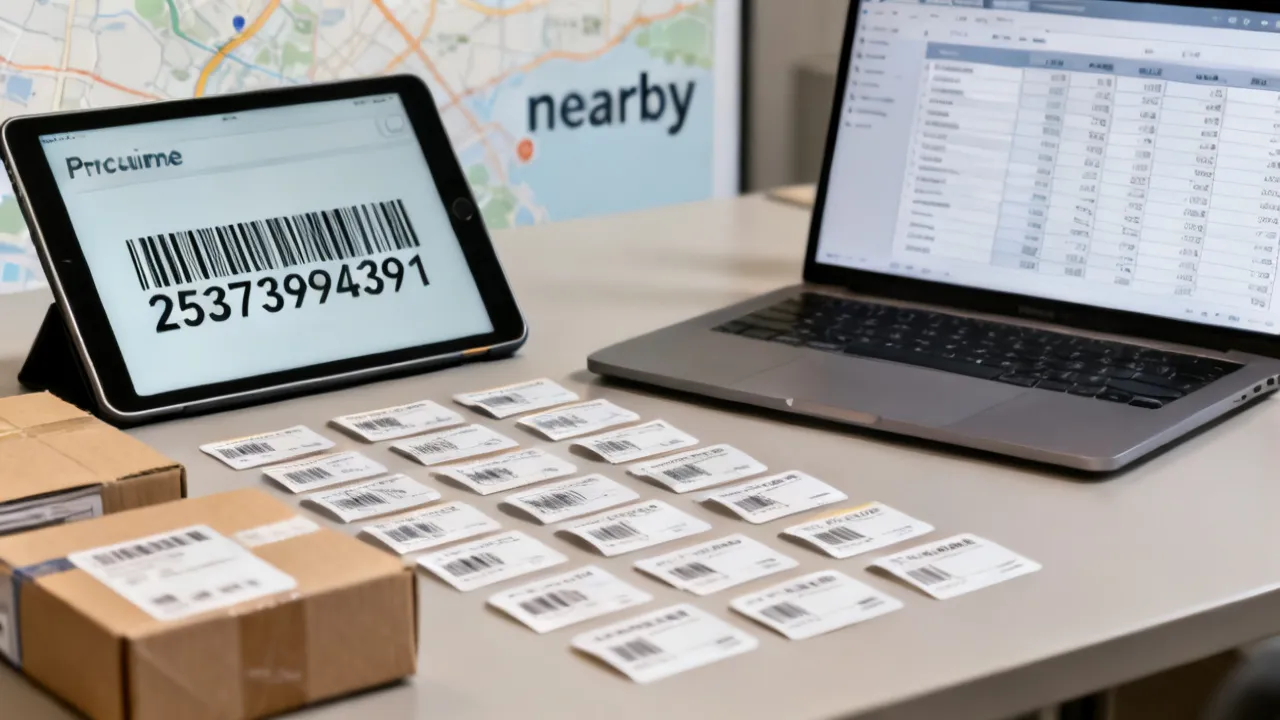
- Packaging and labeling requirements, if applicable: unit packaging, bulk packaging, labeling format, barcodes/serial numbers, compliance labeling, and any preservation/storage requirements (e.g., humidity protection, anti-corrosion requirements).
- Regulatory or compliance expectations relevant to your industry category (e.g., RoHS/REACH declarations, material declarations, sector certifications). If compliance depends on supplier documentation, specify those forms and timing.
- Traceability expectations: what traceability level you need (batch-level, serial-level, lot-to-lot mapping), and whether labels must match certificates.
If the specification cannot be expressed unambiguously, price comparisons become misleading—because the quotations are likely not comparing like-for-like. In that situation, the correct action is not to “pick the lowest price,” but to resolve ambiguity before requesting or awarding.
A useful discipline is to create a “requirements-to-quote” mapping template. For each requirement line item in the spec, require suppliers to indicate: (a) how they meet it, (b) what evidence they will provide, and (c) whether anything is excluded or assumed. This turns later acceptance disputes into earlier clarification.
2) Validate supplier details through evidence, not statements
Next, verify supplier details using objective evidence. A supplier’s submitted information should be reviewed for:
- Quality management practices: process documentation and inspection plans relevant to the work. For manufacturing, look for evidence of controlled processes: work instructions, calibration records, inspection standards, and nonconformance prevention approach (e.g., root cause analysis methods).
- Test and traceability evidence appropriate for the product category. This includes what tests they perform, what sampling plan they use, and how results are recorded. Also verify whether they can provide traceability to the batch/lot/serial numbers you need for downstream acceptance or compliance.
- Capacity and lead-time realism, supported by prior delivery performance or production planning artifacts. Evaluate whether their capacity is “claimed” or supported by schedules, current workload, and demonstrated delivery reliability.
- Clear named points of responsibility: commercial contacts and technical points of contact. Include escalation paths and expected response times for technical questions, NCRs (nonconforming reports), or clarification of documentation.
- Configuration control capability: evidence that the supplier can maintain the same configuration for 123456 across production runs (e.g., controlled change management, approved substitutions, and formal notification processes).
- Compliance/assurance maturity: relevant certifications and whether they are current and applicable to the scope being quoted.
Where available, request documentation that ties directly to your acceptance criteria for the 123456 deliverable. This prevents gaps between what the supplier can do and what you need. For instance, if your acceptance requires measurement of a specific parameter, do not accept a certificate that only reports a different parameter. Require the right test data.
You can also validate through “evidence of behavior,” not only documents. For example:
- Review the supplier’s historical nonconformance patterns for similar parts or deliverables (if your organization has access to those data).
- Conduct a technical call that includes document walkthroughs: ask the supplier to show an example of the exact test report format they will provide for 123456, including how they reference your relevant drawing/specification revision.
- Assess how they handle deviations: what they do if a test fails, whether they can hold/rework, and how they communicate nonconformance.
All of these are “supplier details” in practice: they reveal the supplier’s ability to deliver not only the product, but also the evidence you require to accept it.
3) Decompose “price” into total delivered cost components
To evaluate price objectively, treat it as more than a unit number. In practical procurement, cost typically comprises:
- Unit cost for the defined scope. Confirm whether the unit basis is per piece, per set, per pack, per batch, or per service bundle.
- Logistics (shipping method, insurance, handling, and any special delivery conditions). Also confirm whether the quote specifies an Incoterms term (e.g., EXW, FOB, CIF, DDP) and when risk transfers.
- Inspection and testing fees (if separate or included). Clarify whether supplier inspection is performed before shipment, whether buyer inspection is additional, and whether sample testing is included.
- Packaging and labeling requirements (often overlooked but can materially change cost). Confirm carton labeling, barcode printing, and any required protective materials.
- Commercial terms like payment schedule, warranty, service-level commitments, and whether costs accrue for rework or expedited replacement.
- Documentation costs: often hidden. Confirm whether required documentation (certificates, test reports, material declarations, packing lists) is included in the price and whether there are charges for special formats or re-issuance.
- Change control cost structure: if specs change, does the supplier charge for re-validation, rework, or documentation updates?
When you compare proposals for 123456, you should normalize these components so each quotation reflects the same “delivered” definition. Otherwise, a lower unit price may hide higher total cost.
A practical method is to create a “Total Delivered Cost (TDC)” worksheet for each quote. The TDC worksheet should explicitly list assumptions: shipping lane, incoterms, packaging type, documentation delivery timing, inspection responsibility, warranty scope, and acceptance process. The goal is to compare like-for-like by controlling assumptions.
Where quotes differ in assumptions, you either (a) reject the quote as non-comparable, or (b) adjust the quotes to reflect your agreed assumptions and clearly document the adjustment method. In either case, the comparison becomes auditable.
4) Check commercial and contractual terms before selecting
Even strong supplier details cannot compensate for weak terms. Review:
- Warranty/returns process and responsibility for nonconformance. Identify what qualifies as nonconformance and the remedies available: repair, replacement, refund, credit, or payback for downstream costs.
- Lead-time structure: production lead time vs. shipping time vs. acceptance lead time. Ensure you understand what triggers production start (e.g., receipt of purchase order, approved drawings, payment of deposits) and whether lead times include documentation generation.
- Change control approach: how specification changes are handled, including pricing impact, notification timelines, and approval authority.
- Liability boundaries and escalation paths: who is responsible for what costs if goods fail acceptance or if documentation is missing or incorrect. Ensure there is a dispute resolution path with defined timeframes.
- Documentation delivery: which files (certificates, test reports, pack lists) must be provided upon shipment or acceptance, and in what format (PDF, XML, hard copy, electronic system upload).
- Acceptance window: define the time allowed for receiving inspection and whether acceptance can be delayed due to missing documents.
- Force majeure and risk: how the contract addresses delays and what happens if shipping is disrupted; confirm that penalties or remedies are aligned with your risk appetite.
These items directly affect whether price remains stable or changes during the project lifecycle. A quote with low unit price but weak remedies for nonconformance can be a financial risk because the cost of quality failures may shift onto you.
Another commonly missed commercial detail is whether the supplier reserves the right to make substitutions without approval. Substitutions can be acceptable if managed properly, but they should require formal notification and approval when they affect performance, compliance, traceability, or documentation linked to 123456.
5) Reduce risk with controlled trials or pilot acceptance (when feasible)
For unfamiliar suppliers or critical 123456-linked deliverables, consider a controlled trial. A pilot can confirm:
- Whether the supplier’s production output meets your acceptance criteria, including real tolerances and measurement approaches.
- Whether lead-time assumptions are realistic and reproducible under conditions similar to your order.
- Whether documentation delivered by the supplier supports acceptance processes (correct formats, traceability alignment, test report completeness).
Where trials are not feasible, you can still reduce risk through stricter inspection and documentary requirements in the initial purchase order. For example:
- Require enhanced receiving inspection for the first lot (e.g., increased sampling, additional tests, or independent verification of key parameters).
- Require full documentation review before release to production or shipment to downstream users.
- Set explicit “hold points” if the supplier’s documentation does not meet criteria.
Critically, pilot results should be integrated into the contracting strategy. If the pilot fails, you should decide quickly whether to (a) correct and re-test, (b) negotiate remediation pricing, or (c) switch suppliers. Delaying the decision can convert a solvable issue into a schedule crisis.
Comparison table: how to choose among supplier/price proposals for 123456
The table below converts typical “additional important information” into a structured comparison you can apply immediately. It is designed to support objective evaluation—without depending on promotional claims. To strengthen its use, assign each evaluation dimension a weighting based on criticality (e.g., compliance might outweigh minor cost differences).
| Evaluation dimension | What to request or verify (objective requirements) | How to compare across suppliers for 123456 |
|---|---|---|
| Specification alignment | Written technical spec mapping for the 123456 deliverable; acceptance criteria; required standards; explicit specification revision references | Confirm each quote covers the same scope and tests; reject incomplete mappings; score alignment completeness and revision matching |
| Quality evidence | Inspection plan, traceability approach, relevant documentation for your acceptance method, calibration/test equipment evidence (as applicable) | Score evidence completeness and relevance to the defined acceptance criteria; verify traceability data fields match your needs |
| Commercial clarity | Full pricing breakdown; payment terms; warranty/returns terms; change control clause summary; documentation inclusion and any re-issuance fees | Normalize “total delivered cost” and ensure terms are comparable across quotes; document any adjustments |
| Lead time realism | Production lead time + shipping method; confirmation of start conditions; capacity constraints; lead time includes documentation readiness (or not) | Compare lead times with consistent assumptions (e.g., order start triggers); assess confidence level based on evidence |
| Delivery conditions | Packaging requirements, labeling, documentation timeline, and acceptance window; Incoterms and risk transfer details | Verify each quote includes the same delivery and documentation requirements; ensure packaging and labeling scope is identical |
| Risk controls | Pilot/initial inspection plan (if applicable); nonconformance handling process; remediation timelines; replacement/repair remedies | Choose suppliers whose risk controls match the criticality of 123456 deliverables; score remediation practicality |
| Supplier responsiveness | Named contacts; documented escalation; ability to answer technical questions within deadlines; willingness to clarify spec mapping | Assess responsiveness against your internal governance timelines (e.g., RFI turnaround, doc turnaround); verify commitments in writing |
To make the table actionable, you can add a “Pass/Fail gate” column for each dimension. For example: if a supplier cannot provide traceability documentation that matches your acceptance method, the quote fails regardless of price. Similarly, if a quote does not include the required warranty/returns terms, the procurement team can treat it as non-comparable or unacceptable.
Conditions and requirements for using this evaluation method
- Documentation availability: you must be able to obtain technical and commercial documentation before making a final decision for 123456. If you cannot, decisions should be postponed or made with explicit risk acceptance and mitigation.
- Normalization rule: compare quotations only after decomposing price into equivalent delivery and acceptance scope. No normalization means no fair comparison.
- Acceptance criteria must exist: ensure acceptance tests and evidence requirements are defined up front. Otherwise, you will evaluate supplier outputs using subjective judgment after delivery.
- Change control must be explicit: any revision to specifications for 123456 should trigger a governed commercial review, including how pricing and documentation responsibilities change.
- Comparable Incoterms and logistics: ensure shipping responsibilities and risk transfer points are understood. Without this, “cheaper” quotes can become expensive due to insurance, customs, and handling charges.
- Documentation timing clarity: define when documentation must be delivered relative to shipment or acceptance. Missing documents can block acceptance and create operational downtime.
Reliable context: what authoritative procurement guidance says about risk and documentation
Procurement best practices emphasize alignment between requirements, risk management, and contract clarity. For additional background, organizations such as the ISO family and widely used procurement guidance (e.g., frameworks used by public procurement authorities) stress traceability, documented requirements, and controlled acceptance processes. While this guide does not claim industry performance metrics tied to your specific identifier 123456, the underlying risk logic is consistent across regulated and non-regulated purchasing environments: decisions improve when specifications, evidence, and terms are explicit before ordering.
In practice, many organizations treat documentation as a compliance overhead. That mindset is counterproductive for projects tied to parts and services identified by numbers like 123456. Documentation is not merely “paper”: it is how you can verify conformity, close receiving, support downstream compliance, and enforce contractual remedies.
If you need a formal reference for your organization’s procurement policy, align your internal checklist with the relevant quality and documentation standards applicable to your sector (e.g., ISO-based quality practices or sector-specific regulatory requirements). Additionally, ensure your procurement governance includes:
- Clear responsibilities across procurement, engineering, quality, and compliance. Each group should own a part of the decision evidence.
- Defined acceptance sign-offs. Who signs off on technical acceptance, and who signs off on commercial acceptance?
- Contract change governance. Who approves deviations, substitutions, and spec changes?
- Auditability of the sourcing decision. Can you explain why you selected a supplier and why you accepted their offer?
When these governance elements exist, teams can evaluate supplier pricing with confidence because the evaluation method is consistent, documented, and repeatable.
Deep dive: translating “supplier details” into decision evidence for 123456
Supplier details often appear as a list of certifications and a marketing narrative. For rigorous procurement, you need supplier details translated into evidence that answers specific questions tied to 123456. Below are common evidence categories and why they matter for acceptance and cost stability.
Organizational and legal clarity
Begin with basic supplier facts: the legal entity name, contract signatory authority, and whether the supplier is acting as a manufacturer, authorized distributor, or reseller. For 123456, this matters because traceability may flow from manufacturer to distributor, and documentation may be created by different entities.
If a reseller provides a quote, ask whether they will be able to supply the exact same configuration and documentation you require. Ask whether the manufacturer will support the documentation and warranty directly or whether the reseller’s warranty is limited.
Configuration control and documentation consistency
For parts indexed by an identifier like 123456, “same part number” does not always mean “same configuration.” Suppliers may use the identifier to represent a family of compatible variants. If the technical spec requires exact materials, processes, tolerances, or standards, then supplier details must include how configuration is controlled.
Request:
- Evidence of change control (how substitutions are approved, how the supplier notifies customers of changes, and how those changes affect product performance).
- Evidence of document control (drawing revision control, versioned test reports, and traceability links to revision identifiers).
- Evidence that the supplier can repeat production to the same configuration across multiple shipments.
Quality systems and inspection readiness
Quality system certifications (e.g., ISO-based) can be useful indicators, but procurement should treat them as supporting evidence rather than proof. The most decisive evidence is often the inspection plan and how the supplier performs acceptance-related tests.
Specifically for 123456, ask whether their inspection plan matches your acceptance criteria. If your acceptance includes a specific measurement, verify that their inspection plan measures that property and that they use calibrated instruments (where measurement is required for acceptance).
Also ask how the supplier handles nonconformance. If their process includes rework, does it require re-testing? Are test results reported per lot? Are deviations documented in a way you can review?
Traceability and data integrity
Traceability is frequently underestimated until the moment you need it. Supplier details should specify:
- What traceability link exists (serial number, batch/lot number, heat number, or manufacturing date code).
- How labels on packaging correspond to the documentation and test reports.
- How the supplier prevents mislabeling and ensures data integrity.
If the supplier cannot provide traceability down to the level required by your acceptance or compliance obligations, your risk of rejection and downstream compliance failures rises. In such cases, price differences may be irrelevant: the supplier is non-compliant with the evidence expectations tied to 123456.
Logistics readiness and delivery predictability
Supplier details also include their ability to deliver on schedule and to deliver in a condition suitable for acceptance. Ask about:
- Packaging effectiveness for protecting against shipping damage or degradation.
- Documentation readiness timing (e.g., whether certificates are produced before shipment).
- Carrier selection and how shipping risks are managed.
Even if the product is technically correct, poor packaging can cause damage and lead to nonconformance, increasing total cost.
Deep dive: translating “price” into a comparable total outcome for 123456
“Price” is often presented as a unit rate. However, procurement decisions tied to 123456 require decomposing price into components that affect the total delivered outcome. Below is a practical framework to guide normalization.
Unit economics: what is the unit and what is included
Before comparing unit prices, clarify the unit definition. For example, if the quote is per item, confirm whether an “item” includes:
- All components required by the deliverable scope (e.g., kits, accessories, adapters, fasteners, packaging).
- Required documentation per unit, per batch, or per shipment.
- Any required labeling or serialized marking.
A quote can appear cheaper due to smaller unit definitions or missing included elements. This is a prime source of “like-for-like” comparison failures.
Shipping and delivery terms
Logistics can dominate total cost, especially for large shipments or time-critical deliveries. Price normalization requires that you evaluate:
- Incoterms and risk transfer.
- Shipping method and service level (standard vs express).
- Insurance coverage and handling requirements.
- Port/clearance responsibilities (if international shipping applies).
If one supplier quotes EXW and another quotes DDP, the total “delivered” costs are not comparable unless adjusted. Procurement should either require consistent Incoterms or apply a documented adjustment method.
Inspection responsibility and cost of quality
When supplier quotes include inspection, the definition of inspection matters. Ask:
- Does the inspection occur before shipment and is it documented?
- Is the sampling plan included?
- Does the supplier provide inspection data aligned to acceptance criteria?
If the supplier’s “inspection” is only a generic checklist and not the test required by your acceptance criteria, the cost savings may be illusory because you will incur acceptance testing costs and risk delays.
Warranty, remedies, and financial exposure
Warranty terms should be evaluated as part of price. A supplier who offers broader warranty remedies may charge more unit cost but reduce your downstream costs (replacement, rework, line stoppage, penalties). In contrast, narrow warranty terms shift the burden back to you.
When evaluating price tied to 123456, quantify financial exposure where possible:
- Cost of replacement and logistics if nonconformance occurs.
- Cost of rework or testing required on your side.
- Schedule risk cost if acceptance is delayed due to disputes.
Even if you cannot fully quantify risk, you can still compare the contractual remedies and decide which supplier provides the most credible risk allocation for your operational needs.
Documentation pricing and re-issuance
Some suppliers include documentation in the base quote; others treat it as an additional cost. For compliance and acceptance, missing or incorrect documentation can block release and cause operational delays.
To normalize pricing, ensure you understand:
- Whether documentation is included for each shipment or only once.
- Whether updated documentation costs extra if a re-test is required.
- Whether there are fees for re-issuing certificates if data errors occur.
Payment terms and working capital effects
Payment terms can affect the “effective cost” of a quote due to working capital impacts. While you may not want to calculate net present value in every situation, at minimum compare:
- Deposit requirements and refundability.
- Milestone-based invoicing tied to delivery or acceptance.
- Payment cycle length and any discount offered for early payment.
These details are not always critical, but for high-value or long lead time procurements, they can materially affect total cost and internal budgeting.
Advanced technique: scoring models that still remain defensible
Many teams try to use scoring models (“quality = 60%, price = 40%”), but they often fail because scoring becomes subjective or because “price” is not normalized. A defensible scoring model for 123456 should combine both evidence-based pass/fail gates and weighted scoring.
For example:
- Gate 1 (Non-negotiable): specification mapping must be complete; traceability requirements must be met; warranty/returns must include required remedies.
- Gate 2 (Comparable normalization): quotes must be normalized to the same delivered scope and documentation timing.
- Gate 3 (Weighted scoring): after normalization, apply weighted scores to remaining comparable criteria such as lead time confidence, documentation quality completeness, and risk controls.
This approach prevents “low price wins” from being a hidden cost trap, and prevents “best quality claims” from being used without evidence.
Handling exceptions and partial compliance for 123456
Not all procurement situations allow perfect alignment. Sometimes suppliers cannot meet a requirement exactly; they may offer alternatives. For 123456-linked sourcing, exceptions must be handled carefully so they do not become silent scope reductions.
When a supplier proposes an exception, require:
- Written exception description linked to the exact specification clause or requirement.
- Impact assessment: performance impact, compliance impact, acceptance test impact, and traceability impact.
- Approval workflow: who can approve the exception and under what conditions.
- Commercial adjustment if the exception reduces cost or scope. If the exception increases risk, require pricing compensation via credit or reduced payment schedule.
Without explicit exception documentation and approval, exceptions tend to surface later during acceptance, when they are most disruptive and most expensive.
Risk management during the order lifecycle: from award to acceptance
Even the best procurement decision can fail if execution is weak. For 123456, define risk management tasks that correspond to the evidence you relied on at award time.
Pre-shipment controls
Before shipment, verify that supplier documentation is available and matches the shipment. Controls may include:
- Documentation checklist completion (certificates, test reports, packing lists).
- Verification that labels and serial numbers/batch numbers match documentation.
- Confirmation of inspection dates and test results for the correct production run.
During shipment controls
Shipping changes can introduce risk. Ensure you understand:
- Carrier and routing: if the supplier changes the carrier, does that affect insurance or packaging needs?
- Handling conditions: storage temperature/humidity controls if relevant.
- Tracking and status updates: do they provide tracking within a defined timeframe?
Receiving and acceptance controls
Receiving should be designed to avoid “late disputes.” If documentation is missing or incorrect, define the acceptance status (e.g., reject, hold, conditional acceptance) and who approves release to internal systems.
Also define what happens if tests fail:
- Is the shipment rejected immediately?
- Is there a re-test procedure?
- What are the timelines for supplier remediation and data correction?
These should be contractually and procedurally defined so outcomes are predictable.
How to conduct supplier Q&A effectively for 123456
Supplier Q&A is not just clarification—it is part of evidence collection. Poorly structured Q&A wastes time and allows misunderstandings to persist. For 123456, your Q&A should be evidence-oriented.
A practical Q&A strategy:
- Start with a requirements list: ask suppliers to confirm each requirement clause and specify how they meet it.
- Ask for document samples: request example certificates and test report formats showing traceability and revision references.
- Ask about exceptions: if something cannot be met, require a written exception with impact and risk mitigation.
- Ask about documentation timing: clarify when documents will be delivered relative to shipment.
- Ask about lead-time triggers: confirm when production begins and whether lead time includes documentation readiness.
The output should be a consolidated “supplier offer clarification record” that you can keep for audit and internal approval justification.
Common pitfalls even after you think you’re done
Many teams believe they’re safe once they’ve selected a supplier. But failures often occur due to subtle pitfalls.
- Buying based on the quotation PDF, not the defined scope: ensure the purchase order references the mapped specification and revision.
- Not updating the ERP/part mapping for 123456: if internal systems map 123456 to the wrong spec revision, you might order the wrong deliverable even with a correct supplier quote.
- Not aligning acceptance responsibility: clarify whether supplier inspection is advisory or acceptance evidence, and what your receiving inspectors will do.
- Assuming documentation will match: verify that document naming conventions, certificate formats, and traceability fields match your acceptance process.
- Underestimating change orders: if specs evolve, ensure change control triggers and pricing/lead time adjustments are governed.
These pitfalls are preventable if your procurement process treats scope, evidence, and contract terms as a connected system rather than isolated checklists.
FAQs
How should I interpret “123456” when comparing supplier quotes?
Treat 123456 as an identifier that must map to a precise technical specification and scope. Ask for a written specification mapping and acceptance criteria so each proposal reflects the same deliverable. Confirm which specification revision and configuration the identifier represents, and require evidence that the supplier will deliver that specific configuration.
What does “price” include in an objective procurement comparison?
Price should be decomposed into at least unit cost plus total delivered cost components relevant to your scope—such as logistics, packaging, inspection/testing responsibilities, documentation delivery, and any warranty or service-related terms. Compare only after normalizing quotes to equivalent delivered scope and responsibilities.
Which supplier details matter most during supplier selection?
The most important supplier details are those that directly support your acceptance criteria: quality evidence, traceability approach, compliance documentation relevant to the item category, realistic lead-time assumptions, clear delivery/documentation responsibilities, and demonstrated configuration control for the 123456 deliverable.
How can I reduce risk if I can’t run a pilot for 123456?
Strengthen nonconformance handling requirements, request stricter initial inspection/documentation delivery, define acceptance windows clearly, and ensure change control is contractually enforceable. Also consider enhanced receiving inspection for the first lot and require full traceability documentation before acceptance release.
Should I pick the lowest quoted price for 123456?
Not by default. Lowest price can be misleading if scope, inspection responsibility, warranty terms, documentation delivery, or traceability depth differ. Normalize quotes to the same delivered definition and compare total cost of quality and delivery risk, supported by evidence and contract remedies.
What should be included in the purchase order to avoid disputes?
Include the mapped specification for 123456, acceptance criteria, required documentation (certificates/test reports/pack lists), delivery and packaging requirements, lead-time structure and triggers, warranty/returns process, explicit change control terms, and documentation timing requirements (what is delivered with shipment vs. after). Also include clear nonconformance and remediation timelines.
Final checklist: a practical closing for 123456 sourcing decisions
Before you finalize supplier selection tied to 123456, ensure the decision is grounded in evidence: exact scope, verified supplier details, normalized total delivered cost, and explicit acceptance requirements. When these elements align, pricing becomes a meaningful comparison rather than a guess—and your project is far less likely to encounter avoidable delays, acceptance disputes, or scope creep.
To close confidently, confirm internally (before award) that: (1) every requirement in the mapped specification has an identified supplier response and evidence obligation, (2) every cost component in the normalized pricing worksheet matches an included scope element or a clearly excluded item, and (3) your contract and purchase order documents contain the acceptance, documentation, and change control language needed to enforce those expectations after delivery.
-

A Guide to Cost-Efficient Small Electric Cars for Seniors
-
Mastering Debt Consolidation: Boost Your Credit Score and Manage Interest Rates
-
Your Guide to Loans, Credit Checks, and Interest Rates
-
Affordable Independent Living: Finding the Right Senior Housing
-
Guide to Senior Living Apartments: Affordable and Comfortable Environments