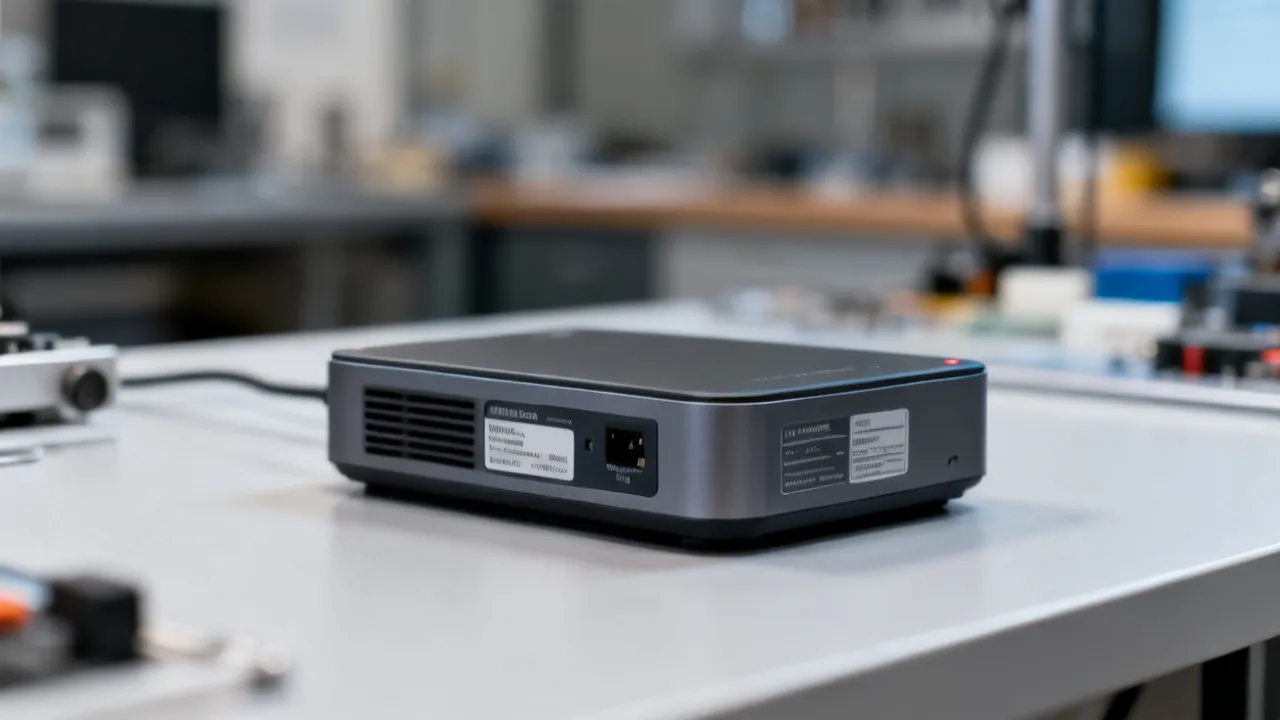
Understanding Pix18996459094 and Supplier Sourcing
This guide explains how to evaluate “Pix18996459094” and related sourcing details to make reliable procurement decisions. Objectively, the keyword refers to an item identifier used in inventory and purchase workflows. We outline practical selection criteria—documentation, price consistency, supplier verification, and quality control—then provide a comparison table, a step-by-step due-diligence workflow, and clear FAQs for procurement teams.
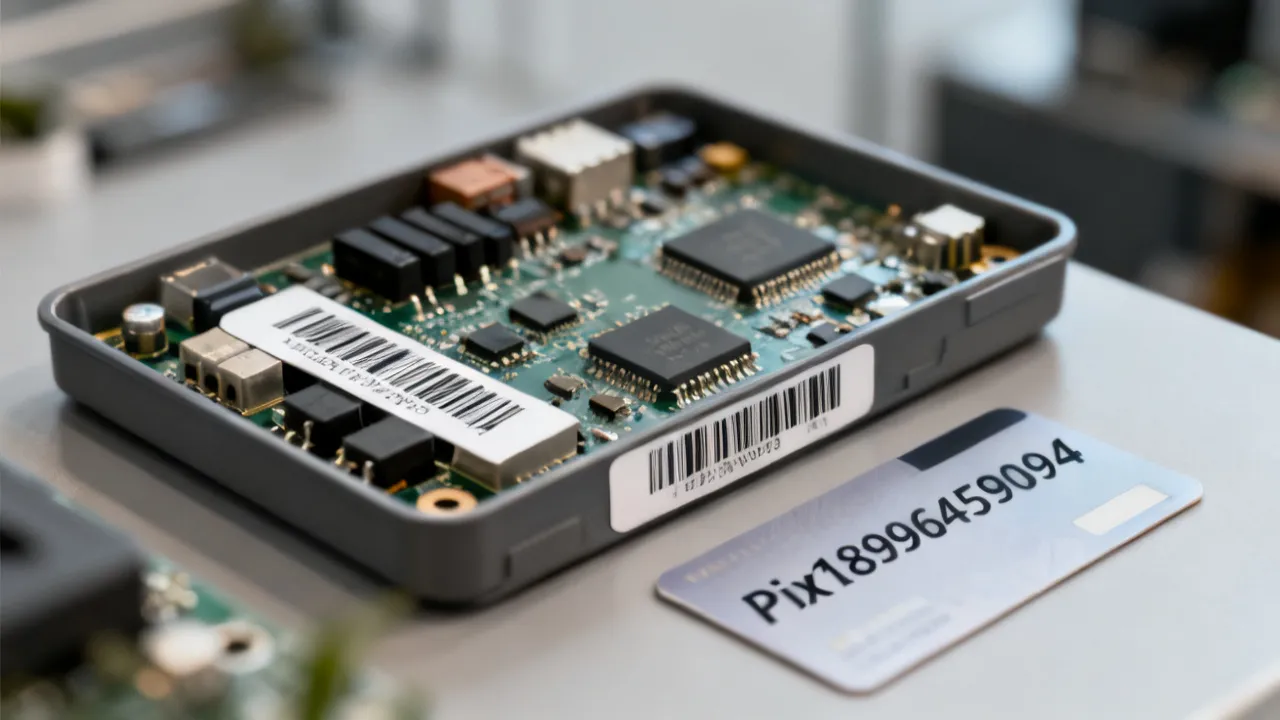
Key Takeaway: Validate Pix18996459094 Before You Buy
When you see Pix18996459094 in an inquiry, it usually signals a specific stock-keeping reference inside procurement, inventory, or fulfillment systems. The very important action is to verify that the exact item matching Pix18996459094—including specifications, packaging, revision level, and compatibility—matches what your project requires. In parallel, you should assess the supplier details, confirm price information for your quantities and delivery terms, and document quality expectations before placing an order.
In practice, organizations run into trouble when the procurement process treats an identifier like Pix18996459094 as the complete truth of an item’s characteristics. But identifiers are frequently used to streamline transactions; they are not inherently a substitute for engineering verification, quality documentation review, or commercial due diligence. The correct workflow is to treat the identifier as a starting point and then validate the rest of the chain of information that proves what is actually being delivered.
That is why the core instruction is to validate Pix18996459094 before purchase, and not only at the moment of order. Validation should be continuous: first at quote comparison, again at purchase order creation, and finally at receiving inspection. When you do this consistently, you reduce the risk of delays, returns, rework, warranty claims, and even safety or compliance issues.
What Pix18996459094 Typically Represents (Objective Background)
Pix18996459094 looks like an alphanumeric identifier often used to organize product records. Identifiers like this commonly appear in:
- warehouse catalogs and goods-receipt systems,
- purchase orders and line-item descriptions,
- packing lists for controlled or traceable goods,
- traceability records for audits and warranty claims.
From an objective standpoint, identifiers help reduce ambiguity, but they also create risk if the receiving party assumes the code alone guarantees technical equivalence. In practice, the correct match depends on the accompanying technical description, datasheet revision, and any configured options.
To expand on that “accompanying technical description” point: many modern products—especially electronics, industrial components, and parts used in regulated environments—exist in multiple revisions. A single SKU might remain constant across a family of variants, while the meaningful differences live in revision fields, configuration codes, or accessory lists. Sometimes the supplier uses the same SKU while shipping different internal revisions when their manufacturing process changes or when their inventory includes mixed lots. That doesn’t always happen, but it is a known failure mode in supply chains.
Even if your vendor states that Pix18996459094 is the correct item, you must verify what “correct” means in your context. Correct could mean electrical characteristics, firmware compatibility, mechanical dimensions, software version support, packaging requirements for ESD protection, labeling requirements, or compliance documentation. Without verifying those attributes, you may inadvertently purchase a similar but not identical variant.
Why Price Information Requires Context, Not Just a Number
“Price information” in procurement can be misleading when it is not paired with terms like minimum order quantity (MOQ), lead time, shipping mode, taxes, and warranty/returns conditions. Even if two offers both mention Pix18996459094, differences in packaging, quality grade, or test documentation can change the real cost of ownership.
For an evidence-based approach, procurement teams often follow a “total procurement cost” mindset. For example, the OECD notes that stronger due diligence and supply-chain transparency improve risk management outcomes in commercial sourcing contexts (see OECD due diligence guidance on responsible business conduct). While that guidance isn’t pricing data per se, it supports the principle: do not evaluate offers in isolation.
To make the point more concrete, consider typical hidden cost categories that can turn a cheaper unit price into a more expensive purchase overall:
- Inspection and acceptance labor: If one supplier provides better documentation (or pre-test results), you may spend less time validating items upon arrival.
- Return shipping and restocking: If the wrong revision or incompatible configuration is shipped, the cost of returns can exceed the original savings.
- Schedule impact: In manufacturing projects, delays can cause downstream downtime, overtime, expedite freight, or customer penalties.
- Rework and integration time: When parts require reconfiguration, replacement of connectors/cables, or software adjustment, the cost often dwarfs the unit price difference.
- Warranty and liability allocation: Some suppliers provide clearer warranty terms and quicker resolution pathways; others may limit coverage or impose burdensome claim requirements.
So when comparing price information for Pix18996459094, procurement should compare like-for-like. That means ensuring both quotes include the same:
- unit price basis (per piece, per reel, per module, per kit),
- MOQ and whether price breaks apply to your order quantity,
- lead time assumptions (manufacturing time vs. stock availability),
- incoterms (EXW, FOB, CIF, DDP, etc.),
- shipping method and expected transit risk,
- warranty length and what it covers,
- documentation included (datasheets, test certificates, compliance certificates),
- packaging requirements (ESD bags, moisture barrier bags, labeling format).
In addition, consider whether the quoted price assumes acceptance of “as-is” condition or whether it includes a test/inspection service. For example, one supplier might quote a low price but only after refusing additional verification or acceptance criteria. If your project requires traceability or performance verification, the “cheaper” quote may not be cheaper when you add the cost of additional testing or risk mitigation.
Supplier Details Matter: Verification Over Assumptions
Supplier details—such as legal entity name, distribution authority, return policy, documentation quality, and past fulfillment performance—are frequently more predictive of downstream problems than the visible line-item identifier. With Pix18996459094, treat the identifier as a starting point, not a guarantee.
An industry expert’s lens is simple: reduce uncertainty early. That means confirming whether the supplier is acting as a manufacturer, authorized distributor, or reseller, and whether they can provide supporting documentation that ties the identifier to the exact physical item.
To expand on “supplier details,” it helps to understand that the identifier is only one data point. Procurement risk often concentrates in gaps between what suppliers claim and what they can prove. That is why you should assess whether the supplier can support the identifier with documents that you can pass to engineering and quality teams.
Key supplier details to confirm for Pix18996459094 include:
- Business identity: Is the seller’s legal entity clearly identified on the quote and invoice? Are contact addresses and payment terms consistent?
- Authorization and channel status: If the product requires authorized distribution to ensure authenticity (or to avoid counterfeit risk), confirm whether they are authorized.
- Quality systems: Do they operate under recognized quality frameworks (e.g., ISO standards) or do they at least provide consistent documentation?
- Documentation process: Can they provide datasheets with revision numbers and test certificates with batch/lot identification?
- Warranty and returns: Are warranty claims clearly defined? Are returns accepted if the received product does not match the documented specification?
- Escalation and turnaround time: If issues occur, how quickly do they respond? Who is the responsible contact?
Many procurement mistakes happen late. For example, a team might purchase based on a quote, then discover that the supplier cannot provide revision-specific documentation. Or a team might receive products but face an unclear warranty claim path. By verifying supplier details early, you ensure you have a practical route to resolution if anything goes wrong.
Quality Control and Documentation: The Practical Bridge Between Identifier and Reality
Procurement specialists know the gap that can exist between a catalog code and the delivered hardware or component. To close that gap, ask for:
- technical datasheets (and revision numbers),
- incoming inspection expectations,
- batch/lot identifiers where relevant,
- photos or documented packaging details tied to Pix18996459094,
- any compliance certificates required by your industry.
Even when an SKU is correct, documentation gaps can create rework costs. That rework cost is often the hidden “price premium” that only appears after delivery.
It can be helpful to treat documentation as part of the product itself. In many projects, documentation is not optional; it is required for acceptance, auditability, or warranty coverage. If you fail to obtain the right documentation at procurement time, you may be forced to spend extra time chasing it later—or you may lose leverage entirely once inventory has been received and consumed in production.
Below are examples of what “documentation you should request” can look like in different categories:
- Electromechanical components: Request drawings/spec sheets, revision-level documentation, and packaging/labeling evidence.
- Electronics: Request datasheets, revision level, handling requirements (ESD, moisture sensitivity), and test reports if needed.
- Industrial parts: Request inspection reports, material certificates, and batch traceability.
- Regulated environments: Request compliance documentation such as relevant certifications, declarations, and evidence supporting traceability.
For Pix18996459094 specifically, ask the supplier to connect the identifier to a precise set of facts. For example, request a statement that explicitly says: “Pix18996459094 corresponds to revision X of the datasheet, batch/lot Y, and includes documents A, B, and C.” That kind of explicit mapping reduces the chance that the identifier is only partially accurate.
Also consider practical receiving documentation. Some teams require suppliers to attach specific labels or documents to the shipment. Others require a packing list that includes batch/lot references. If your receiving process cannot validate without those items, procurement should treat them as non-negotiable line-item requirements.
When “Nearby” Is Mentioned: Handling Location Without Overgeneralization
Your instructions request replacement of any city/country placeholders with “nearby”. In sourcing conversations, “nearby” typically relates to logistics convenience, shorter lead times, or region-specific distribution networks. However, procurement teams should not infer that local suppliers are automatically faster or lower-risk. Instead, confirm:
- estimated lead time under realistic order volumes,
- shipping method and expected transit variability,
- customs responsibilities (if cross-border),
- incoterms used for cost breakdown.
To expand further, “nearby” can be ambiguous unless you define it in measurable terms. A supplier might say they are “nearby” because they operate within the same country or region, but still ship from a different warehouse. Or “nearby” might refer to the seller’s corporate office while the product is actually sourced from a separate inventory location. That difference can matter a lot if you have time-critical needs.
Therefore, when “nearby” is part of your selection criteria, you should translate it into verification steps. Examples include:
- Ask whether the item is in stock in a local warehouse and what the “ready to ship” date is.
- Confirm whether the supplier uses local carriers and what their on-time performance typically looks like.
- Request a lead-time breakdown: processing time vs. shipping time.
- Clarify whether delays due to carrier pickup scheduling are within the supplier’s responsibility.
- If cross-border is possible, specify who handles customs clearance and who bears cost for delays.
In summary: nearby might help, but it must be backed up by data—lead time estimates, stock availability confirmation, and clear delivery terms—before you treat it as a lower-risk choice.
Comparison Table (No Links): Options for Handling Pix18996459094 Sourcing
| Procurement Approach | What You Confirm | Top For | Main Risk If Skipped |
|---|---|---|---|
| Identifier-Only Ordering | Only that Pix18996459094 appears on documents | Low-complexity items with interchangeable specs | Mismatch between code and actual revision/spec |
| Documentation-First Ordering | Datasheet revision, batch/lot info, compliance needs | Engineering projects and regulated environments | Receiving goods that can’t be validated for use |
| Supplier-Verified Ordering | Authorized channel, traceability, return/warranty terms | Higher-value components or long lifecycle systems | Difficulty claiming corrective action after delivery |
| Inspection-Ready Receiving | Defined acceptance criteria before mass use | Production lines requiring consistent quality | Hidden defects causing downtime or scrap |
One way to think about the table is that it represents increasing levels of verification maturity. You can start at a lower level for low-risk items but should consider moving to higher levels as the value, criticality, or regulatory burden of the item increases.
Step-by-Step Due Diligence: A Practical Workflow
The following workflow is designed to help procurement teams treat Pix18996459094 as a verifiable reference in their process, while also aligning with objective supplier evaluation.
Step 1: Capture the full line description
Do not rely solely on “Pix18996459094.” Request the complete description used by the seller (e.g., model name, version, key specs). Store it in your purchase record so that engineering and receiving use the same language.
This step is not just administrative. It prevents “translation errors.” For example, one supplier might describe Pix18996459094 as a “module” while another describes it as a “kit.” The physical contents might differ. Or the supplier might omit a specification attribute in the shortened description. Capturing the full description allows teams to align on what should be received.
Step 2: Request supporting documentation up front
Ask for the datasheet and its revision, plus any quality or compliance documents relevant to your industry. If the seller cannot provide a revision number, request clarification on how they identify the exact spec level.
When a supplier cannot provide revision information, treat that as a signal to slow down. In some cases, suppliers genuinely do not track revision numbers in a way that is easily shareable. But even in those cases, they should be able to provide other evidence that correlates to the revision—such as internal revision codes, manufacturing change notices, or batch-level documentation.
Step 3: Normalize the price information
Compare offers using consistent terms: unit price, MOQ, lead time, incoterms, taxes, and shipping. If one supplier includes test reports and another does not, the “cheaper” quote may be more expensive once inspection time and risk are considered.
Normalization also includes validating what “unit” means. Some items are sold as single units, others as reels or trays, and others as bundles. If Pix18996459094 is quoted per piece but your receiving needs are per tray or per assembly kit, you can create a mismatch that looks like a pricing issue but is actually a packaging and unit-of-measure issue.
Step 4: Validate supplier details
Confirm legal entity, warranty terms, returns process, and whether they are authorized distributors where authorization matters. For higher-risk categories, request evidence of channel authorization or manufacturer correspondence.
It can be useful to request a “supplier assurance packet” for critical items—documents such as the company registration details, warranty statement, and sample copies of standard certificates. That is not always required for low-risk procurement, but it can prevent delays when you need to escalate issues quickly.
Step 5: Define acceptance criteria for receiving
Set clear acceptance criteria that map to the technical requirements. For traceable goods, align your receiving checklist with documentation that ties to Pix18996459094.
Acceptance criteria should not be vague. Instead of “item must match,” specify “verify datasheet revision,” “verify batch/lot traceability,” “verify labeling,” and “verify performance test results” where relevant. If your project is quality-managed, acceptance criteria should be documented in the receiving SOP and aligned with your quality system requirements.
Step 6: Require pre-shipment confirmation when stakes are high
For larger orders, request photos of packaging labels, batch/lot marks, and any test documentation before shipment. This reduces the odds of a “paper-correct but physical-wrong” delivery.
Pre-shipment confirmation is particularly valuable when there is inventory mixing risk. For example, a supplier might have multiple lots that share a similar identifier, but with different internal test outcomes or manufacturing date codes. Pre-shipment photos and documents provide evidence you can use to approve shipment or request correction before goods ship.
Step 7: Record outcomes and feedback
After delivery, log whether the goods match the expected revision/spec associated with Pix18996459094. Use that record for future supplier selection and performance reviews.
Feedback loops matter. Even if a single order goes smoothly, documenting what “smoothly” means helps you replicate the success. If there is a mismatch, the record becomes evidence for corrective action requests and can drive changes in your supplier qualification process.
Conditions and Requirements (What Your Process Should Include)
- Traceability requirement: The delivered item must be traceable to the documented description associated with Pix18996459094.
- Specification requirement: Your engineering or technical owner must validate the datasheet revision/spec level before use.
- Commercial requirement: Price information must be compared under the same delivery and warranty terms.
- Receiving requirement: Acceptance criteria must exist before delivery (not after failures).
- Supplier requirement: Supplier details must include a clear returns/warranty path.
To expand these conditions into operational requirements, procurement teams often implement them as checklist items. For example, if traceability is required, receiving staff should be able to locate a serial number, batch/lot label, or documentation reference within the shipment paperwork. If specification validation is required, engineering should provide sign-off that the datasheet revision matches the project’s bill of materials (BOM) or technical requirements.
When these conditions are written clearly, you minimize the chance that different departments interpret “the same item” differently. That alignment reduces expensive misunderstandings.
Industry-Expert Perspective: How Teams Reduce Sourcing Risk
From an expert procurement viewpoint, the central question is not “Is the code correct?” but “Does the code map to the exact deliverable we need?” Identifiers like Pix18996459094 can speed workflows, yet they can also be copied across inconsistent product variants if systems are poorly maintained or if listings are reused.
To reduce risk, mature teams build a “two-factor verification” approach:
- Factor A: the identifier (Pix18996459094) appears on official documents.
- Factor B: the technical description and revision (and where relevant, batch/lot information) match your requirement.
This is consistent with the broader governance direction that organizations take toward supply-chain risk management. For instance, international frameworks for responsible business conduct emphasize due diligence processes that identify, prevent, mitigate, and account for risks across the supply chain (OECD guidance). While your use case may be operational rather than compliance-driven, the underlying logic—verify and document—remains aligned with top practice.
“Two-factor verification” can be extended beyond technical factors and include commercial and legal evidence as separate verification layers. In many organizations, procurement uses a “proof stack” idea. For example:
- Document proof: quote, packing list, certificate of conformance
- Technical proof: datasheet revision, test results, compatibility statement
- Logistics proof: tracking number, shipping method, incoterms
- Commercial proof: warranty terms, return policy, claim process
- Identity proof: supplier legal entity and contact ownership
Even if Factor A (identifier match) looks convincing, Factor B and the proof stack ensure you can trace why the item should be accepted. That is especially important when an audit happens later, when a warranty claim is filed, or when you must prove compliance to customers.
Another expert point: procurement and engineering must share vocabulary. If the buyer team thinks Pix18996459094 indicates “exact revision,” but engineering interprets the revision requirement differently, the organization can still fail. Therefore, it helps to create a short “BOM mapping” document that links each SKU/identifier to the exact technical attributes required. Then procurement uses that mapping to validate what suppliers should deliver.
Procurement Scenarios: Choosing the Right Level of Rigor
Not all sourcing situations demand the same level of verification. Here are common scenarios where your level of rigor should scale:
- Low-cost, low-criticality items: You may tolerate identifier-only checks if the item is truly interchangeable and returns are straightforward. Even then, confirm basics like packaging class and revision where possible.
- Engineering-critical components: Require datasheets, revision numbers, and receiving inspection criteria. Pix18996459094 should be tied to the documented spec, not treated as sufficient alone.
- Production line or uptime-critical systems: Add pre-shipment confirmation and batch/lot traceability. The operational cost of receiving wrong goods is often far higher than the time spent verifying.
- Regulated environments: Demand compliance documentation, quality certifications, and clear warranty/recall pathways.
To add more practical nuance, consider the “failure mode” for each scenario. If a low-cost item fails, you may replace it. If an engineering-critical component fails, it may cause design rework or field failures. If an uptime-critical part fails, it may stop production. If a regulated part fails, it may create compliance violations. Matching verification rigor to failure severity reduces total cost and improves quality outcomes.
For Pix18996459094, the best level of rigor depends on:
- Value of the item: Higher value often justifies more documentation and verification.
- Usage criticality: Does it affect safety, performance, or regulated outputs?
- Integration complexity: If the part is difficult to integrate or replace, require more up front evidence.
- Supplier reliability history: New suppliers or suppliers with inconsistent fulfillment require higher diligence.
- Lifecycle stage: For prototypes, you might accept higher variance. For production, you should reduce variance.
Another consideration is the maturity of your internal systems. If your internal ERP/warehouse systems are well-maintained and revisions are tracked correctly, identifier-only checks might be more reliable. But if internal records are inconsistent or if items are cross-logged incorrectly, you must compensate by demanding external validation from suppliers.
FAQs
1) What does Pix18996459094 mean in procurement documents?
In very cases, Pix18996459094 functions as an internal product identifier (SKU/line reference) used to organize inventory and purchase records. It should be treated as a pointer to the item, not a complete technical specification by itself. Always confirm the full product description and revision details.
2) Can I order using only Pix18996459094?
You can, but it depends on your risk tolerance and the item’s interchangeability. For engineering-critical or regulated items, identifier-only ordering is generally insufficient because it may not capture revision differences, configuration options, or packaging variants.
If you do order using only Pix18996459094, you should at least require that the supplier provides a complete pack list and documentation that explicitly ties to the code. That compromise reduces some risk but does not eliminate the need for engineering validation.
3) How should I evaluate price information for Pix18996459094?
Compare offers using consistent commercial terms: unit price, MOQ, lead time, shipping method, incoterms, warranty, taxes, and any required documentation/test reports. A lower unit price may still be more expensive if it increases inspection time or delivery risk.
Also verify whether the quoted price includes standard test documentation or whether you must pay for it as an add-on. When projects require batch traceability, some suppliers may price that documentation separately. Treat those documents as part of the cost of acceptance, not as an optional convenience.
4) What supplier details should I request before purchasing?
Request the seller’s legal entity details, return and warranty policy, channel authorization (when applicable), expected lead time, and documentation quality (datasheets, compliance certificates, batch/lot traceability if relevant). These details determine whether you can resolve issues quickly.
In addition, ask about their process for handling nonconformance. For example: if the wrong revision is delivered, what is their immediate corrective action process? Can they ship the correct part quickly? Can they provide replacements without long approval cycles?
5) Does sourcing “nearby” always mean faster delivery?
Not always. “Nearby” can reduce transit time, but lead time is influenced by stock availability, dispatch schedules, carrier performance, and—if applicable—customs processing. Always request realistic lead-time estimates and delivery terms.
To avoid surprises, ask for the timeline: order confirmation date, processing/pack time, dispatch date, and estimated arrival date. Even if the supplier provides an estimate, you can define acceptance for delays (e.g., what happens if dispatch is late).
6) What should receiving inspection focus on for Pix18996459094 orders?
Receiving inspection should verify that the physical item matches the documented spec tied to Pix18996459094: correct revision/configuration, packaging label accuracy, and any required test documentation. Then apply any acceptance criteria defined by your engineering or quality team.
When possible, receiving should also check the documentation completeness. Many failures are administrative: missing certificates, missing batch/lot labels, or inconsistent labeling between packing list and the item itself. If documentation is missing, you may need to place goods in quarantine or hold them from use until resolved.
7) How can I prevent future mismatches of Pix18996459094?
Log the outcome of each purchase: whether the item matched specs, how quickly issues were resolved, and whether documentation was complete. Use those records to refine your supplier selection and update your acceptance checklist.
Over time, you can also create a preferred supplier list for Pix18996459094-like items, or maintain a “known good” mapping between identifiers and revisions. But be careful: mapping should be supported by evidence, not by assumption. If the supplier changes manufacturing processes, even the same identifier might map to different internal variants.
Conclusion: Treat Pix18996459094 as a Verifiable Reference
In practical procurement, Pix18996459094 is top understood as an identifier that anchors a purchase record. The real value comes from what you can verify around it: accurate specifications, consistent price information under comparable terms, and reliable supplier details supported by documentation and clear receiving/returns processes. By applying the workflow and requirements above—and scaling rigor to your risk level—you can make sourcing decisions that are consistent, auditable, and technically sound.
Ultimately, the best procurement outcomes come from treating identifiers like Pix18996459094 as the beginning of the verification journey, not the end. When you combine documentation validation, supplier evaluation, and receiving acceptance criteria, you reduce uncertainty and build a sourcing process that withstands audits, warranty claims, and real-world operational pressures.
-

A Guide to Cost-Efficient Small Electric Cars for Seniors
-
Mastering Debt Consolidation: Boost Your Credit Score and Manage Interest Rates
-
Your Guide to Loans, Credit Checks, and Interest Rates
-
Affordable Independent Living: Finding the Right Senior Housing
-
Guide to Senior Living Apartments: Affordable and Comfortable Environments