2177 Guide: Supplier, Price, and Sourcing Analysis
This guide explains how to evaluate “2177” when choosing suppliers, assessing price, and planning sourcing. Objectively, it outlines what buyers should consider in procurement decisions—such as specifications clarity, lead time, QA documentation, and cost drivers—so sourcing teams can compare options consistently and reduce project risk.
Why “2177” procurement decisions hinge on supplier fit and documented specs
When teams reference 2177 during procurement, the very important question is rarely “What is the low price price?”—it is whether the offering tied to 2177 can be reliably delivered with verifiable specifications, stable lead times, and quality documentation. This article provides an objective framework for assessing 2177, the roles suppliers play, and how pricing typically forms so stakeholders can compare options in a consistent, auditable way.
Because the provided keywords appear as placeholders (blank strings around 2177), this guide focuses on the very practical interpretation: buyers using the term “2177” as a product code, configuration identifier, or procurement reference. Regardless of industry—electronics components, industrial parts, or other technical goods—the evaluation principles are the same: align on requirements, validate quality evidence, understand total cost, and confirm supply continuity.
In many organizations, 2177 may show up in quotes, engineering documents, supplier catalogs, or purchase order (PO) line items. Sometimes it’s a manufacturer’s internal part number; sometimes it’s a buyer’s configuration code; sometimes it’s an engineering “variant” that determines everything from materials and tolerances to labeling and test methods. The procurement challenge is that a code can look identical while representing different underlying realities.
Therefore, a disciplined procurement process should treat 2177 as the starting point of an evidence chain. A correct evidence chain ensures that the purchased item will be accepted by incoming QA, will function as intended in production, and will remain compliant over time even as supply conditions change.
Start with the specification: define what “2177” means in your context
In professional procurement practice, the “code” (here, 2177) is only useful if it maps to a precise set of technical requirements. The same code can represent different revisions across manufacturers, or it can be an internal SKU used by one organization but not another.
To reduce ambiguity, request:
- Exact product definition tied to 2177 (revision, revision date, model family, or variant).
- Datasheet or specification sheet that states tolerances, performance targets, materials, and interfaces.
- Compatibility notes if the component interfaces with a broader system.
- Packaging and labeling standards (especially if it must integrate with receiving QA procedures).
- Country/region of manufacture where applicable, so your internal compliance review can proceed.
Expert perspective: During supplier qualification, the very common failure mode is a mismatch between “catalog description” and “engineering truth.” A buyer might receive a product that passes basic checks but fails functional verification because one parameter was assumed rather than confirmed in writing.
To illustrate how this mismatch occurs, consider three typical scenarios:
- Scenario A: Revision drift. Supplier A quotes 2177 but references a revision used two years ago. The revision drift could affect mechanical tolerances, firmware versions (for configurable items), or even materials that influence performance and regulatory compliance.
- Scenario B: Variant confusion. The code 2177 might be shared across multiple variants (for example, different connector options or different packaging types). A buyer might inadvertently procure the variant intended for another customer or integration environment.
- Scenario C: “Equivalent” substitution. A supplier may consider their product “equivalent” but not identical. If engineering tolerances or documentation requirements are not explicitly stated in the PO, substitutions can become an informal negotiation during fulfillment.
Because these scenarios are predictable, procurement should reduce interpretive space. “Reduce ambiguity” is not only a best practice—it is what makes later audits possible. If an issue arises, your organization should be able to trace exactly which requirement set was ordered, which evidence was received, and how acceptance decisions were made.
Define your requirement set before comparing suppliers
Many teams start comparing quotes too early, before the requirement set is fully defined. For 2177, that means ensuring you have a single authoritative requirements document (or at least a single authoritative requirement interpretation). This could include:
- Engineering drawings and revision levels (or equivalent for non-drawn items).
- Specification sheets that define critical-to-quality (CTQ) parameters.
- Test methods and acceptance thresholds (including sampling plans if relevant).
- Regulatory constraints that may apply (for example, restricted materials declarations).
- Traceability requirements that must be satisfied for lot/serial tracking.
When procurement refers to “2177” but fails to confirm the requirement set, you may see procurement speed with a hidden cost: rework, expedited shipping, or production downtime. In contrast, when the requirement set is clear, procurement decisions become defensible because they rest on documented needs.
Price assessment should separate unit cost from delivered cost
Procurement discussions often revolve around a single unit price; however, for 2177-related sourcing, decision-makers should decompose price into cost drivers:
- Manufacturing cost (material inputs, yield rates, processing steps).
- Revision specificity (a strict match to “2177” may require a particular revision, which affects pricing).
- QA and testing included (some quotes embed documentation and inspection; others treat them as add-ons).
- Order quantity (tiered pricing, minimum order quantity, and price breaks).
- Logistics and handling (incoterms, packaging requirements, and warehousing).
- Lead time risk (rush production or constrained capacity can materially change total cost).
Practical guidance: Ask suppliers for a quote that itemizes what “price” includes. If two vendors quote different scopes—one with inspection reports and one without—comparing only unit price can mislead stakeholders.
Reliable sourcing note: While unit pricing varies widely by product category and market conditions, cost decomposition is consistent across procurement standards used by professional buyer organizations. The International Organization for Standardization (ISO) emphasizes process clarity and documented requirements for quality management (ISO 9001). For a broadly applicable procurement-quality baseline, ISO 9001 can be used as a reference point for how suppliers should manage requirements and documentation workflows.
To operationalize this approach, procurement should request quotes using a structured template or a standardized “quote normalization” form. Even if suppliers can’t fill the form exactly, your team can translate their response into comparable categories.
For example, if you’re evaluating two suppliers—Supplier X and Supplier Y—unit pricing might show Supplier Y as cheaper by 5%. But once you separate the cost categories, you may find:
- Supplier X includes CoC, traceability documentation, and a pre-shipment inspection test report in the base unit price.
- Supplier Y includes the product but charges separately for documentation packages and fails to guarantee traceability format.
- Supplier Y’s lead time is longer, increasing inventory carrying costs and the risk of missing a production schedule window.
As a result, the “cheaper” option can become more expensive once you include the true cost of handling, verification, and schedule risk.
Supplier evaluation: quality evidence matters more than marketing claims
For procurement tied to 2177, supplier credibility should be demonstrated through documented evidence. The ideal supplier provides traceability and repeatable quality controls.
Request the following quality materials, where appropriate to your industry:
- Test reports relevant to 2177 requirements (and the specific parameters you care about).
- Certificates of Conformance (CoC) and/or conformity documents.
- Material declarations (where regulated substances or material constraints apply).
- Process documentation for key manufacturing steps (at least at a high level).
- Traceability information (batch/lot numbers, serialization, or production records).
Expert perspective: A buyer should treat “quality” as something that can be audited. If supplier documentation for 2177 is missing, inconsistent, or non-repeatable, you may experience heightened incoming inspection costs—effectively eroding savings from low unit pricing.
What counts as “evidence” depends on the product type. For instance:
- For mechanical parts, evidence might include dimensional inspection reports, material test certificates, and a traceability map from batch to shipped lots.
- For electronics components, evidence might include electrical test data, parameter verification results, and compliance documentation tied to revision levels.
- For configured assemblies, evidence might include configuration-level verification, board/final test records, and labeling confirmation.
Regardless of category, procurement should avoid vague assurances like “we follow our standard procedures.” Those assurances do not establish what was done for 2177 in the actual order fulfillment.
Make supplier fit explicit: capabilities, constraints, and track record
Supplier fit is often discussed qualitatively (“good supplier” vs “bad supplier”), but for 2177 procurement, you can make it explicit. Supplier fit should cover at least three dimensions:
- Capability fit: Can the supplier produce and test to your required revision and tolerances?
- Documentation fit: Can they produce the evidence package you need consistently (format, completeness, traceability field names)?
- Continuity fit: Can they continue to supply without frequent revision changes, capacity interruptions, or sudden compliance shifts?
Track record matters. Request past performance data where possible, such as:
- On-time delivery percentages by recent period.
- Defect or nonconformance rates (and the major defect modes).
- Evidence accuracy (for example, frequency of missing CoCs or incorrect lot mapping).
- Corrective action responsiveness (how quickly they implement CAPA and prevent recurrence).
This information helps you understand whether the supplier’s quality system is stable in practice—not just on paper.
Lead time and supply continuity: plan for both schedule and capacity risk
Even when the 2177 product is clearly defined, delivery timelines can vary due to component availability, production capacity, and logistics constraints. A mature sourcing strategy accounts for:
- Confirmed lead time for your order size and revision match.
- Production schedule transparency (what triggers shipment vs. delay).
- Buffer strategies (safety stock, multi-sourcing, or phased orders).
- Change control practices (how suppliers handle engineering change notices that could affect 2177 compliance).
Where “price” can change unexpectedly: If the quoted timeline is not achievable, suppliers may revise pricing for expediting. That’s why schedule confirmation should be part of the negotiation, not a post-order surprise.
Procurement teams should also distinguish between lead time “promise” and lead time “commitment.” A promise is a best-case estimate; a commitment includes conditions, triggers, and what happens if those conditions are not met.
To make this practical, you can ask suppliers to answer questions such as:
- What is the planned production slot for this PO line item?
- Is the lead time based on raw material availability, finished goods stock, or booked capacity?
- What events could shift the schedule (component shortages, rework, compliance changes)?
- What is the escalation path if delivery is at risk?
- Are there conditions under which partial shipments are allowed or required?
When these questions are answered clearly, your procurement and planning teams can anticipate schedule risk and make proactive decisions.
Calculate total cost of ownership (TCO) for 2177, not just purchase price
For items tied to 2177, total cost of ownership may include costs that are not visible in the invoice. A more complete TCO view typically includes:
- Incoming inspection and test cost (time, labor, consumables, equipment usage).
- Rework or replacement cost if parts fail verification or functional acceptance.
- Inventory holding cost due to longer lead time or uncertain supply.
- Expedite cost if production schedules need urgent delivery.
- Engineering time cost spent resolving documentation issues or variant confusion.
- Regulatory/compliance handling cost when documentation is insufficient or not timely.
These costs can be substantial, particularly for critical parts, regulated industries, or high-mix manufacturing environments where traceability and documentation workflows are essential.
When procurement focuses only on unit price, it is easy to create a false economy. When procurement includes TCO, it becomes easier to justify a slightly higher unit price that comes with stronger documentation, shorter lead time, or lower verification burden.
Risk controls: verification steps to protect engineering and receiving teams
To keep sourcing tied to 2177 robust, integrate verification into your procurement workflow. For many technical goods, a practical approach includes incoming inspection, functional checks, and documentation validation.
Common controls include:
- Incoming inspection plan aligned to critical-to-quality parameters of 2177.
- Sampling method and acceptance criteria defined before shipment.
- Traceability checks verifying lot/batch matches and documentation completeness.
- Nonconformance workflow specifying containment, root-cause communication, and corrective actions.
Objective rationale: These steps reduce the likelihood that a “near match” to 2177 passes receiving but fails in downstream use.
It’s helpful to think of verification as a layered system. Each layer addresses a different risk:
- Documentation layer: Prevents “paper mismatch” and ensures you can audit what was produced.
- Physical layer: Confirms that what arrived matches CTQ parameters (dimensions, markings, performance).
- Functional layer: Confirms that the part works as intended in its integration context (especially important for assemblies or configurable components).
- Process layer: Monitors whether the supplier’s process remains stable over time through trend analysis.
When one layer fails, others can catch issues—but you want to design redundancy intentionally rather than relying on luck.
Incoming inspection design: align sampling to risk and criticality
Incoming inspection should not be generic. It should be derived from what makes 2177 critical in your environment. A higher-risk item requires tighter verification, more robust sampling, and possibly first-article testing.
Procurement and QA can collaborate to classify requirements by criticality. For example:
- CTQ parameter: A parameter that directly affects performance or safety. It might require 100% inspection or higher sampling frequency.
- Non-CTQ parameter: It affects quality but not immediate function; it might be checked with standard sampling.
- Traceability parameter: It affects auditability and recall readiness; it typically requires strict completeness checks.
Even if 100% inspection is impractical, you can still strengthen incoming controls by focusing on CTQ parameters and documentation validity.
Traceability and documentation validation: the silent make-or-break factor
For 2177, traceability is not only about knowing which lot is which; it’s about being able to link received items to manufacturing evidence and acceptance criteria. Documentation validation typically includes:
- Confirming that the CoC references the correct revision/configuration associated with 2177.
- Verifying lot/serial numbers match packing labels and shipment records.
- Ensuring test reports include the relevant test methods and parameter names (not just “passed”).
- Checking that documents are complete, legible, and delivered in the required format/time window.
When documentation validation is neglected, teams often discover late that they cannot prove compliance. That problem is especially acute in regulated contexts or whenever customer audits require objective evidence.
Nonconformance management: containment, communication, and CAPA discipline
When something doesn’t meet requirements tied to 2177, you need a defined nonconformance workflow. A strong workflow typically includes:
- Containment: Hold affected lots; isolate them clearly to prevent unintended use.
- Verification: Determine whether the failure is isolated or systemic, using traceability data.
- Root-cause investigation: Require supplier explanation with evidence, not just assertions.
- Corrective and preventive action (CAPA): Confirm what permanent change will be made to prevent recurrence.
- Effectiveness check: After CAPA implementation, verify that future shipments meet requirements.
Procurement should coordinate these steps with QA and engineering. If procurement lacks visibility into nonconformance patterns, repeat failures can occur while procurement continues to chase unit price savings.
Industry context: why “spec alignment” and “documentation quality” are widely recognized priorities
Across industries, procurement quality failures often stem from requirements ambiguity, incomplete documentation, and weak change control—not from the raw existence of a product code. Standards-based quality management frameworks emphasize defining requirements, controlling changes, and maintaining records. ISO 9001 is a common baseline reference for these practices (see ISO’s official materials on quality management systems).
Additionally, many organizations align supplier qualification and performance management with recognized quality and risk management methods. For risk, a commonly used approach is ISO 31000 (risk management principles), which is useful for structuring how buyers evaluate supply and process risks.
Key takeaway: Whether “2177” refers to a component or a configuration identifier, buyers should treat the reference as a starting point for formal requirement alignment and documentation verification.
It may also help to recognize that modern procurement is increasingly documentation-heavy, especially as supply chains become more global and customer requirements become more rigorous. As a result, documentation quality is not “administrative overhead”—it is part of product quality.
For example, in many enterprises:
- Receiving QA cannot accept goods without documentation completeness.
- Engineering cannot verify compliance without revision-specific records.
- Regulated customers require traceability evidence for audits and investigations.
Therefore, when evaluating suppliers for 2177, documentation quality is effectively a performance attribute.
Change control: what happens when “2177” evolves over time
A frequently overlooked aspect of procurement tied to a code like 2177 is lifecycle change. Suppliers may implement revisions due to manufacturing improvements, supplier base changes, regulatory updates, or component obsolescence. Without a change control mechanism, you can receive an altered item while the procurement reference remains the same (or appears the same).
For this reason, procurement should require explicit change control expectations, such as:
- Supplier must notify you of any engineering change that could affect 2177 compliance.
- Supplier must provide updated documentation for the new revision before shipment (or at least within a defined time window).
- Any “drop-in” substitution must be validated and approved by engineering, not assumed.
- Supplier must maintain traceability so you can identify which shipments correspond to which revision state.
Change control can be included in the PO terms or in supplier quality agreements. Even in cost-optimized environments, a robust change control process typically reduces hidden costs caused by late engineering revalidation.
Comparison table: conditions, requirements, and step-by-step selection criteria
Below is a structured comparison table for teams evaluating 2177 supplier quotes. It is designed to support consistent decision-making while keeping scope and verification requirements explicit. (No links are included, as requested.)
| Stage | What to Confirm (for “2177”) | Conditions/Requirements | Output/Decision Gate |
|---|---|---|---|
| 1. Definition | Exact meaning of 2177 (revision, variant) | Supplier provides datasheet/spec sheet and revision identifiers in writing | Engineering-approved product definition |
| 2. Quote Scope | What “price” includes (testing, paperwork, logistics scope) | Itemized quote; written statement of included documentation and inspection | Normalized apples-to-apples cost comparison |
| 3. Documentation | Traceability for the batch/lot tied to 2177 | CoC/test reports; lot/serial traceability fields provided | Receiving acceptance criteria readiness |
| 4. Lead Time | Confirmed ship date based on your quantity and revision | Lead time by quantity tier; written commitments; escalation path | Schedule feasibility decision |
| 5. Verification Plan | Incoming inspection and functional checks | Sampling plan and acceptance thresholds defined before shipment | Risk mitigation approval |
| 6. Change Control | How changes affecting 2177 will be managed | Change notice process and timeline for notification | Good supply confidence |
| 7. Ongoing Performance | Delivery consistency and quality trend monitoring | KPI tracking: on-time delivery, defect rates, documentation accuracy | Supplier continuation or corrective action |
Step-by-step guide for buyers: selecting the right quote for “2177”
Procurement teams can follow a repeatable workflow. Below is a practical, step-by-step approach that helps buyers avoid “quote confusion” and ensures that 2177 is sourced to the correct requirements.
-
Collect requirements tied to “2177”. Engage engineering to list the critical parameters that must be true for your use case.
-
Request revision-specific documentation. Confirm that the supplier’s referenced 2177 matches your required revision and interfaces.
-
Normalize the quotes. Require itemized pricing that includes documentation, testing, and logistics terms. Do not compare unit prices without scope alignment.
-
Evaluate lead time and shipment certainty. Ask for production schedule assumptions for your quantity. If the supplier cannot commit, treat timing as an unresolved risk.
-
Define acceptance criteria. Set objective incoming inspection checks and documentation validation steps based on the requirements.
-
Conduct first-article verification (where appropriate). For critical parts, perform a controlled verification of the first batch before scaling volume.
-
Lock change control expectations. Ensure the supplier will notify you of changes that could affect 2177 compliance.
-
Review supplier performance after receipt. Track documentation accuracy, on-time delivery, and any nonconformance outcomes.
To make this workflow even more robust, you can add a “quote clarification loop.” If any answer is incomplete—revision unclear, documentation not specified, traceability format missing, or lead time conditional—procurement should request clarification before awarding the PO. This reduces the chance that the project ends up in negotiation during the delivery phase, when power dynamics often shift against the buyer.
How to score suppliers consistently for 2177
Sometimes stakeholders find it hard to agree because they weigh factors differently (for example, one team emphasizes price while another emphasizes documentation). A scoring model helps. You can assign weights to categories such as:
- Specification match: Does the supplier’s documentation clearly map to your required revision and interfaces?
- Documentation quality: Completeness, evidence relevance, traceability format.
- Lead time certainty: Confirmed commitments vs best-case estimates.
- Verification burden: How much inspection/test your organization must perform?
- Change control maturity: Clear process for notifying engineering of changes.
- Historical performance: On-time delivery and nonconformance trends.
By converting qualitative assessments into a consistent scoring rubric, procurement can reduce debate time and improve auditability. The scoring output should still rely on evidence, not subjective opinions.
FAQs about “2177” sourcing, supplier selection, and pricing
1) What does “2177” mean in procurement?
In many sourcing contexts, 2177 functions as a product code, configuration identifier, or procurement reference. Its exact meaning must be confirmed through revision-specific documentation such as a datasheet/spec sheet and written clarification from the supplier.
2) Why can two quotes with the same “2177” code differ?
Even when the same code is referenced, vendors may quote different revisions, different included testing/documentation scopes, or different logistics terms. Without a normalized quote scope, comparing unit price alone can be misleading.
3) How should I evaluate supplier documentation quality?
Look for traceability and completeness: certificates of conformance, relevant test reports, batch/lot or serial identifiers, and clear documentation aligned to the requirements tied to 2177. Documentation should be consistent with the product definition and receiving acceptance criteria.
4) What should be included in a “good” quote?
A strong quote itemizes what is included—testing and paperwork (if applicable), logistics responsibilities (incoterms), packaging requirements, lead-time assumptions, and revision confirmation for 2177.
5) How do lead times affect total sourcing cost?
Long or uncertain lead times can increase inventory carrying costs and scheduling risk. If expediting becomes necessary, pricing may change. Therefore, lead-time certainty should be treated as part of total cost and risk management.
6) What verification should receiving teams perform?
Receiving verification should align with the critical-to-quality parameters defined for 2177. Typical steps include documentation checks, traceability verification, sampling-based dimensional/functional checks (where applicable), and a nonconformance workflow.
7) Are there standards that support these procurement practices?
Yes. For example, ISO 9001 provides a quality management systems foundation emphasizing requirement control, documentation, and continual improvement. ISO 31000 offers risk management principles that can help structure sourcing risk evaluation. These frameworks are widely used as reference points for governance and consistency.
What to watch for during negotiation: common failure points
When discussing 2177 with suppliers, experienced procurement teams often monitor for the following issues:
- Ambiguous revision references (e.g., “same as prior” without specifying the revision).
- Unclear testing scope (what is included vs. what is optional).
- Missing traceability fields needed by receiving and QA.
- Schedule commitments without escalation terms if supply constraints occur.
- Change control uncertainty (when and how notifications will be sent).
Objective rule: If the procurement document cannot be audited—meaning the requirements and deliverables are written clearly—it will become harder to defend decisions if quality issues arise.
Negotiation is also where “scope creep” often hides. For instance, a supplier might initially quote a product with CoC included, but later argue that the CoC is “commercially reasonable” rather than “contractually required.” Procurement should reduce this risk by ensuring the PO explicitly requires deliverables tied to 2177.
Practical contract language considerations (without legal advice)
While contract wording is legal-specific, procurement often uses the idea of “deliverables” and “acceptance.” Consider requiring that:
- The supplier delivers an evidence package (CoC, test reports, traceability fields) as a condition of shipment.
- Any substitutions must be pre-approved by engineering and documented with updated revision references.
- Lead time commitments include conditions and define what happens if those conditions are not met.
- Change notifications are required before shipment of the changed item.
- Nonconformance handling includes containment, investigation timelines, and CAPA requirements.
Even if procurement does not write detailed legal clauses, insisting on clear deliverable requirements improves enforceability and reduces disputes.
Conclusion: a disciplined approach improves both cost control and quality outcomes
Sourcing something referenced as 2177 should not be treated as a simple price shopping exercise. The highest-value procurement outcomes come from defining the exact specification, comparing quotes using consistent scope, validating documentation and traceability, and building risk controls around verification and change management.
By applying the step-by-step selection criteria above and treating supplier evidence as a core procurement requirement, buyers can reduce downstream failures, protect engineering time, and improve schedule reliability—benefits that often outweigh marginal unit price differences.
Cover note (prompt usage)
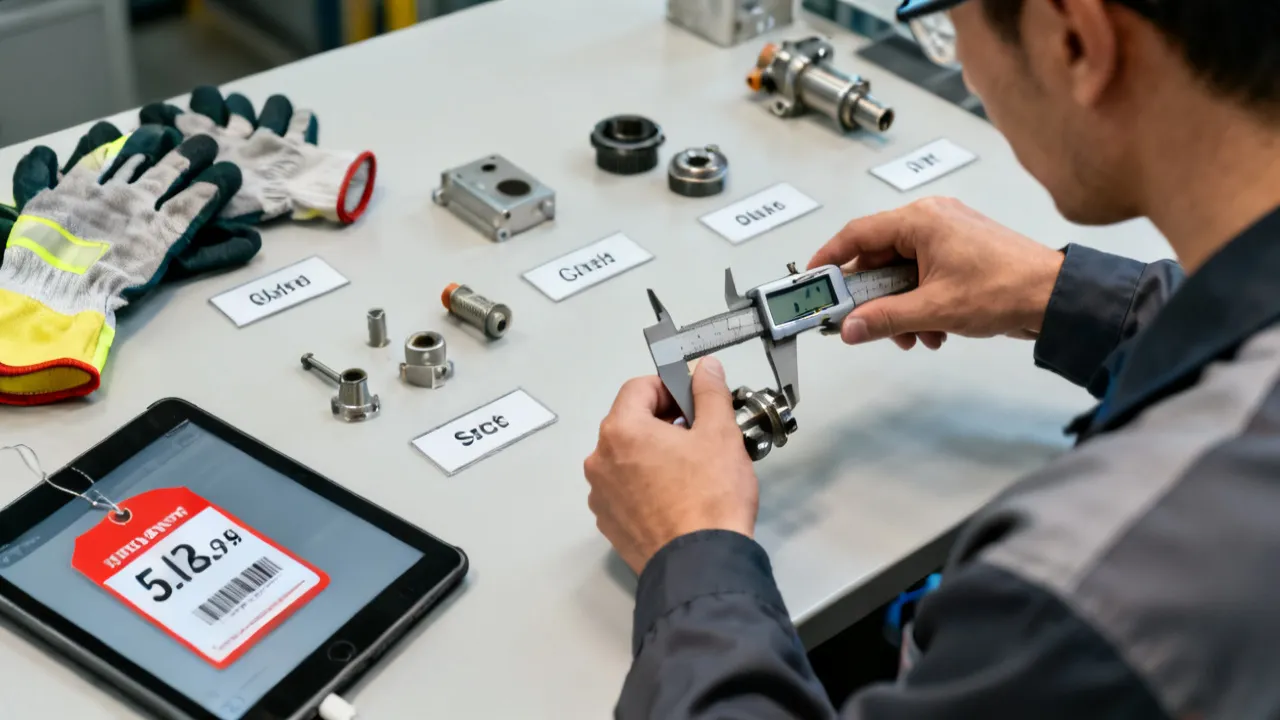
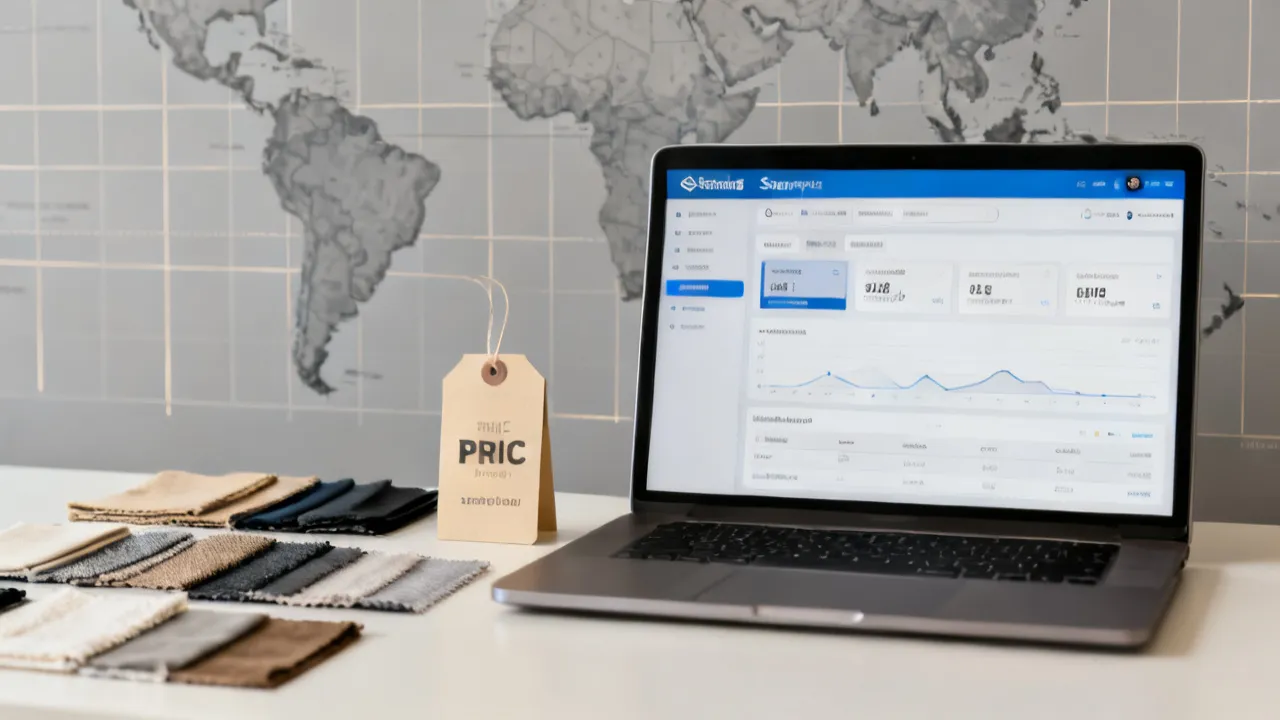
The image prompt at the top is designed to visually represent a modern, quality-focused technical sourcing environment, supporting the editorial intent of this guide.
-

A Guide to Cost-Efficient Small Electric Cars for Seniors
-
Mastering Debt Consolidation: Boost Your Credit Score and Manage Interest Rates
-
Your Guide to Loans, Credit Checks, and Interest Rates
-
Affordable Independent Living: Finding the Right Senior Housing
-
Guide to Senior Living Apartments: Affordable and Comfortable Environments