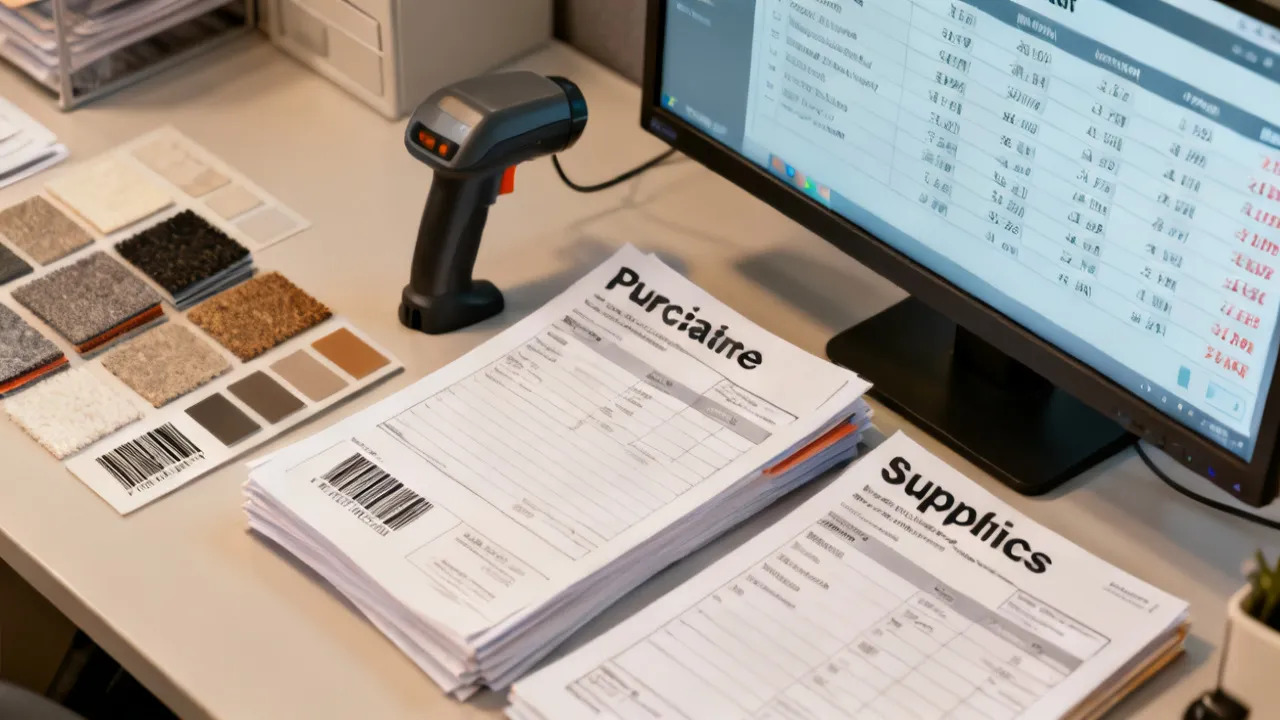
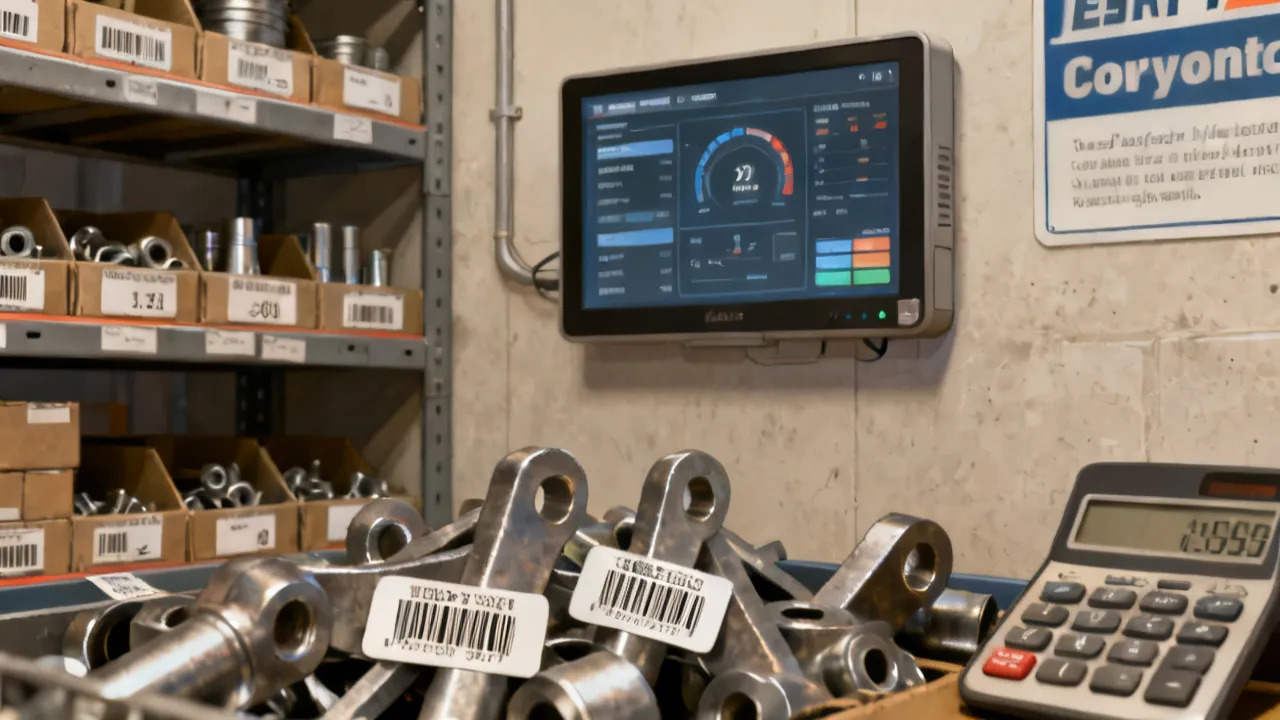
Navigating Bulk Supply Pricing and Supplier Options
This guide explains how to evaluate bulk supply pricing, supplier options, and product specifications by using the number 1333 as a reference point for comparisons. Objectively, bulk purchasing involves cost drivers such as packaging, logistics, lead time, compliance, and quality assurance. You’ll also find structured decision criteria and practical requirements to support consistent sourcing outcomes.

Key takeaways for choosing the right bulk supply arrangement
When you’re comparing bulk supply options using 1333 as a reference point, focus first on total delivered cost, supplier reliability, and specification match. In practice, the lowest advertised price often hides differences in packaging size, quality assurance documentation, incoterms, lead time, and returns handling. This article provides an objective framework for evaluating suppliers and pricing—so your sourcing decision stays anchored to verifiable requirements rather than guesswork.
Bulk purchasing is rarely “just buying more units.” It’s a commitment to a supply pathway: the products must be produced in a consistent way, packed correctly, documented accurately, transported predictably, and supported if anything goes wrong after delivery. Even small ambiguities—like how a supplier defines “landed cost,” whether certificates are included for each batch/lot, or what exactly happens when a shipment is late—can compound into significant operational disruption and cost overruns. This is why the evaluation criteria should be consistent across suppliers and should be expressed in measurable terms.
Using 1333 as an internal anchor can help you achieve that consistency. However, the main benefit comes not from the number itself but from the discipline it forces: you compare like-for-like quotes by holding constant the underlying assumptions—quantity, packaging configuration, delivery point, logistics responsibilities, and document deliverables. When you standardize those inputs, you can then measure and score supplier offers on the outcomes that matter.
Why “bulk supply” pricing varies even when the unit price looks similar
Bulk procurement typically follows a pricing model tied to quantity breaks, packaging formats, and contractual terms. Even if two suppliers quote the same base figure, your real purchasing cost changes once you account for:
- Packaging and configuration: Pallets, cartons, drums, bags, or custom kitting affect handling and storage.
- Logistics structure: Freight mode, routing, insurance, and warehousing can substantially change the “landed” cost.
- Lead time: Faster replenishment may carry an expedite premium.
- Compliance deliverables: Certificates, batch/lot traceability, and inspection reports can be included or charged separately.
- Quality alignment: Different grades, tolerances, or material specifications can shift costs.
For a practical comparison anchored to 1333, ask every supplier to quote the same packaging configuration and delivery terms, not just a single unit figure. That approach reduces “apples-to-oranges” comparisons.
To make the pricing differences more tangible, consider how bulk arrangements are typically broken down into cost “layers.” A supplier might advertise a low product price per unit because they assume you handle certain steps internally. Another supplier might price slightly higher but include those steps within the quote. When you only look at the unit price, you may inadvertently select the higher-risk or higher-effort option.
Common pricing layers include:
- Product cost and grade selection: The supplier may quote for a specific grade but you might later discover that the grade delivered does not satisfy your tolerance or acceptance criteria.
- Packaging cost and packaging engineering: For fragile, regulated, or temperature-sensitive goods, packaging is not a commodity. It’s part of product integrity.
- Labeling and documentation cost: Batch numbering, COAs, SDS coordination, and labeling standards can vary significantly between suppliers.
- Freight and handling: If the supplier ships by different incoterms (or different service levels), costs can shift to you or be paid by the supplier but embedded in their pricing.
- Warehousing and staging: If the supplier stages inventory in a local warehouse for faster delivery, that can either be reflected in their price or billed as an additional charge.
- Exception handling: Some suppliers embed an “assume standard conditions” posture in their pricing; others provide a more structured approach to deviations.
In many real purchasing scenarios, the quote with the lowest unit price becomes the most expensive after you add “hidden” components such as document fees, special packaging, customs processing, or additional testing. The disciplined response is to demand itemized quotes and standardize what you mean by “delivered.”
How to interpret supplier details without losing clarity
Supplier evaluation should be objective. Instead of relying on general claims, look for concrete evidence of process control and traceability. In bulk supply, “supplier details” commonly include:
- Legal entity and operational footprint: Clear company registration and operating address reduce ambiguity.
- Quality management system: Documentation that demonstrates controlled production and inspection.
- Traceability mechanisms: Batch/lot records that tie each shipment to its production history.
- Service capabilities: Handling of deviations, replacement policy, and document management.
When vendors provide documentation consistently—such as inspection reports and batch traceability—your procurement process becomes easier to audit and repeat. This is particularly important for regulated industries and for enterprises managing supplier risk.
However, interpretation matters. A supplier can provide documents, but if those documents are not aligned with your expectations (for example, COAs that list pass/fail values without the test method, or traceability systems that cannot identify a specific lot shipped), the documentation may not be decision-grade. You should therefore evaluate documents as “decision artifacts,” not as marketing items.
To avoid confusion, create a documentation checklist that maps every acceptance requirement to the corresponding supplier document you need. For example, if your receiving team will check that each batch meets specific chemical composition tolerances, then the COA should ideally specify:
- Batch/lot identifier clearly linked to the shipment (invoice/packing list alignment).
- Test results with the specific values required by your acceptance criteria.
- Test methods (standards or internal method references) so you can judge comparability.
- Date of test and conditions where relevant.
- Sign-off authority or authorized signatory details.
When you do this across multiple suppliers under the 1333 comparison scenario, you reduce the cognitive load of “deciphering” vendor claims. You can move from qualitative judgments to a standardized evaluation.
What role does “1333” play in sourcing comparisons?
The reference number 1333 can be treated as a standardized anchor in your internal comparisons—for example, a baseline quantity, an agreed index, or a benchmark used to compare quotes across suppliers. The objective goal is not the number itself, but consistency:
- Request quotes for the same “1333-based” configuration (same quantity, packaging, and delivery terms).
- Normalize differences (e.g., cost per delivered unit after logistics, taxes, and required documentation).
- Record assumptions explicitly so that future re-sourcing is repeatable.
If a supplier cannot meet the comparison conditions behind 1333, treat the quote as a partial match and renegotiate requirements.
To make the 1333 anchor operational rather than abstract, you should write a short “quote brief” that every vendor receives. The brief should state the comparison conditions in plain language and list any constraints that could impact cost. A strong quote brief typically includes:
- Quantity: The exact number of units (or the exact weight/volume basis) for the 1333 scenario.
- Packaging configuration: The required pallet/carton/drum configuration, including dimensions where relevant.
- Delivery point: Your receiving location (address or warehouse) and preferred delivery appointment constraints.
- Delivery timing: Whether you need a specific ship date, a lead-time range, or a replenishment schedule.
- Incoterms or equivalent: Clearly define who pays and controls freight, insurance, and customs handling.
- Documentation package: Which certificates, COAs, test reports, SDS documents, and traceability artifacts are required per batch.
- Deviation handling expectations: Replacement/credit rules if items fail acceptance criteria.
Once you establish that brief, you can evaluate each supplier’s quote under identical conditions. If a supplier refuses to quote under those conditions—or provides a quote that subtly changes packaging or delivery scope—you can either (1) request clarification and amendments or (2) exclude the quote from the “1333” apples-to-apples comparison set.
Industry sourcing norms to reduce procurement risk
Procurement specialists commonly apply structured gating to reduce risk in bulk buying. While specific practices vary by sector, the following norms are widely used:
- Specification lock: A signed product specification or quality agreement before large orders.
- Sampling or pre-shipment inspection: Verification that the shipped batch conforms to the agreed standard.
- Documented chain of custody: Batch numbers, COAs, test methods, and inspection results where applicable.
- Defined deviation handling: Clear procedures for returns, replacements, and crediting.
These practices support reliability and audit-readiness, especially when bulk orders are frequent and scale increases the cost of errors.
It helps to think of these norms as layers of assurance. The more you move downstream (from contract to production to shipping to receiving to use), the more you rely on information that must already be accurate. By locking the specification up front, you prevent a “spec drift” scenario where a supplier changes grade, sourcing, or tolerances midstream. By using sampling or pre-shipment inspection, you reduce the probability that the first “truth event” is when product arrives and fails internal tests.
Deviation handling is often where buyers discover whether supplier relationships are resilient. Some suppliers handle nonconformance with speed and structure; others respond inconsistently. A deviation policy can include:
- Time limits for reporting nonconformance and for supplier acknowledgment.
- Evidence required to substantiate a nonconformance claim.
- Corrective action process expectations (root cause, impact assessment).
- Replacement and/or credit timelines.
- Disposition rules for rejected goods (return, scrap, quarantine).
When deviation handling is unclear, the cost of a mistake is not only in the rejected items but also in the time, administrative overhead, and production disruption that follow.
Comparing suppliers: objective scoring beyond price
To select the top supplier option, build a scoring model that reflects total performance, not just cost. A sound approach combines:
- Cost: Total delivered cost under the “1333” comparison scenario.
- Quality consistency: Evidence of stable production and inspection results.
- Delivery reliability: Lead-time predictability and responsiveness to schedule changes.
- Operational responsiveness: How quickly the supplier handles document requests and corrections.
- Compliance readiness: Ability to provide required documentation for your internal and customer audits.
This structure keeps decisions anchored to verifiable factors and reduces the likelihood of costly surprises after purchase.
To make scoring more reliable, consider assigning weights to each criterion. Weights should reflect your business impact. For example:
- If your operations are highly sensitive to downtime, delivery reliability may deserve a higher weight than marginal cost differences.
- If you operate in a regulated environment, compliance readiness might outrank small variations in landed cost.
- If your product quality is tied to tight tolerances, specification match and quality evidence should carry the highest weights.
Scoring should also be transparent. Use a rubric where each score level corresponds to specific evidence. For instance:
- Quality consistency: Score higher if the supplier’s inspection results over multiple batches show stable pass rates, if they provide COAs with test methods, and if traceability is verifiable.
- Delivery reliability: Score higher if lead times are consistently met and if the supplier provides a proactive approach to exception communication.
- Operational responsiveness: Score higher if document deliveries occur within agreed timelines and corrections are handled quickly.
In practice, scoring becomes most useful when you connect it back to your decision process: who approves suppliers, what thresholds must be met, and what conditions allow you to proceed even if a supplier is not the lowest-cost option. Having thresholds (like “must provide batch-level traceability” or “must include required COAs”) prevents expensive compromises.
Additional important information (supplement): comparison guide, source, steps, and requirements
Below is a supplement presented as a comparison table, followed by an objective source reference, a step-by-step guide, and clear conditions/requirements.
| Decision Factor | Supplier A (What to verify) | Supplier B (What to verify) | Supplier C (What to verify) |
|---|---|---|---|
| Total Delivered Cost | Confirm logistics terms and what is included in the quote under the 1333 scenario. | Request an itemized quote showing freight, packaging, and required documents. | Check whether taxes, insurance, and handling are included or charged separately. |
| Specification Match | Compare material/grade/tolerances against your written requirement. | Verify whether they can meet batch-level traceability requirements. | Confirm sample or test results align with your acceptance criteria. |
| Quality Assurance Evidence | Ask for COA/inspection reports format and coverage. | Confirm retention of test records and batch documentation practices. | Evaluate whether third-party testing is available when needed. |
| Lead Time & Reliability | Provide a lead-time range and how they handle schedule changes. | Assess responsiveness for document delivery and order modifications. | Confirm buffer policies for common replenishment scenarios. |
| Deviation Handling | Request a written process for returns, replacements, and credits. | Check timeline for response after a nonconformance is reported. | Confirm re-test or re-inspection options for disputed results. |
The table above is intentionally concise. To make it operational, you should add a “what to ask” section for each row and capture responses consistently. For example, for “Total Delivered Cost,” you don’t just ask for a price; you ask for a breakdown by line item category, and you ask for an explicit statement of what “delivered” includes. Then you verify whether there are any conditional charges (like document fees that only apply if you request additional copies of certificates).
For “Deviation Handling,” do not accept vague phrases like “we will work with you.” Instead, ask for a written process and for the supplier’s historical performance in dealing with nonconformances. Even without revealing sensitive internal metrics, the supplier can usually describe typical response times and corrective action steps.
For “Lead Time & Reliability,” consider asking for a past performance summary relevant to your product family. This can include:
- How often shipments arrive within the promised window.
- Typical reasons for delays and how they communicate them.
- Whether they hold safety stock or use vendor-managed inventory models.
- How they handle customs documentation issues (if applicable).
Source (objective background)
This guide aligns with broadly accepted procurement and supply-chain practices described in recognized frameworks and industry guidance. For foundational risk and control concepts, refer to:
- ISO 9001 (quality management system principles and supplier process control).
- ISO/IEC 17025 (competence of testing and calibration laboratories, relevant when test methods and accreditation are discussed).
- Supply chain risk management guidance from established organizations such as the OECD and ISO-related materials.
Because these frameworks emphasize process control and verifiable evidence, they reinforce the idea that procurement should not rely on promises alone. Quality systems and testing competence are only meaningful when they translate into reliable documentation, traceability, and consistent product outcomes. In other words, the “what” (specifications, documents) must connect to the “how” (process controls, testing competence), and procurement should treat that linkage as part of the evaluation.
Step-by-step guide to compare bulk supply pricing and supplier options
- Define the comparison conditions: Fix the “1333” reference scenario (quantity, packaging, delivery point, and timeline). If you change any variable, record it.
- Standardize the specification package: Provide the same written requirements to each supplier (grade, tolerances, acceptance criteria, required documents).
- Request itemized quotes: Ask for breakdown of price components (product cost, packaging, freight, insurance, handling, and documentation fees).
- Require documentation clarity: Specify which certificates and reports you need per batch/lot and confirm delivery timing for documents.
- Evaluate logistics and lead times: Compare lead-time estimates and confirm how the supplier handles exceptions (weather delays, customs holds, capacity changes).
- Run a quality check plan: Decide on sampling, inspection steps, or pre-shipment verification aligned with your acceptance criteria.
- Confirm deviation handling in writing: Make sure replacement/credit processes exist and that they are triggered by defined nonconformance conditions.
- Score options objectively: Use a rubric balancing total delivered cost, compliance readiness, and quality consistency.
- Place a controlled first order: If the supplier is new, consider an initial order sized to validate performance under your “1333” terms.
- Review and recalibrate: After delivery, compare actual landed cost and document completeness to the assumptions used in your evaluation.
To expand on these steps into a more detailed workflow, you can convert each step into a checklist for internal execution. For example, step 1 can produce an internal “conditions sheet” that is attached to requests for quotation (RFQs). Step 2 can produce a “spec pack” including drawings, tolerances, and test references. Step 3 can produce a financial comparison spreadsheet that normalizes costs (currency conversion, tax applicability, duties, insurance, and any document fees).
For step 3 (itemized quotes), here is a practical structure of what you might request from suppliers to make normalization easier:
- Product unit price under the agreed grade/tolerance.
- Line item for packaging configuration (including carton/pallet counts).
- Line item for loading/handling charges (especially if you require special loading).
- Freight line item with service level details (road/air/sea, routing, transit time estimates).
- Insurance line item (if applicable) and who bears the cost.
- Customs/duties line item if you are using incoterms where you manage import responsibilities.
- Document fees (COA per batch, SDS format, any additional copies).
- Any optional fees (expedite premium, re-labeling charges, re-issuance fees for documents).
Step 4 (documentation clarity) also benefits from specificity. If you need the documents in advance of physical delivery, require stated delivery dates or “document cut-off” points. For instance, if your receiving process cannot start without certificates, then the supplier should provide them before the shipment lands or by a defined time window.
Step 5 (logistics and lead times) should include a risk perspective. Lead times may be quoted as ranges, but you should ask what events trigger a shift outside the normal schedule and what communication cadence is used. A supplier that responds quickly to exception events can reduce operational disruption even if delays occur.
Step 6 (quality check plan) can include multiple layers. You might decide on:
- Incoming inspection at receiving (visual checks and verification samples).
- Third-party pre-shipment inspection for new suppliers or high-risk batches.
- First-article inspection for products where spec verification is complex.
- Periodic auditing of batch results over time to confirm ongoing consistency.
Step 8 (score options objectively) should not only consider the supplier’s responses but also the supplier’s willingness to follow your process. A supplier that collaborates on clarifications and offers improvements can reduce procurement friction.
Step 9 (controlled first order) is especially useful when you’re introducing a new supplier or when the product has high impact. The first order can validate assumptions: packaging integrity, document completeness, traceability accuracy, and responsiveness in case of minor issues.
Step 10 (review and recalibrate) can be operationalized by capturing “actuals” after delivery: actual shipping time, actual document delivery timing, completeness rate of required paperwork, and any variance from estimated landed cost. If you learn that certain assumptions were wrong, update your future comparison briefs so the next sourcing round improves.
Conditions and requirements you should set before purchase
- Document requirements: Specify the exact documents required for each batch/lot (for example, COA/inspection report formats and delivery schedule).
- Traceability: Confirm batch/lot identification on invoices, packing lists, and shipment documentation.
- Acceptance criteria: Define what constitutes pass/fail and which test method will be used for confirmation.
- Packaging integrity: Require packaging suitable for your storage and handling environment.
- Delivery terms: Confirm Incoterms or equivalent logistics responsibilities to avoid cost disputes.
- Nonconformance policy: Include timelines and response responsibilities for deviations.
Beyond these essentials, you may also want to include contractual language that prevents “scope ambiguity.” Many disputes occur because the parties disagree later about whether certain tasks were included in the price or were “assumed.” Clear conditions can include:
- Minimum order and quantity break rules: Define whether price tiers apply based on total quantity across deliveries or a single shipment.
- Change management: Specify what happens if the supplier needs to change packaging or sourcing due to supply disruptions.
- Right to audit: In regulated or high-risk settings, you may want the right to review quality records.
- Confidentiality and data handling: Some industries require secure handling of traceability data and test results.
- Communication channels: Define who handles procurement communications, who handles quality documentation, and who authorizes replacements/credits.
These additions reduce friction by making procurement and quality responsibilities clear before transactions occur.
Localization and practical sourcing realities “nearby”
Although this article does not specify a particular city or country, many bulk procurement teams source from options “nearby” to reduce transit variability and improve replenishment responsiveness. In practice, “nearby” sourcing often benefits from shorter lead times, easier sampling coordination, and faster document follow-ups—especially when shipments must align with production schedules. Local norms also matter: some regions expect certain labeling formats, while others emphasize specific inspection or documentation practices. The objective takeaway is to treat “nearby” as a logistics strategy and validate it through documented lead times, traceability, and measurable delivery performance—not assumptions.
To go deeper, “nearby” sourcing can also reduce certain types of procurement risk beyond speed. For instance:
- Lower probability of documentation delays: When customs processing is minimal or local labeling standards are familiar, document preparation issues can be resolved faster.
- Better responsiveness to quality verification: If you need additional samples or re-test documentation, local suppliers can respond quickly.
- Reduced temperature and damage exposure: In some supply categories, shorter transit time can reduce the risk of temperature excursions or handling damage.
- More feasible replacement logistics: If you need rapid replacement, local sourcing can reduce downtime.
However, “nearby” is not automatically cheaper. Local suppliers might have higher product costs, smaller packaging economies, or different compliance documentation requirements. That’s why the evaluation should still be anchored to 1333 conditions and normalized by total delivered cost.
When you treat “nearby” as a logistics strategy, you should explicitly test it using measurable indicators. Examples include:
- Average time from order confirmation to shipment dispatch.
- Average time from dispatch to receiving confirmation.
- Document delivery time relative to shipment date.
- Incidence of rework (wrong labels, missing documents, or incomplete COAs).
If local suppliers meet these indicators consistently, they can justify a preference even if their unit price is not the lowest.
Common buyer mistakes when evaluating bulk supply quotes
Even experienced procurement teams can misjudge supplier offers. The very frequent issues include:
- Comparing different packaging configurations without normalization.
- Ignoring documentation scope (e.g., required batch certificates not included).
- Using unit price only, without landed cost and handling fees.
- Assuming lead-time is guaranteed rather than discussed as a forecast range with contingencies.
- Skipping deviation handling details, which becomes costly after nonconforming shipments.
To avoid these pitfalls, keep your evaluation anchored to the consistent “1333” comparison conditions and require clear written assumptions from every supplier.
Here are additional common mistakes that often appear in bulk supply evaluations and can cause procurement “blind spots”:
- Not verifying currency, tax, and duty assumptions: Quotes may appear comparable but differ in whether taxes are included, whether duties are assumed, or whether incoterms shift costs to you.
- Not distinguishing between lead time and delivery window: A supplier might “ship” quickly but deliveries might arrive later due to routing or local carrier issues. Your production schedule needs delivery certainty.
- Accepting substitutions without controls: A supplier might propose “equivalent grade” alternatives after an initial negotiation. Unless equivalency is formally approved in writing, substitution risk remains.
- Underestimating administrative overhead: If a supplier delivers documents in inconsistent formats or with missing data fields, your internal team spends time chasing corrections.
- Not planning for returns and dispositions: You may have no clear plan for storage of rejected materials, who pays for return shipping, or what happens to quarantined stock.
A practical safeguard is to create a “quote discrepancy log.” For each supplier, track every deviation from the 1333 conditions: missing documents, different packaging, different incoterms, inconsistent lead-time promises, or missing traceability statements. This log becomes your internal record and helps you negotiate corrections.
FAQs
1) What does “1333” mean in supplier pricing comparisons?
In this guide, 1333 is a reference anchor you can use internally to compare quotes consistently. The number itself is less important than maintaining the same quantity, packaging setup, and delivery terms across suppliers.
In a practical procurement context, you can interpret “1333” as the baseline scenario against which all other quote components are normalized. If a supplier offers different packaging or proposes a split shipment, you either bring their quote back to the baseline or treat the proposal as a different category that cannot be compared directly.
2) How can I compare supplier quotes objectively?
Ask for itemized quotes and standardize your requirements: same “1333” scenario, same specification package, and same required documentation. Then evaluate total delivered cost alongside quality evidence, lead-time reliability, and deviation handling processes.
To make objectivity more reliable, ensure you define what “total delivered cost” means in your organization. For example, include or exclude freight charges, specify which taxes are applicable, and clarify whether documentation fees are included. Without this, even itemized quotes can still be non-comparable.
3) Why is the lowest unit price sometimes the worst deal?
Because the “unit price” may exclude logistics, documentation fees, quality assurance deliverables, or may reflect a different grade/specification. Total delivered cost and batch-level verification often determine the real value.
Another reason the lowest unit price can be worse is that it may correlate with weaker supplier responsiveness. A lower-cost quote might come from a supplier that has lower documentation accuracy or slower deviation response times. Those issues translate into hidden costs: rework, delays, and production impact.
4) What supplier details should I request during procurement?
Request clear company identification, quality management evidence, traceability mechanisms (batch/lot), document formats and timelines (such as COA/inspection reports), and written deviation handling terms.
If relevant, you might also request information about their production controls: calibration practices for testing equipment, retention period for batch records, and how they manage nonconforming material internally before it ships.
5) What requirements should be included before placing a bulk order?
Include specification and acceptance criteria, required documents per batch/lot, traceability labeling requirements, packaging integrity expectations, delivery terms, and a written nonconformance policy for replacements/credits.
Make sure these requirements are communicated before order placement. If your procurement process includes a purchase order or contract, ensure the requirements appear in the purchase order terms or in attached quality agreements.
6) Is “nearby” sourcing always faster and cheaper?
Not always. “Nearby” can reduce transit time and simplify coordination, but cost still depends on logistics structure, packaging, and documentation scope. Validate speed and total delivered cost with documented lead-time performance.
You can treat “nearby” as a hypothesis rather than a certainty. Your validation criteria can include a measured document delivery rate, on-time delivery rate, and the frequency of receiving issues.
7) Are third-party test reports always necessary?
They are often not mandatory, but they may be required depending on your industry, contract terms, and risk tolerance. If acceptance depends on testing competence, ensure test methods and reporting formats are clearly defined and appropriate.
Where third-party testing is used, the key procurement decision is not merely whether a test report exists, but whether it is valid for your acceptance criteria and whether the test laboratory competence aligns with your needs (for example, relevant accreditation or recognized competence).
8) How should I handle a nonconforming bulk shipment?
Follow the deviation process agreed in advance. Report nonconformance promptly, preserve evidence (batch numbers, packaging, and test results), and invoke replacement/credit terms based on the written acceptance criteria.
To reduce disputes, ensure your nonconformance report references the lot/batch identifiers from the shipment documents and clearly states which acceptance criteria were not met. The goal is to make it easy for the supplier to investigate and for your organization to justify the corrective action decision.
Closing perspective: align decisions with verifiable sourcing criteria
Bulk supply decisions become significantly more reliable when you treat pricing as part of a broader system: specification alignment, supplier process control, documentation completeness, logistics predictability, and deviation handling. By maintaining consistent comparison conditions anchored to 1333, and by validating supplier details through objective evidence, you can reduce procurement risk while improving cost transparency.
Ultimately, the “right” bulk supply arrangement is the one that meets your product requirements on time, with the documentation and traceability your operation needs, and with a deviation process that protects you if issues occur. When you measure suppliers by verifiable criteria rather than by the lowest visible unit price, you create a repeatable sourcing approach that supports both short-term operational continuity and long-term supply resilience.
-

A Guide to Cost-Efficient Small Electric Cars for Seniors
-
Mastering Debt Consolidation: Boost Your Credit Score and Manage Interest Rates
-
Your Guide to Loans, Credit Checks, and Interest Rates
-
Affordable Independent Living: Finding the Right Senior Housing
-
Guide to Senior Living Apartments: Affordable and Comfortable Environments