Understanding Supply Numbers, Pricing, and Supplier Choice
This guide explains how to interpret the supply number 39196734841, evaluate pricing signals, and compare supplier options for safer procurement decisions. Objectively, the terms typically relate to inventory tracking, order documentation, and vendor accountability in industrial sourcing. You’ll learn what to verify, how to assess conditions, and which checks reduce operational risk.
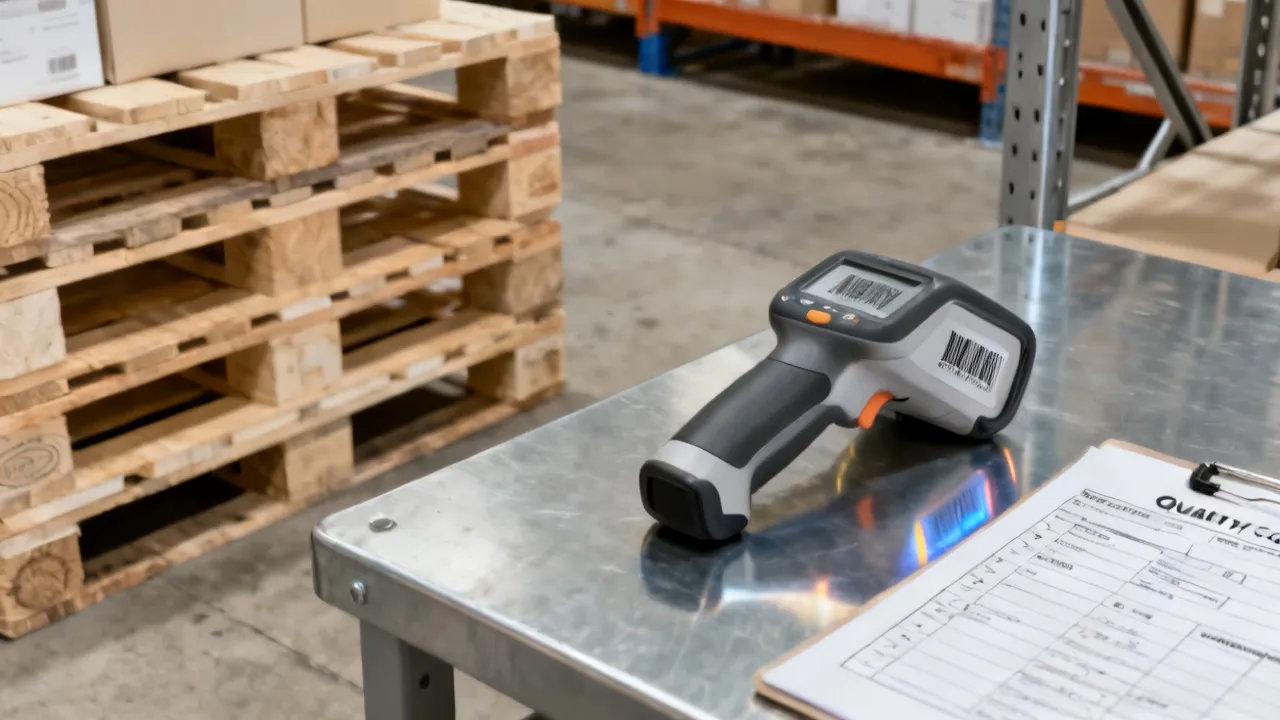
1) Key Takeaway: Use the supply number, pricing, and supplier evidence together
When procurement documentation includes a supply number such as 39196734841, your top outcomes come from treating it as a traceability anchor—then validating the associated pricing and supplier details with primary evidence (not assumptions). In practice, that means confirming the identifier in the relevant purchase order, invoice, and shipping/receiving records, and then assessing whether the supplier can consistently meet quality, packaging, lead time, and compliance requirements.
Because the keywords provided are largely numerical/identifier-based and without explicit location context, this article focuses on objective procurement principles: how supply identifiers are used, how pricing variations should be interpreted, and how to compare suppliers using documented capability rather than marketing claims.
1) Key Takeaway (Expanded): “Anchor + Scope + Proof” is the repeatable pattern
A procurement record that contains only a supply number and a price can look straightforward at first glance, but operationally it represents a chain of commitments that must stay aligned. A repeatable way to manage this is to apply three checks together:
- Anchor the meaning of the supply number: ensure 39196734841 points to the correct item, revision, or batch/lot reference in every document you control.
- Scope the meaning of the price: confirm what is included (packaging, documentation, labeling, inspection effort, transit responsibility, and any required certificates or tests).
- Proof the supplier’s ability: validate that the supplier’s documents and performance outputs match what actually arrives at receiving.
When you apply these together, you reduce the most common procurement failure mode: the “false match.” A document may show the same identifier and a similar unit cost, but hidden differences—revision levels, packaging configurations, missing certificates, or altered inspection scope—turn into expensive rework. This pattern is also valuable for audits, because you can show a clean logic trail: the identifier was checked, the scope was clarified, and the evidence was verified.
2) Why supply numbers like 39196734841 matter in real sourcing workflows
A numeric identifier such as 39196734841 is often used to connect multiple steps in the commercial chain—commonly linking a part/item record, a batch reference, a contract line, a shipment reference, or an internal catalog entry. Even when the identifier is not human-readable in everyday use, it usually becomes meaningful when you match it across systems:
- Procurement: it appears on a purchase order line or requisition record.
- Accounting: it may map to an invoice line item.
- Logistics: it can correspond to a shipment document or packing record.
- Operations/QA: it is used for receiving checks, batch traceability, and corrective actions.
From an industry perspective, identifiers reduce confusion. But they only help if they’re verified end-to-end. A mismatch—such as correct quantity but inconsistent batch reference—can cause delays during receiving, disputes in invoicing, or difficulty during audits.
2) Why they matter beyond compliance: they reduce “time-to-truth” during issues
It’s useful to recognize that supply numbers do more than satisfy audit needs; they also speed up root-cause investigation. When a problem occurs—damaged packaging, out-of-spec material, incorrect labeling, or delayed shipments—teams need a fast path to answer:
- Which exact supply line does this shipment correspond to?
- Which contract terms and pricing scope were agreed for that line?
- Which batch or lot should be traced back through receiving and storage?
- Which documents should have been present at receipt?
In environments where disputes are common, or where multiple versions of an item exist, the supply number is the fastest route to build an accurate timeline. If 39196734841 is used consistently, your teams can avoid broad, manual searches through emails and spreadsheets. If it is not used consistently, procurement and QA become reactive: they spend time reconstructing the narrative instead of fixing the underlying process gaps.
2)2) Common ways supply identifiers get “misleading”
Although identifiers exist to reduce confusion, they can also create a false sense of certainty. Misleading situations include:
- Revision drift: the identifier stays the same while the revision changes in a system that isn’t controlled.
- Packaging variation: the same base supply number may be used for multiple packaging formats (e.g., single pack vs. bulk pack) if the supplier does not encode packaging type into the reference.
- Batch reassignments: the supplier may allocate different lots to orders using an internal mapping that isn’t visible to the buyer.
- Invoice translation errors: accounting systems sometimes transform line item identifiers, so the invoice appears correct even when receiving documentation indicates a difference.
These are precisely why procurement must pair identifier checks with receiving reality and pricing scope verification. A numeric supply number can be necessary, but it is rarely sufficient by itself.
3) Interpreting pricing signals without relying on unsupported claims
Even when pricing is provided as part of a record, the practical question is what drives it. In industrial sourcing, pricing typically reflects a mix of:
- Unit cost drivers (materials, yield, labor intensity, process complexity)
- Operational drivers (packaging type, labeling requirements, documentation overhead)
- Risk pricing (qualification stage, tolerance requirements, inspection frequency)
- Commercial drivers (payment terms, incoterms, logistics mode, minimum order quantity)
As a rule, price alone should not decide the supplier. The “top” procurement outcome is usually the one with the lowest total cost of ownership (TCO), accounting for inspection effort, rework risk, lead time variability, and downstream operational disruption. For reference, reputable supply-chain frameworks (e.g., those published by the Institute for Supply Management (ISM) and Gartner supply chain research) consistently emphasize visibility, risk management, and supplier performance tracking over single-point price comparisons.
3) Expanded: translate price into “what you’re actually buying”
Pricing should be interpreted like a contract summary. If you treat price as a single number, you miss the subcomponents that create real differences. A structured way to interpret pricing is to break the quoted unit price (or line total) into components aligned to your operational reality. For example:
- Packaging and labeling: Are there additional costs for protective materials, inner cartons, moisture barriers, barcoding, or language requirements?
- Documentation pack: Are certificates (COC/COA), test reports, inspection records, and compliance statements included or billed separately?
- Inspection burden: Does the unit price assume the buyer will perform certain incoming tests, or does it include supplier inspection coverage?
- Transit and handling: Do terms include special handling (temperature control, shock indicators) that protect quality during shipment?
- Acceptance criteria risk: Does the price reflect tight tolerances that reduce defect rates, or does it reflect higher probability of exceptions?
When you map pricing to these components, it becomes easier to justify decisions without relying on subjective “gut feeling.” If supplier A is cheaper but does not include required documentation, the true TCO might increase because your receiving team must spend extra time rejecting, reissuing, or holding inventory.
3)2) Pricing variations are often evidence of hidden scope changes
In practical procurement, a common pattern is that price differences are not arbitrary. They often indicate one of the following:
- Scope contraction: the supplier included fewer certificates, reduced inspection, or simplified labeling.
- Scope expansion: the supplier took on extra compliance steps, provided additional traceability records, or improved packaging protections.
- Risk reallocation: responsibility for transit damage, shelf-life management, or lead-time reliability is shifted.
- Commercial offsets: longer payment terms or different MOQ trade off against unit pricing.
This is why an identifier like 39196734841 matters. If you have the same supply number across quotes, you can still have scope differences. If you don’t verify that the supply number refers to the same revision and packaging configuration, you cannot confidently interpret why the price changed.
4) Supplier evaluation: move from promises to proof
The supplier portion of the record—when described alongside the supply number 39196734841—should be treated as a claim that needs verification. Objective supplier evaluation commonly includes:
- Traceability readiness: ability to tie shipments to the relevant identifier(s).
- Quality system maturity: evidence of documented processes and inspection practices.
- Capacity and consistency: on-time delivery performance and the ability to hold specs at scale.
- Documentation reliability: completeness of pack lists, certificates, and compliant labeling.
- Responsiveness: performance during clarifications, nonconformance handling, and returns.
Instead of relying on supplier-provided PDFs alone, consider checking whether the supplier’s documents can be validated against your receiving outcomes (accuracy, labeling match, batch/lot consistency, and the absence of avoidable corrections).
4) Expanded: evaluate suppliers across “document truth” and “physical truth”
Supplier performance can be split into two domains:
- Document truth: do they produce the correct documents, with matching identifiers, before or at receipt?
- Physical truth: does what they deliver physically match the documentation and the agreed specifications?
A supplier can be strong in document truth but weaker in physical truth (e.g., certificates exist but the lot is wrong). Conversely, a supplier can deliver correct product but produce inconsistent documentation (e.g., they ship correctly but labeling lacks required language or barcodes). A record containing 39196734841 gives you an opportunity to test both domains quickly by requiring identifier-level alignment at receiving.
4)2) Evidence sources that are often overlooked
Procurement teams often request standard documents (certificates, compliance statements, quality manuals). Those are useful, but additional evidence sources can improve confidence:
- Incoming inspection results history: defect rates, common failure modes, and reinspection frequency.
- Nonconformance (NCR) logs: how often issues occur and how quickly they’re resolved.
- Corrective action reports (CAPA): evidence of root cause analysis and effectiveness over time.
- Audit outcomes: third-party audits, customer audits, or internal audits.
- Packaging/label verification checks: past performance on barcoding, carton labeling, and document packs.
When you connect these evidence sources back to a specific supply number like 39196734841, you reduce the risk of selecting a supplier based on generalized performance rather than performance for that specific item family or line scope.
5) Objective procurement conditions and requirements to verify
To keep procurement decisions defensible, define conditions in advance. These are typical requirements you should look for, especially when dealing with identifier-based records like 39196734841:
- Correctness of identifier mapping across PO, invoice, packing list, and shipment.
- Specification alignment: technical parameters match the item record or engineering requirement.
- Packaging and labeling compliance suitable for receiving and warehousing.
- Lead-time realism: confirmed shipping dates and reliable transit assumptions.
- Inspection and acceptance criteria agreed before the first order.
- Nonconformance process: documented handling for defects, shortages, or traceability issues.
When these conditions are missing or unclear, small discrepancies—especially those involving identifiers—can escalate into cost and schedule impacts.
5) Expanded: make the verification criteria measurable
A frequent reason disputes occur is that requirements are described qualitatively (“correct labeling,” “proper documentation,” “acceptable quality”). These terms can mean different things to different stakeholders. To be objective, define verifiable checks. Examples include:
- Identifier mapping: exact match of 39196734841 on PO line and shipping/receiving documents.
- Labeling compliance: presence of barcode/serial format, carton labeling fields, language requirements, and unit-of-measure consistency.
- Packaging condition: evidence of protective materials, absence of moisture damage, and correct carton count.
- Inspection criteria: measurable thresholds or pass/fail criteria for defects; clear sampling method.
- Lead-time: confirm “ship date” vs. “delivery date” responsibilities and tolerance windows.
By moving from vague statements to measurable checks, procurement decisions become easier to defend. It also prevents “negotiated reinterpretation” after delivery—when a supplier later claims the requirements were different from what was intended.
6) Industry top practices: build a comparison logic for suppliers
Procurement teams often compare suppliers using a structured scorecard. The goal is to balance commercial terms (price and payment) with operational performance (quality, documentation accuracy, and on-time delivery). While specific numeric weights vary by industry, an expert approach usually emphasizes:
- Quality and traceability (because they protect your ability to operate and comply)
- Delivery reliability (because schedule variance is expensive)
- Commercial terms (price, payment, MOQ, lead-time commitments)
- Service and escalation (because exceptions are inevitable)
If your supplier selection hinges on a record that includes an identifier like 39196734841, treat traceability as a “gate” requirement before you start optimizing price.
6) Expanded: scorecards should include “specific item performance,” not only general supplier metrics
Supplier scorecards often aggregate performance across many parts and categories. That can hide item-level realities. A supplier may perform well overall but poorly on a particular line due to special handling requirements, unique packaging needs, or tighter tolerances. When you are sourcing an item tied to 39196734841, adjust your scorecard to capture:
- Item-level nonconformance rate: defects per shipment for that line.
- Item-level documentation errors: missing certificates, incorrect labeling, wrong identifiers.
- Item-level traceability success: ability to link shipment to the correct reference without manual correction.
- Item-level lead time stability: frequency of missed ship windows and required expediting.
This is how you keep the comparison logic objective: you compare suppliers on evidence related to the exact scope you are buying.
6)2) Establish a gate-and-then-optimize approach
Gate-and-optimize means you separate “must be acceptable” criteria from “nice to improve” criteria. For traceability-anchored procurement, the gate criteria might include:
- Identifier alignment across PO, invoice, packing list, and shipment
- Correct documentation pack presence
- Acceptance criteria defined prior to shipment
- Ability to resolve nonconformance quickly
Once a supplier clears the gate, then price and other commercial factors can be optimized using TCO logic rather than raw unit cost comparisons. This approach prevents scenario where a supplier “wins” because the unit price is low but then repeatedly fails traceability and acceptance tests, driving rework and holding costs.
7) Structured supplement: conditions, sources, and a step-by-step guide
Below is a practical supplement you can reuse when your procurement file includes supply numbers and supplier/pricing details. It is phrased as a comparison table (no links), followed by a source note and a step-by-step method.
| Decision area | Option A: Low documentation rigor | Option B: Strong documentation rigor | Conditions/requirements you should enforce |
|---|---|---|---|
| Identifier integrity (e.g., 39196734841) | Identifier appears in only one document type | Identifier aligns across PO, invoice, packing list, and shipment | Require cross-document verification at receiving and during invoice review |
| Pricing interpretation | Price used without clarifying packaging, terms, or inspection scope | Pricing mapped to scope: unit price, packaging, documentation, inspection | Demand a line-by-line cost breakdown or a documented scope statement |
| Quality evidence | Certificates provided, but acceptance criteria unclear | Acceptance criteria and nonconformance process are explicit | Define sampling/inspection method and defect handling steps before shipment |
| Lead-time reliability | Dates shift; exceptions handled ad hoc | Lead-time commitments are tracked with clear escalation rules | Use a documented lead-time variance policy and defined remedies |
| Supplier responsiveness | Slow resolution for traceability or documentation mismatches | Fast acknowledgment and corrective-action workflow | Require response-time expectations and a root-cause reporting process |
Source note (reliable foundations)
For widely accepted procurement and supply risk practices, consult recognized frameworks and research publications. Two commonly cited references are the Institute for Supply Management (ISM) for procurement performance concepts, and Gartner research on supply chain risk and supplier performance management. These sources generally support the idea that traceability, quality systems, and risk controls must be evaluated alongside price.
7)2) Practical interpretation of “evidence” in procurement documentation
When procurement teams say “use evidence,” they can sometimes mean any document the supplier provides. In strong procurement practice, evidence is evidence only if it is:
- Traceable: it references the correct identifier(s) and ties to the shipment/lot or contract line.
- Verifiable: the buyer can validate it through receiving checks or internal system matching.
- Complete: it includes all required fields and documents, not a partial pack.
- Timely: delivered before or at the time the buyer needs it to perform acceptance checks.
- Consistent: matches across PO, invoice, packing list, and physical delivery labeling.
If the supplier sends a certificate that does not include or cannot be linked to 39196734841, its usefulness is reduced. It may still be valuable for general quality claims, but it cannot substitute for traceability requirements. This is a subtle but important distinction that prevents false confidence.
8) Step-by-step guide for acting on a record that includes 39196734841
Use the method below to reduce errors and disputes. It is designed to be objective and repeatable, suitable for very procurement environments.
-
Locate the identifier in every document you can control
Verify that 39196734841 appears consistently in the purchase order, invoice, packing list, and receiving paperwork. -
Validate item/spec alignment before shipment
Compare the technical requirements for the line item with what the supplier confirms. If specifications reference tolerances, acceptance standards, or material condition, ensure they match. -
Clarify price scope
Confirm what the price includes: packaging type, labeling requirements, inspection scope, documentation pack, and any handling charges. -
Confirm lead time assumptions
Check whether lead time accounts for processing, packing, transit, and your receiving window. -
Define acceptance criteria upfront
Set measurable criteria for what “pass” means at receiving. If you do incoming inspection, specify sampling logic and defect thresholds. -
Perform receiving verification against the identifier
At receipt, confirm that the shipment contents correspond to the identifier, quantities, labeling, and packaging requirements. -
Reconcile invoice lines using verified scope
Ensure the invoice line item uses the correct identifier and matches agreed scope. If discrepancies exist, escalate before payment. -
Track supplier performance after the first cycles
Measure outcomes: traceability accuracy, documentation completeness, and lead-time variance. Use results to refine future supplier decisions.
8)2) Add a “pre-receipt readiness” check to prevent receiving overload
In many organizations, the moment a shipment arrives is too late to resolve paperwork or traceability gaps. You can avoid receiving overload by adding a pre-receipt readiness check. For example:
- Document pack check: confirm the correct certificates and labeling fields are included, ideally before the truck arrives.
- Label readiness: verify carton/unit label format expected by your receiving scan processes (barcode format, field sequence, and whether 39196734841 is present as required).
- Lot/batch linkage: ensure the supplier’s lot/batch reference can be mapped to your internal traceability requirements and that it is consistent with the identifier.
- Receiving staff coordination: confirm receiving team knows what inspection level applies to this line (full inspection vs. sampling) and what to do if discrepancies are found.
This pre-receipt approach reduces the risk that receiving becomes a bottleneck waiting for supplier clarifications, especially if your internal receiving process depends on scanning identifiers.
8)3) Build an escalation trigger policy tied to identifiers
To keep the process objective, define escalation triggers tied to identifier-level discrepancies. For example:
- If 39196734841 is missing from packing list or does not match PO line reference, treat it as an escalation trigger—not a “later correction.”
- If labeling includes a different reference number or revision code while quantities match, escalate because traceability is compromised.
- If documentation pack arrives but does not include acceptance evidence aligned to the agreed scope, escalate before material release.
- If invoice differs in identifier mapping or line scope while goods are already received, hold payment pending reconciliation (unless your policy permits partial payment).
These triggers should be written in your procurement workflow so that people don’t interpret severity differently depending on workload or interpersonal dynamics.
9) Common pitfalls when procurement relies too heavily on identifier and price
Even with a clear supply number like 39196734841, errors can occur. The very frequent pitfalls include:
- Assuming identifier equality means item equality: the same identifier may map to different revisions or packaging configurations if not properly controlled.
- Using price as a proxy for reliability: the low price quote may not include inspection or documentation scope, increasing receiving friction.
- Skipping cross-document reconciliation: invoice corrections after payment are costly and slow.
- Not documenting acceptance criteria: disputes often happen because “pass/fail” was never defined in measurable terms.
9) Expanded: pitfalls become more severe when traceability drives compliance
Identifier mistakes often have ripple effects beyond operational inconvenience. In sectors where traceability is linked to safety, regulatory compliance, or product recall response (e.g., regulated manufacturing, medical-adjacent materials, or safety-critical components), the cost of wrong traceability evidence can be high. Common severe pitfalls include:
- Failing to align identifier and batch/lot mapping: this undermines recall scope accuracy.
- Approving inventory release without validated evidence: creates downstream risk that may not surface until later.
- Letting supplier “close” issues informally: oral agreements can be lost; audit trails require written records.
- Accepting documentation that is “close enough”: a missing field can break traceability automation during audits.
This is why the best practice is to treat 39196734841 not as a label but as a traceability anchor that must be proven across documents and receiving outcomes.
10) FAQs
FAQ 1: What does a supply number like 39196734841 typically represent?
In many procurement systems, an identifier such as 39196734841 is used to connect line items across documentation—linking purchase orders, invoices, packing records, and shipments. The exact meaning depends on the organization, but its practical value is traceability and alignment across the commercial chain.
FAQ 1 (Expanded): How to confirm what it means in your specific environment
Because numeric identifiers can be generated by internal catalog systems, ERP integrations, or vendor part numbering logic, the “meaning” of 39196734841 should be confirmed in your environment. You can typically do this by:
- Tracing it to the purchase order line and confirming the mapped item master record.
- Checking whether it corresponds to a part number, contract line, batch/lot code, or shipment reference.
- Reviewing how it appears on labels (carton labels, unit labels, shipping labels) and how receiving systems scan or store it.
- Confirming whether invoices show it as the same value or as a transformed field.
Once confirmed, you can standardize your verification checklist around that meaning.
FAQ 2: Should I choose a supplier based on the lowest price shown in the record?
No. Price can be a useful signal, but it must be interpreted in context—especially regarding packaging, documentation scope, inspection expectations, and lead-time commitments. A higher price can be justified if it reduces rework risk or improves documentation accuracy.
FAQ 2 (Expanded): How to compare price fairly when scope differs
If supplier quotes include different scope assumptions, you need to normalize the comparison. This can be done by requiring:
- A packaging and labeling scope statement that clarifies what is included for that line item.
- A documentation pack list (which certificates, which tests, and which fields must appear).
- An inspection agreement summary (what the supplier tests, what the buyer samples, and how acceptance is determined).
- Clear shipping terms and delivery responsibility (processing time vs. transit time).
After normalization, you can calculate a more realistic TCO rather than comparing raw unit cost.
FAQ 3: What’s the very important verification step at receiving?
Verify that the delivered goods match the agreed traceability identifiers (including 39196734841 if applicable), and that labeling and packaging correspond to your receiving requirements. Then confirm quantities and that acceptance criteria are met.
FAQ 3 (Expanded): What to do if the identifier matches but the lot/batch differs
If 39196734841 appears correctly but the lot/batch information differs from what you expected (based on PO line or pre-receipt documentation), treat it as a traceability issue. Typical actions include:
- Pause release to production or storage locations that require strict traceability linkage.
- Compare the lot/batch field values on packing list and labels.
- Confirm whether the supplier is allowed to substitute lots under the agreed terms (some contracts allow substitutions with controls).
- If substitutions are not allowed, issue a nonconformance and request corrective action documentation.
This prevents a situation where physical goods are “close” but the traceability chain is broken for audit and recall readiness.
FAQ 4: How do I compare suppliers objectively when documentation differs?
Use a structured scorecard that weights traceability/quality evidence and delivery reliability alongside pricing and responsiveness. Require the same documentation set (or equivalent proof) for every supplier so comparisons remain fair.
FAQ 4 (Expanded): Define “equivalent proof” criteria
“Equivalent proof” should not mean “similar.” It should have explicit criteria. Examples include:
- Certificates of conformity must include the required identifier fields and the same test categories.
- Inspection records must support the acceptance criteria you will apply at receiving.
- Compliance statements must correspond to the regulatory or internal requirements relevant to your product line.
By defining equivalence criteria, you keep supplier comparisons objective even when suppliers prefer different document formats.
FAQ 5: What should be included in an acceptance criteria statement?
An objective acceptance criteria statement typically includes measurable defect thresholds, sampling or inspection method (if applicable), documentation required at receipt, and the escalation path for nonconformance.
FAQ 5 (Expanded): Acceptance criteria examples that reduce disputes
Without adding unnecessary complexity, acceptance criteria often include:
- Dimensional or performance thresholds (numerical tolerances and required test method).
- Visual inspection rules (surface defects, labeling readability, packaging damage criteria).
- Sampling plan (e.g., sample size by lot size, acceptance numbers, and retest logic).
- Documentation checks (required certificates, correct identifier mapping, completeness checklist).
- Nonconformance handling (quarantine rules, supplier notification timelines, and corrective action requirements).
When these are written and agreed upfront, disputes decrease because “pass/fail” becomes a shared measurable definition rather than a subjective debate.
FAQ 6: What reliability resources can I consult for procurement top practices?
Industry top practices are often reflected in research and professional guidance from organizations such as the Institute for Supply Management (ISM) and major supply chain research firms like Gartner. These sources generally emphasize risk management, supplier performance monitoring, and process discipline.
FAQ 6 (Expanded): Convert research principles into operational procedures
Research guidance can be abstract. To make it operational, convert it into internal procedures such as:
- Supplier approval workflows including evidence requirements
- Receiving checklists tied to identifier mapping
- Invoice reconciliation procedures with escalation triggers
- Supplier performance reporting that measures both document and physical outcomes
This ensures that procurement is not only informed but consistent.
11) Conclusion: Treat identifiers, pricing, and suppliers as a connected system
For procurement decisions, a supply number like 39196734841 is very valuable when it is used as part of a connected verification system—one that aligns traceability, pricing scope, supplier capability, and acceptance criteria. When you validate documents end-to-end and compare suppliers with objective evidence, you reduce operational risk and make your sourcing choices easier to defend during audits and internal reviews.
11) Expanded Conclusion: why this approach scales and improves defensibility
A key advantage of the “anchor + scope + proof” approach is that it scales across teams and time. Instead of relying on individual expertise or memory, you embed verification rules into process checkpoints:
- Receiving becomes systematic: checks are performed against the traceability anchor, not against informal expectations.
- Invoice disputes decrease: reconciliation is performed against verified scope rather than against assumptions.
- Supplier comparisons become fair: suppliers are evaluated on evidence tied to the same identifier-driven scope.
- Continuous improvement becomes measurable: supplier performance is tracked using outcomes that relate to traceability accuracy, documentation completeness, and lead-time stability.
Ultimately, the procurement record containing 39196734841 is not just a static document. It is a living contract between your organization and the supplier. Treating the identifier as an anchor, the price as a scope signal, and supplier documents as proof creates a procurement system that is more reliable, more auditable, and more resilient when exceptions occur.
-

A Guide to Cost-Efficient Small Electric Cars for Seniors
-
Mastering Debt Consolidation: Boost Your Credit Score and Manage Interest Rates
-
Your Guide to Loans, Credit Checks, and Interest Rates
-
Affordable Independent Living: Finding the Right Senior Housing
-
Guide to Senior Living Apartments: Affordable and Comfortable Environments