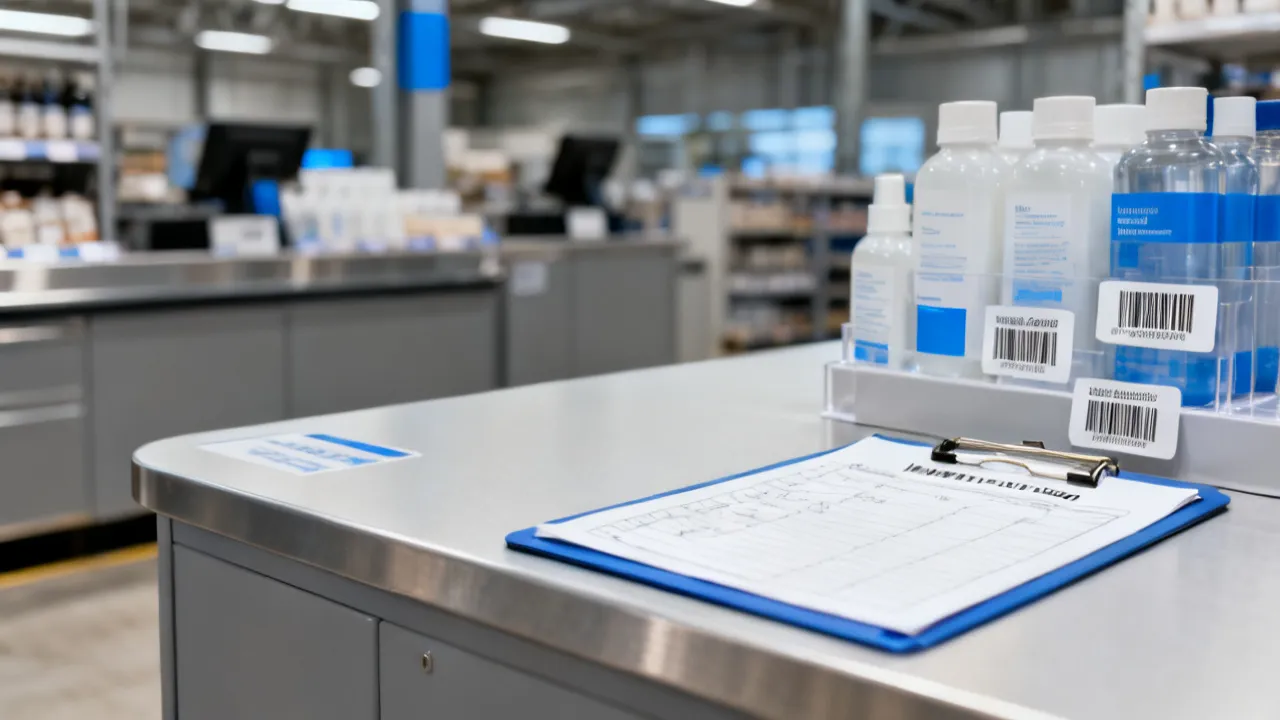
Hnda Procurement Guide for Healthcare Supply Quality
This guide explains how to evaluate “Hnda” supplier quality, procurement reliability, and documentation readiness for healthcare-related purchasing. It provides objective background on common procurement risks, quality criteria, and compliance expectations around healthcare supply chains, helping buyers compare suppliers and plan next steps with clearer conditions and requirements.

Start Here: How to Evaluate “Hnda” Sourcing Decisions
When buyers search for Hnda in the context of healthcare supply purchasing, the core challenge is rarely “finding an item”—it is confirming that the supplier, documentation, and quality controls are aligned with responsible procurement. A well-run procurement process reduces rework, avoids acceptance failures, and supports consistent service delivery. This guide focuses on practical evaluation criteria—what to verify, how to compare suppliers, and which conditions should be built into purchase planning—using a professional, objective lens rather than assumptions.
Because the term Hnda can appear in different procurement contexts (for example, as a shorthand within internal catalogs, vendor product groupings, or region-specific labeling practices), you should treat the name as a procurement identifier that must be mapped to specific product specifications, intended use, and the documentation that proves compliance. Put simply: confirm what “Hnda” refers to in your specific buying environment before you judge price or lead time.
In regulated healthcare supply chains, small mismatches can produce outsized operational friction: an incorrect lot traceability field, a missing certificate, a label that cannot be scanned, a packaging configuration that fails your receiving inspection, or handling instructions that don’t match your warehouse capabilities. Each of those issues may not stop patient care directly, but they can delay readiness, trigger quarantine holding, add administrative burden, and create downstream purchasing exceptions. Therefore, your sourcing evaluation should emphasize evidence before cost, and clarity before speed.
Throughout this guide, you’ll see repeated themes: define identity, validate documentation completeness, ensure quality management evidence exists, and confirm the supplier can resolve issues quickly. This repetition is intentional. In healthcare procurement, the “same” item ordered from different vendors often behaves differently at delivery time. The job of procurement evaluation is to ensure that the differences you cannot control do not become compliance failures you must absorb.
Most Important Verification Points (Before Comparing Any Price)
Procurement teams often begin by comparing price, but expert practice starts with evidence of quality and traceability. For anything connected to healthcare supply workflows, your early checks should prioritize the following:
- Product identity clarity: Ensure “Hnda” corresponds to a defined product (SKU, formulation/spec, model) rather than a vague category. Buyers should confirm specification parameters that your internal team relies on—dimensions, concentration range, materials, sterility status (if applicable), shelf-life expectations, or other category-specific details.
- Intended use alignment: Verify that the product is suitable for the receiving department’s process and constraints. Intended use alignment is not only about “can it work,” but also about “can it be used safely in our environment,” including workflow compatibility, equipment compatibility (if relevant), and any environmental requirements (temperature, humidity, light sensitivity, etc.).
- Documentation completeness: Check for batch/lot traceability, certificates of analysis (where applicable), safety documentation, and packaging/label requirements. For many healthcare items, documentation is the difference between being able to verify “what you received” and being forced to treat the receipt as nonconforming until evidence is provided.
- Quality management evidence: Prefer suppliers that can describe quality controls, inspection routines, and corrective action processes. This means they should not only claim quality; they should describe their approach to maintaining it, including how nonconformities are prevented and corrected.
- Receiving and acceptance readiness: Confirm that incoming inspection procedures (dimensions, appearance, labeling, count, packaging integrity) can be consistently performed. Even if documentation exists, the physical packaging and labeling must allow your team to verify items quickly and correctly.
Only after these elements are addressed should you evaluate costs. Even if a vendor offers a competitive figure, a poor fit on documentation or specifications can raise total cost through delays, returns, administrative exceptions, and operational disruptions. A helpful way to frame this internally is: “Price buys procurement outcomes.” If the supplier’s deliverable cannot support acceptance reliably, the supplier’s price is not truly “cheap”—it is deferred cost you will pay in rework and risk handling.
In practice, buyers often use a “gating” approach: suppliers cannot advance to the quote comparison stage until they provide the minimum documentation and identity mapping required for receiving acceptance. This is not bureaucratic—it is a decision accelerator. It prevents teams from spending time comparing offers that will later fail acceptance requirements.
What “Price” Means in Healthcare Procurement (And Why It’s Not Only a Number)
Buyers sometimes request “price” for Hnda early in the process. A professional approach is to treat price as one component of a broader “delivered value” package:
- Unit price vs. delivered total: Shipping method, cold-chain handling (if relevant), packaging standards, and insurance can change the real total. A lower unit price may still be more expensive once freight, handling conditions, and special packaging are included.
- Incoterms and lead-time reliability: Two suppliers may list comparable unit prices, but one may include more predictable delivery windows. In healthcare settings, unreliable lead time can cause stockouts, expedite purchases, or substitution requests, each of which adds friction and cost.
- Acceptance risk: Lower-cost offers may lead to higher rejection rates if labeling, batch information, or packaging conditions do not meet expectations. If your acceptance process requires documentation that is not consistently delivered, rejections become “administrative acceptance failures”—a category many teams underestimate when building their cost models.
- Operational compatibility: If “Hnda” items require specific storage or handling, your cost model must reflect that capability. For example, a product that requires specialized storage might force additional facility setup or restrict purchasing flexibility, both of which affect total cost of ownership.
In practical terms, when you quote or compare Hnda pricing, require a consistent basis: same product identity, same packaging configuration, same quantity break, and the same documentation package. That is the only way to compare like with like.
To strengthen quote comparability, procurement teams commonly require suppliers to quote using structured fields rather than open-text descriptions. For example:
- Product identity reference: exact SKU/model
- Packaging: pack size, case quantity, inner packaging configuration
- Labeling: whether labels show lot/batch, expiry date, or other mandatory data
- Shipping conditions: standard vs temperature-controlled, maximum transit time assumptions
- Documentation: list of documents included with shipment and/or provided electronically
When these fields are consistently provided, “price” becomes comparable across suppliers and you reduce the tendency to mistakenly select a vendor based on unit price alone.
Supplier Selection: From “Vendor List” to “Qualified Supplier”
For Hnda purchasing, suppliers should be evaluated using a structured approach. The aim is to determine whether they can repeatedly meet your specification and acceptance criteria. Industry best practice commonly emphasizes:
- Traceability systems: Ability to provide batch/lot identification and link it to manufacturing and inspection. Traceability should be actionable, meaning your team can use it to verify what was received and to support investigation if a problem occurs.
- Quality documentation discipline: Readiness to provide required documents for receiving and audits. A supplier may provide documents after delivery, but acceptance often requires documents at receipt time or by a defined timeframe.
- Corrective and preventive actions: Evidence of how they handle nonconformities. Buyers should look for descriptions of corrective action scope, root cause analysis capability, and prevention mechanisms—not just a promise to “fix it next time.”
- Contract clarity: Clear terms for returns, replacements, and responsibility if documentation or product integrity is compromised. Contract terms should specify what happens when traceability data is missing, labeling is incorrect, or shelf-life fails minimum requirements.
- Communication cadence: Predictable responses for quotes, clarifications, and shipping updates. A supplier that responds quickly and consistently reduces operational burden, especially when shipment details require clarification.
Procurement experts typically recommend that buyers do not “react” to quality issues after delivery only. Instead, quality expectations should be embedded in purchase orders, acceptance criteria, and supplier qualification steps. That shift—from reactive to preventive—is a maturity marker for procurement programs.
Qualification does not mean you must audit every supplier in the same way. It means you match the qualification depth to risk. If Hnda refers to a critical consumable, sterile medical-related item, or product with strict documentation requirements, your qualification expectations should be more stringent. If it’s a low-risk accessory, qualification may be lighter—but identity clarity and traceability evidence should still be verified.
Local Sourcing Considerations: Building Confidence with “Nearby” Networks
Your prompt includes a localization rule: whenever a city or country appears in keywords, replace it with "nearby." Since Hnda is presented without a clear city/country term, this guide uses “nearby” language as a decision principle rather than a literal location claim. In healthcare supply workflows, sourcing from nearby networks can sometimes reduce shipping variability and facilitate faster communication for documentation issues—yet it should never replace verification of documentation and quality systems.
In many procurement environments, regional sourcing is attractive because it supports:
- more predictable delivery windows,
- easier coordination for receiving inspections, and
- quicker supplier clarifications if labeling or shipment details require correction.
However, “nearby” should be treated as a logistical advantage, not a substitute for evidence of compliance and traceability. A supplier delivering quickly is still responsible for delivering correctly. If a shipment lacks required batch information, fast delivery does not solve the underlying documentation gap.
When comparing nearby versus non-local suppliers, procurement teams should consider:
- Transit time variability: Shorter routes can reduce variability, but variability can still occur even for “nearby” suppliers due to carrier capacity, weather events, or batching patterns.
- Communication pathways: Local suppliers may respond faster, but documentation quality must remain consistent. A fast response to missing documents is good; preventing missing documents is better.
- Return logistics: If acceptance failures occur, nearby sourcing can reduce return cycle time. Still, return logistics are only effective when the supplier’s replacement/credit terms are explicit.
In other words: localization helps execution, but qualification ensures compliance.
Objective Background: Why Procurement Quality Matters
Healthcare supply chains differ from general consumer supply because product issues can create downstream clinical or operational risks. Consequently, buyers often apply more stringent controls for identity, documentation, handling, and traceability. While specific regulatory frameworks vary by product category and jurisdiction, the general procurement logic remains consistent: verify product identity, ensure quality evidence exists, and confirm the supplier can support accountability through documentation and corrective actions.
For context on how quality management concepts are widely treated in regulated industries, buyers often align internal expectations with internationally recognized quality principles. For example, ISO quality management concepts (such as process control, document control, corrective actions, and continual improvement) are commonly referenced by organizations seeking consistent outcomes. For general background, ISO’s quality management family emphasizes structured, evidence-based management practices.
Note: If you share the exact product type behind “Hnda” (medical device, reagent, pharmaceutical-related supply, consumable, packaging material, or another category), the evaluation checklist should be narrowed accordingly, because requirements can differ significantly by product class.
Even without specifying the exact product type, procurement professionals typically understand that “healthcare-grade procurement” requires more than purchasing. It requires operational assurance: being able to demonstrate due diligence, provide audit-ready documentation, and maintain a controlled receiving process that is repeatable over time.
This matters for internal governance. Many organizations track supplier performance using receiving outcomes: percent of shipments accepted without rework, percent requiring documentation follow-up, time-to-complete documentation, and frequency of label/lot mismatches. These metrics become inputs for supplier qualification decisions. When procurement teams ignore these outcomes and focus only on price, they lose the ability to manage vendor risk systematically.
Comparison Table: Supplier and Procurement Conditions for “Hnda”
The table below reframes supplemental guidance into a practical comparison view. It does not rely on links, and it focuses on decision conditions that procurement teams typically document when qualifying suppliers for Hnda purchasing.
| Evaluation Area | What to Compare Between Suppliers | Buyer Condition / Requirement (Suggested) |
|---|---|---|
| Product Identity | Exact SKU/specification match for “Hnda” | Written mapping from “Hnda” to product spec; no ambiguity in PO description |
| Traceability | Batch/lot information and ability to provide records | Batch/lot must be provided on delivery documentation and labels |
| Quality Documentation | Certificates/COA and safety or compliance documentation completeness | Receiving package includes required documents per your acceptance checklist |
| Packaging Integrity | Sealing, labeling readability, and packaging condition | Packaging must arrive intact; labels must match PO details |
| Handling & Storage Compatibility | Storage guidance and handling restrictions | Supplier provides handling/storage instructions aligned with your warehouse capability |
| Acceptance Criteria Fit | Whether the item can be inspected using your standard receiving steps | Item supports your incoming inspection procedures without special improvisation |
| Corrective Action Readiness | How nonconformities are handled (replacement/credit process) | Contract includes documented remediation steps for acceptance failures |
| Lead-Time Predictability | Historical consistency and responsiveness to shipment updates | Supplier provides lead-time assumptions and update process in writing |
| Commercial Terms | Returns, shipping responsibility, and warranty-like commitments | Terms define responsibility for documentation or integrity issues |
To make the table operational, procurement teams often add a “evidence type” column internally—meaning what documentation or proof will be provided to show each requirement is met (for example, sample labels, a documentation checklist, prior shipment evidence, or a written corrective action summary). That internal discipline helps prevent “agreement based on promises” and promotes “agreement based on documents.”
Step-by-Step Procurement Workflow for “Hnda” (Practical Guide)
Below is a step-by-step workflow that procurement teams can adapt. The goal is to structure decisions around evidence, not assumptions—especially when Hnda could refer to different internal product groupings.
-
Define “Hnda” precisely in your system.
Map “Hnda” to a product description that includes specification/model, packaging configuration, and intended use.
Practical tip: Confirm whether “Hnda” in your catalog corresponds to a single SKU or a broader family. If it’s a family, ensure you require suppliers to quote the exact SKU and include any sub-spec details that affect receiving acceptance. -
Draft an acceptance checklist.
Specify what your receiving team will inspect (label match, batch/lot presence, packaging integrity, count, and document completeness).
Practical tip: Use checkboxes and clear pass/fail statements rather than open-ended prompts. “Label visible” can be subjective; “label contains lot/batch ID and expiry date consistent with PO” is measurable. -
Request supplier documentation before confirming any order.
Ask for the documents that your acceptance checklist requires (e.g., batch traceability information and relevant compliance documentation for the product category).
Practical tip: Require suppliers to indicate whether documents will be included physically in the shipment box, provided electronically at dispatch, or available through a portal—and align that with your internal receiving process. -
Collect quotes using a consistent “like-for-like” basis.
Ensure quotes reference the same product identity, quantity breaks, packaging configuration, and delivery expectations.
Practical tip: If packaging differs (for example, multiple inner packs per case), require the supplier to specify how it affects storage, receiving time, and how you count units for acceptance. -
Perform supplier qualification scoring.
Evaluate traceability readiness, quality documentation discipline, and ability to resolve nonconformities.
Practical tip: Incorporate both “capability” and “performance.” Capability is the documented process; performance is the supplier’s history of meeting requirements without causing exceptions. -
Validate logistics suitability.
Confirm storage/handling requirements and ensure your facility can receive and store the product properly.
Practical tip: If cold-chain or special handling applies, align expected temperature ranges, excursion handling rules, and responsibilities if excursions occur. Even if your warehouse is ready, the supplier’s shipping conditions still define risk. -
Place the purchase order with explicit conditions.
Include acceptance criteria, required documents, and remediation steps for failures.
Practical tip: Use PO line-item terms, not only general contract terms. Many organizations overlook that acceptance criteria must be tied to the specific lines that define what was ordered. -
Conduct receiving inspection using the pre-defined checklist.
Do not rely on “looks fine” acceptance; confirm documentation matches the shipment and PO.
Practical tip: If anything is missing (documents, lot info, label mismatch), trigger your internal nonconformance or hold process immediately and document what is missing. Delay can compromise traceability. -
Document results and close the loop.
Record acceptance outcomes and any corrective action requests. Use outcomes to update supplier status for future Hnda purchases.
Practical tip: Feed back not just “pass/fail,” but data: number of receiving exceptions, time to obtain missing documents, and whether replacements were labeled and traceable correctly.
This workflow works best when procurement teams design “decision points” with clear owners. For example: procurement owns supplier qualification and PO terms; receiving owns inspection and documentation review; quality or compliance may own escalation and corrective action governance. When responsibilities are unclear, acceptance problems tend to become fragmented and slower.
FAQs About “Hnda” Procurement, Supplier Selection, and Quality Readiness
1) What does “Hnda” usually mean in procurement?
“Hnda” may function as an internal identifier or shorthand for a specific product group. Treat it as a label that must be mapped to a precise product specification (model/SKU), packaging format, and intended use. Avoid relying on the term alone when ordering. In many real-world systems, an identifier might be reused across multiple vendor catalogs or updated over time, so the mapping should be checked at the moment you plan to purchase—not assumed from the last order.
If your organization maintains an item master, you can strengthen control by requiring that any Hnda code referenced in a requisition is linked to a controlled product record. That way, you minimize the risk that the purchasing team sends ambiguous requests to vendors.
2) Should we compare suppliers using only the unit price for “Hnda”?
In responsible healthcare procurement, unit price should be compared only after confirming the product identity and documentation requirements. Total delivered value includes shipping handling, acceptance risk, and the cost of delays or returns if the shipment fails documentation or integrity checks. A supplier offering a lower unit price may still deliver higher total cost due to:
- increased receiving time for manual verification,
- more frequent document follow-ups,
- higher likelihood of rejection or quarantine,
- administrative effort for nonconformities and corrective actions.
Therefore, “price comparison” should be performed on a consistent basis where the deliverable definition is aligned. This aligns procurement behavior with operational reality.
3) What documentation should a supplier provide for “Hnda” items?
The correct set depends on product category. Common expectations in healthcare supply purchasing include traceability information (batch/lot), documentation aligned with your acceptance checklist, and safety/compliance documents when applicable. Ask suppliers to provide the full receiving package before ordering. To avoid misunderstandings, it helps to request documentation in two layers:
- Pre-shipment documentation (what you need to validate requirements before receipt), such as expected label content, certificate availability, and product specification references.
- In-shipment or immediately-at-receipt documentation (what your receiving team uses for acceptance), such as packing slips, batch/lot lists, COAs where relevant, and any mandatory declarations.
When documentation requirements are not clearly stated, suppliers sometimes provide “similar” paperwork that is not sufficient for your audit trail. That mismatch often becomes an acceptance failure, even if the product itself is otherwise correct.
4) How do we reduce acceptance failures for “Hnda” deliveries?
Use a clear acceptance checklist in advance, require document completeness, ensure label/PO matching, and include explicit remediation terms in your purchase order. Also verify that your receiving team can inspect items consistently without ad-hoc processes. Acceptance failures often fall into recurring categories:
- Label mismatch: lot/batch or expiry date not shown or not matching PO.
- Missing traceability: paperwork doesn’t list batch/lot items at the unit or case level you require.
- Packaging issues: seals compromised, damage in transit without proper documentation.
- Document delays: documents arrive after your acceptance decision window.
- Handling nonconformance: shipping conditions not aligned with storage requirements.
Reducing failures is mostly about preventing ambiguity: the PO should describe acceptance requirements, and the supplier should know which evidence you need at receiving time. When acceptance decisions are predictable, you can manage inventory and audits more effectively.
5) Is sourcing from “nearby” suppliers always better for “Hnda”?
“Nearby” sourcing can reduce variability and improve communication speed, which may support smoother receiving operations. However, it does not remove the need for traceability, quality documentation, and supplier corrective action readiness. “Nearby” is best treated as a logistic risk-reducer, not a quality guarantee.
If you use nearby sourcing as a strategy, you should still require the same identity clarity, documentation completeness, and acceptance criteria that you apply to non-local suppliers. Otherwise, the program can become inconsistent: the organization might unintentionally accept higher variability simply because delivery is faster.
6) What should we do if “Hnda” shipment documentation is incomplete?
Follow your receiving procedures: document what is missing, isolate affected items per internal policy, and trigger the purchase order’s remediation/return process. Then log the issue for supplier corrective action follow-up and future qualification decisions. Incomplete documentation is typically managed in three steps:
- Immediate containment: place affected units on hold (quarantine) if required by your internal policy.
- Evidence tracking: record exactly what documents are missing and whether any batch/lot identifiers are still present.
- Supplier escalation: require a documented response and a timeline for providing the missing information or replacement shipment.
Where traceability is compromised, do not assume that “the supplier will fix it later.” Your ability to trace what you received is central to healthcare procurement accountability. If you cannot verify, you cannot safely use.
7) How can we qualify a supplier for future “Hnda” purchases?
Use a structured scoring model based on traceability readiness, documentation completeness, corrective action performance, and lead-time predictability. Update supplier status using receiving outcomes, not just quote competitiveness.
A simple qualification scoring approach might include:
- Document compliance rate: percent of shipments with complete documentation at receipt.
- Label/lot accuracy: number of label mismatches per shipment or per unit batch.
- Corrective action timeliness: how quickly the supplier responds and implements remediation.
- Delivery performance: on-time rate compared with stated lead time assumptions.
- Resolution effectiveness: whether replacements and corrective actions actually prevent repeat failures.
Qualification should be dynamic. If a supplier improves performance over time, your program should allow for requalification. Conversely, if failures repeat, your program should restrict ordering or require additional controls.
8) Are there recognized quality frameworks we can align to?
Many organizations align procurement quality expectations with established quality management principles, focusing on documented processes, corrective actions, document control, and continual improvement. For general background, ISO quality management standards provide commonly referenced guidance on evidence-based process control. Even if you do not require ISO certification, you can use similar concepts to structure supplier documentation requests and qualification criteria.
For example, you can request suppliers to show how they handle:
- document control (ensuring the right specifications are used),
- traceability controls (ensuring lot tracking is preserved),
- nonconformity handling (how they segregate and correct issues),
- CAPA (corrective and preventive action methodology),
- supplier oversight (if they rely on upstream manufacturers or subcontractors).
Using a recognized framework helps create consistent expectations across categories and reduces internal ambiguity when procurement teams update criteria for new vendors.
Conclusion: Make “Hnda” Decisions Evidence-First
Purchasing for Hnda should be approached as an evidence-driven workflow: define the product identity precisely, verify documentation and traceability, set explicit acceptance criteria, and compare suppliers using like-for-like terms. Price matters, but only after your organization confirms quality readiness and supplier accountability. When you embed these conditions into procurement planning, you reduce avoidable risk and improve consistency across shipments—especially when sourcing from “nearby” logistics networks or expanding vendor options.
If you want, share what “Hnda” refers to in your context (product category and the documents you currently require). I can then tailor the acceptance checklist, supplier documentation request set, and qualification criteria to match the specific healthcare supply scenario.
To make the most of that tailoring, consider providing the following details:
- Product category (e.g., consumable, medical device-related, reagent, packaging material)
- Whether the item has batch/lot, expiry, or serial traceability requirements
- Any storage/handling requirements (temperature range, light sensitivity, special handling)
- Your receiving acceptance checklist items (even a rough list)
- What happens today when documentation is missing or labeling is incorrect (internal policy)
With those inputs, you can convert this general guide into a specific Hnda sourcing specification and supplier evaluation checklist that supports consistent receiving performance and audit-ready procurement decisions.
-

A Guide to Cost-Efficient Small Electric Cars for Seniors
-
Mastering Debt Consolidation: Boost Your Credit Score and Manage Interest Rates
-
Your Guide to Loans, Credit Checks, and Interest Rates
-
Affordable Independent Living: Finding the Right Senior Housing
-
Guide to Senior Living Apartments: Affordable and Comfortable Environments