Understanding the 00447080687 Sourcing Reference
This guide explains how to interpret the sourcing reference “00447080687” and how buyers typically verify supplier alignment, pricing transparency, and documentation quality. It provides objective background on how manufacturer codes function in procurement, why supplier traceability matters, and what due-diligence checks reduce operational risk when acquiring goods or components.
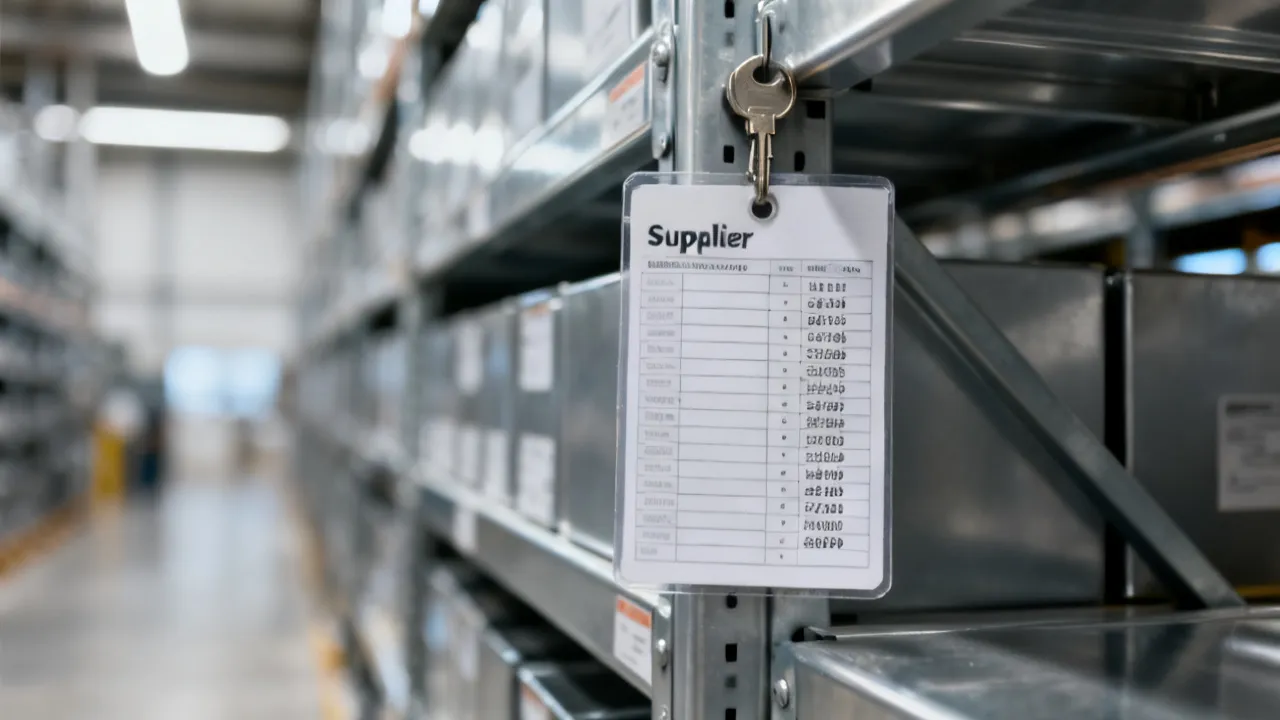
Why the 00447080687 reference matters for procurement decisions
If you are evaluating a procurement request that includes the sourcing reference “00447080687,” your first task is to verify what that identifier corresponds to—then confirm that the supplier can substantiate the item’s specifications, documentation, and pricing basis. In practice, references like 00447080687 often function as internal or catalog codes used to reduce ambiguity between similar products, batches, revisions, or configuration options.
Because procurement failures frequently originate from mismatched parts, unclear revision levels, incomplete documentation, or inconsistent quotation scope, the critical step is not simply “finding the low price,” but validating traceability: what you are buying, under what terms, and backed by which records. This is especially important when your purchase spans multiple SKUs, includes consumables, relates to safety or compliance requirements, or depends on downstream documentation for installation, audits, warranty coverage, or customer acceptance.
To procurement professionals, a code is not just a label. It is an index into a chain of evidence: quotation details, product datasheets, engineering change history, quality certificates, inspection/acceptance criteria, packaging identifiers, and the alignment of those elements at receiving. The better your team handles the chain, the lower your exposure to rework, delays, disputes, and audit findings.
Objective background: what 00447080687-style codes typically represent
A string such as 00447080687 is commonly used in sourcing workflows to identify a specific product configuration. While the exact meaning depends on the issuing party (a manufacturer, distributor, logistics provider, or procurement system), these identifiers usually help operational teams match:
- Product specification (dimensions, material, model variant, performance class, tolerances, or ratings)
- Revision level (engineering change level, updated manufacturing standard, or revision-controlled BOM change)
- Batch or lot context (where relevant for quality control, traceability, or compliance)
- Document set required for acceptance (e.g., datasheets, test reports, certificates of conformity, calibration certificates, inspection reports)
- Packaging configuration (unitization: tube, reel, box, bulk pack, or kit assembly)
From an industry perspective, the code’s value is realized when it is paired with a verifiable “chain” of information: quotation, product description, technical documentation, inspection/acceptance criteria, and the final invoice/packing list alignment. If any link is missing or inconsistent, procurement teams should treat the quote as “unverified” until clarification is completed and documented.
It’s helpful to think of the reference 00447080687 as a key that should open a single, unambiguous product record in the supplier’s systems. If the supplier can’t “open” that record—meaning they cannot explain what the code represents and cannot provide reference-aligned documentation—then the buyer is not only buying an item; they are also absorbing uncertainty risk.
How pricing transparency should be evaluated around a specific sourcing reference
Even when buyers request the “price” for the item tied to 00447080687, the purchasing decision depends on what that price includes. Experienced procurement analysts typically evaluate quotes using a structured lens, because the same identifier can appear in multiple commercial contexts:
- Unit basis: per piece, per kit, per set, per pack, per meter, per reel, or per consolidated shipment
- Delivery basis: Incoterms alignment (where applicable), handling charges, freight methodology, insurance assumptions, and risk transfer point
- Documentation inclusions: whether required documents are included in the quoted offering or billed separately
- Warranty and inspection scope: what tests are included (or excluded) and whether inspection is in-factory, third-party, or at receiving
- Compatibility or substitution policy: whether the supplier guarantees “like-for-like” equivalence under your acceptance criteria and how substitutions are handled
- Quality acceptance: how inspections are performed, whether there is an agreed sampling plan, and what constitutes pass/fail for your use case
- Lead-time assumptions: whether the lead time reflects actual production availability, lead times for documentation, or potential expedited options
In other words, a quote that looks attractive at the line-item level may become more expensive when hidden costs appear later—rework costs, expedited shipping to replace nonconforming items, delays due to documentation re-issuance, or compliance remediation that requires additional testing and certificates.
For the reference 00447080687, pricing transparency should therefore be tied to acceptance and traceability requirements. If the supplier charges extra for certification to match that exact reference, your procurement strategy should either include that cost explicitly or renegotiate scope so the “low price” is not merely a “low-documentation” offer.
Supplier verification: aligning the supplier details with the code
Another key reason 00447080687 deserves attention is that suppliers often handle many overlapping catalogs. A code may exist in a manufacturer database, but a distributor or third-party supplier must still confirm the item’s identity, revision, and the documentation that should accompany it. To minimize errors, procurement teams should ensure supplier details align with the identifier’s product record.
From an expert supplier-auditing standpoint, “alignment” typically means:
- The supplier can map 00447080687 to a concrete product description (not a vague family name)
- The supplier can provide the appropriate technical documentation for that exact reference and revision
- The supplier’s quote, packing documentation, and labels match the reference consistently
- The supplier clarifies exceptions (e.g., revision differences, alternate materials allowed by spec, regional production batches, or documentation currency)
- The supplier can identify the internal quality record that supports the certificate or test report (where your organization requires audited traceability)
Where the buyer’s process requires compliance—industry regulations, internal quality systems, or customer contract terms—the supplier should explain how the reference is controlled within their quality management system. If the buyer later undergoes an audit, the supplier should be able to support the chain of evidence, not just the item shipment.
It is common for procurement teams to request the supplier’s “certificate of conformity” or equivalent statement for a code, but audits often focus on whether the certificate corresponds to the specific product configuration delivered. For 00447080687, the supplier should be able to demonstrate that their process ties the code to the delivered lot and to the relevant records.
Practical procurement workflow for buyers referencing 00447080687
Below is how teams often approach a sourcing request that includes a specific reference such as 00447080687, with a focus on reducing ambiguity and protecting operational continuity.
-
Confirm the exact request scope
Define whether you need the item for a specific installation, assembly line, maintenance activity, or end-use. If your downstream process is sensitive to tolerances, performance rating, or revision levels, state that clearly in the request. Ask whether 00447080687 is tied to a functional specification, a form/fit spec, or both. -
Request a quote that explicitly references 00447080687
Ask the supplier to quote the product line using the same identifier, and include a short technical description that matches it. Require the quotation to show unit of measure and quantities in the same structure you will use for purchase order line items. -
Ask for documentation aligned to the reference
Request datasheets, test reports, certificates, calibration documents, or other materials relevant to your requirements. Avoid accepting “general documents” that don’t map to the specific code, revision, or lot. If documents are too large to send in one package, request that the supplier provide a document list with version dates and mapping to 00447080687. -
Cross-check revision and compatibility
If alternative versions exist, verify compatibility rules and whether the supplier guarantees interchangeability under your acceptance criteria. Ask explicitly whether there are any allowed substitutions or whether the supplier will ship only the exact revision associated with 00447080687. -
Define acceptance criteria
Establish what checks will occur on arrival: visual inspection, dimensional checks, document verification, certificate review, and any required testing. Define how nonconformance is handled (replacement, credit, or corrective action process), and specify who bears the cost of rework if the documentation or item does not match. -
Confirm lead time and shipment method
Tie the delivery promise to the supplier’s stated process and clarify the order confirmation timeline. Ask whether lead time accounts for production, packaging, documentation release, and dispatch. For traceability-sensitive items, remind the supplier that documentation must be delivered with the shipment. -
Reconcile documents at receipt
Ensure that the packing list, invoice, received label, and any certificates match the reference 00447080687 and the listed revision/lot indicators. If mismatch occurs, quarantine and resolve before installation or use. Establish internal receiving controls so your team does not rely solely on “looks correct” checks.
Industry context: why code-driven sourcing reduces risk
In mature procurement ecosystems, structured identifiers are the backbone of traceability. Organizations increasingly treat supply-chain resilience and quality assurance as interconnected. A reference like 00447080687 can support:
- Root-cause investigation when field issues occur (the code links the delivered item to documented specs and test outcomes)
- Recalls or corrective actions by batch/revision clarity (helping limit scope and speed up remediation)
- Faster receiving through reduced manual interpretation (less time comparing catalogs and revision sheets)
- More consistent procurement records across departments and vendors (engineering, QA, maintenance, and finance can align on one identifier)
- Audit readiness where auditors require evidence of controlled sourcing
That said, the identifier is only as reliable as the supplier’s internal control and the buyer’s verification process. Procurement due diligence—especially around documentation mapping—is what converts a code from “text” into “evidence.”
It’s also worth noting that code-driven sourcing can improve spend visibility: when your ERP or procurement platform captures 00447080687 consistently, analytics can reveal patterns in pricing, lead time performance, quality outcomes, and supplier compliance. Without consistent code mapping, data becomes fragmented and decision-making degrades.
Comparison table: how buyers typically approach reference verification (conditions included)
| Verification aspect | What buyers check | Typical requirement / condition | Why it matters |
|---|---|---|---|
| Identifier mapping | That 00447080687 maps to the correct product description | Supplier provides a reference-aligned product name and configuration details | Prevents ordering the wrong variant |
| Pricing basis | Unit basis, delivery terms, and what is included | Quote states whether documentation/packaging/handling are included | Avoids hidden costs after purchase |
| Documentation alignment | That datasheets/certificates match the same reference | Documents include the product code or clearly show the same revision tied to the code | Supports compliance and acceptance |
| Revision control | That delivered revision matches the quoted revision | Supplier confirms revision and substitution policy in writing | Ensures functional compatibility |
| Receiving reconciliation | Invoice, packing list, and label consistency | Buyer checks reference match at receipt before installation/use | Enables traceability for future audits |
| Quality acceptance | That acceptance criteria and evidence are agreed | Supplier provides test methods, sampling plan, and acceptance thresholds (when applicable) | Reduces disputes and ensures objective pass/fail |
Step-by-step guide: due diligence you can apply immediately
-
Record the reference exactly as provided
Preserve formatting, spaces, and leading zeros for 00447080687. Treat the code as case-sensitive if the supplier’s documentation suggests so. Also capture the reference in your procurement system exactly how it appears, because ERP searches often rely on exact strings. -
Request a “reference-to-spec” statement
Ask the supplier to describe what the code represents—product type, key specifications, and any known constraints. Require that the statement be tied to the code, not merely to a product family. If multiple revisions exist, require that the supplier indicate which revision corresponds to 00447080687. -
Request a document bundle tied to the reference
Ensure the datasheet/test report/certificates explicitly relate to 00447080687 (not merely to the manufacturer family). Where possible, request documents that include product code, revision identifier, and lot/batch number. If documents are re-issued, ask the supplier to explain document versioning. -
Confirm pricing inclusions and exclusions
Ask whether pricing includes packaging, handling, inspection documentation, testing, and any required compliance paperwork. Clarify the unit of measure: per piece vs per pack vs per kit. For procurement disputes later, you want the quote to state what it includes in unambiguous language. -
Set acceptance criteria before shipment
Define what will be inspected on arrival and how nonconformance is handled. Clarify whether the buyer will perform dimensional checks, whether the supplier must certify dimensions, and whether third-party inspection is required. Make sure acceptance criteria align with the purpose: if the item feeds a high-precision assembly, you likely need stricter checks than if it is used as a general maintenance component. -
Align lead time assumptions with production reality
Ensure the lead time corresponds to the supplier’s production or procurement scheduling, not an optimistic placeholder. Ask for a schedule that includes production readiness date, packaging completion, dispatch date, and document readiness date. -
Verify at receipt using the same identifier
Match the reference in the packing documentation to the item received. If there is a mismatch, quarantine and resolve before use. Confirm that any revision or lot markings on the delivered items correspond to the paperwork for 00447080687. -
Document the verification outcome
Record the outcome of receiving checks in your system. If the item matches and documentation is correct, record certificate numbers, revision numbers, and lot identifiers. This turns your receiving event into audit-ready evidence.
Supplier and location considerations (including “nearby” localization rule)
The request you provided does not specify a city or country in the keywords; accordingly, no location token required replacement with “nearby” for this article. In general, however, buyers should consider whether the supplier’s dispatch and service capabilities are consistent with their operational needs—especially regarding customs handling, quality documentation processing timelines, and on-site support availability.
When procuring items associated with a controlled reference like 00447080687, location-related issues can become more significant than for generic parts. If documents must be reviewed by QA before they are released to the receiving team, local time zones, shipping carrier delays, and customs clearance timelines can extend the period in which goods are held. Procurement teams should coordinate with logistics and QA to ensure that documentation arrives on time and in the correct format and language requirements.
Additionally, “local delivery windows” can influence how you interpret supplier lead times. A supplier might quote an item availability date but not account for the time to generate reference-aligned documents or to perform inspection steps required by your acceptance criteria. A robust procurement plan should therefore include both delivery and documentation timelines as first-class elements of the agreement.
Risk management: what can go wrong and how to reduce it
Even when a supplier provides the correct-looking reference 00447080687, risks can still arise. Common issues include:
- Revision drift: the supplier ships a later revision that is functionally similar but not identical, potentially affecting compatibility, performance, or compliance outcomes
- Documentation mismatch: certificates refer to a family product rather than the specific code or show an outdated revision date
- Substitution without authorization: an alternate part is shipped to meet a schedule, without a documented approval process
- Unit confusion: quoting errors like “per unit” vs “per pack,” resulting in quantity shortfalls, budget mismatches, or late-order corrections
- Lot traceability gaps: paperwork provides a code but does not include lot/batch numbers required for traceability
- Labeling errors: packaging labels carry a wrong code, causing receiving teams to misidentify goods
- Certificate currency issues: the supplier provides a certificate but not the document version that corresponds to the delivered goods
Mitigation is straightforward in principle: insist on reference-aligned documentation, define substitution policies, and perform receiving reconciliation. These practices align with widely used procurement quality norms and internal audit expectations.
To reduce the risk that 00447080687 becomes a “paper reference” rather than a true traceability anchor, strengthen the link between code, revision, and delivered evidence. Ask the supplier: “If we audit this shipment, what record confirms that the shipped item corresponds to 00447080687?” The supplier should be able to point to their internal traveler, manufacturing record, inspection record, and the certificate issuance process.
Procurement teams can also reduce risk by building explicit clauses into purchase orders. For example: if the supplier ships any item not exactly matching the reference and revision, the shipment may be rejected or returned at supplier cost. If documentation is missing or not aligned, goods may be held until compliance documents are provided. While legal terms vary, the operational intent is consistent: remove ambiguity and force traceability compliance.
Source-based guidance (reliable references for process alignment)
While the exact meaning of 00447080687 depends on the issuing supplier/manufacturer, the verification principles above reflect common standards and widely accepted procurement quality practices. For broader quality and traceability concepts, organizations often look to:
- ISO 9001 quality management system principles, particularly those supporting controlled processes, traceability, and documentation practices
- ISO 9000 foundational vocabulary and quality management concepts
- Supplier quality management approaches, including documented risk assessment, corrective action processes, and controlled acceptance criteria
Additionally, for supply-chain risk management and due diligence frameworks, buyers frequently reference guidance from industry bodies and reputable audit standards. If your organization requires strict compliance, consult your internal quality department and contract requirements to ensure your acceptance criteria and record-keeping meet the relevant standards.
It’s also common for buyers in regulated sectors to use additional procurement requirements beyond ISO 9001, such as documented traceability to lot or serial numbers, retention periods for certificates, and requirements for authorized rework and deviation approvals. In those contexts, a code like 00447080687 often becomes the key to aligning shipped goods with regulatory or customer-specific documentation.
Deepening the decision: turning reference verification into a procurement scorecard
Procurement teams often start with basic checks—confirm the quote references 00447080687, confirm documents exist, verify revision. But the strongest decisions go further by quantifying supplier performance around the code. A practical way to do that is to use a procurement scorecard or evaluation checklist that includes both commercial and quality metrics.
For each supplier quote that mentions 00447080687, create a scoring lens that captures:
- Traceability completeness: Does the quote and documentation explicitly reference 00447080687, including revision and lot identifiers?
- Documentation timeliness: When will the certificate set be delivered—at shipment, before shipment, or after delivery?
- Acceptance alignment: Does the supplier agree to your acceptance criteria or propose alternative criteria with justification?
- Commercial clarity: Is the unit basis correct? Are all inclusions/exclusions stated (packaging, inspection, compliance paperwork, warranties)?
- Change control behavior: If the supplier anticipates revision drift or stock substitution, do they provide a controlled deviation request or a substitution plan?
- Past performance: Has the supplier previously delivered matching references and documentation without disputes?
By converting verification into a measurable evaluation, you protect procurement decisions from “quote-only” bias. Two suppliers can quote the same unit price for 00447080687, but one may include full documentation aligned to the revision, while the other may provide partial documentation that will fail at receiving. The scorecard makes those differences visible before you place the order.
Common scenarios: how 00447080687 can behave differently across purchasing contexts
Because codes are used in multiple ways, it’s useful to anticipate how 00447080687 might appear in different procurement scenarios. Below are several practical patterns procurement teams encounter, along with the implications for decisions.
Scenario A: 00447080687 is used for a single exact configuration
In the best-case scenario, 00447080687 maps to a single exact configuration—one product description, one revision, one documentation set. Here, verification is mainly about confirming alignment and ensuring the supplier’s quote and packing list match that exact record.
Procurement decision impact: If multiple suppliers support full alignment, cost and lead time can dominate. However, you still need to ensure that documentation includes the specific code and revision—not just a generic certificate.
Scenario B: 00447080687 is a catalog reference that must map to a family
Sometimes the code is a catalog entry that points to a family product with variant attributes. The supplier may quote the code but provide documentation that references only the family or a general datasheet not specific to the configuration needed.
Procurement decision impact: You must request additional details or require the supplier to generate documentation for the specific configuration. Otherwise, you risk acceptance failures. The “low price” may become “high rework” if later you discover the product differs in a way that matters to performance or compliance.
Scenario C: 00447080687 is tied to a revision-controlled change
For certain engineering-controlled items, 00447080687 may be associated with a particular engineering change level. In these contexts, revision drift can be functionally important even if the parts appear similar.
Procurement decision impact: You should require explicit revision alignment in the quote and in the certificate set. If the supplier expects to substitute a later revision, require a documented deviation approval or a written confirmation that the later revision meets your acceptance criteria.
Scenario D: 00447080687 is linked to a lot/batch traceability need
In traceability-sensitive items (e.g., where batch-specific properties matter), 00447080687 might not be sufficient by itself. Your procurement documents might need to include lot or batch identifiers, test results, and certificate numbers specific to that lot.
Procurement decision impact: you should ensure that the supplier provides lot-level documentation and labels, not just product-level certificates. At receiving, you must reconcile both the product code and the lot identifiers.
Scenario E: 00447080687 appears in multiple packaging configurations
Some suppliers reuse a product code across different packaging options: bulk, box, kit, or specialized protective packaging. A buyer may request a specific packaging configuration because it affects storage, handling, unit count, or assembly workflow.
Procurement decision impact: the quote’s unit basis and packaging inclusions must be verified. Two suppliers can both mention 00447080687 but one might quote the code per box while the other quotes per individual component. That mismatch can cause quantity and budget errors.
Contract and documentation controls: practical clauses buyers often require
While this article focuses on verification and decision-making, procurement decisions are stronger when commercial arrangements include operational controls. In real procurement practice, buyers often incorporate requirements around reference alignment, documentation, and nonconformance handling.
Depending on your organization and contract framework, you may require items such as:
- Reference and revision requirement: Supplier must ship items whose documentation and labels match 00447080687 and specified revision level.
- Documentation at shipment: Certificate set and datasheets must be delivered with the shipment; documents delivered later should not be accepted unless approved.
- Nonconformance handling: If mismatch is found at receiving, goods may be quarantined and returned; supplier bears costs for replacement and documentation correction.
- Substitution control: No substitution is allowed without buyer approval in writing, especially where functionality or compliance is affected.
- Record retention: Supplier must retain relevant manufacturing and inspection records for an agreed period to support audits.
- Right to audit: In higher-risk categories, buyer may require audit rights or provide a supplier quality audit request process.
These controls help ensure that 00447080687 remains a reliable anchor. Without them, the buyer can be left dealing with disputes after delivery, when it is harder to change outcomes.
Receiving best practices: making traceability real at the dock
Even a well-prepared procurement request can fail if receiving procedures are weak. Receiving is where the code becomes tangible: you confirm what arrived matches what was ordered. For 00447080687, dock-level verification should include both paperwork and physical identifiers.
Practical receiving checks often include:
- Packing list reconciliation: Confirm that the packing list line items reference 00447080687, including revision identifiers when present.
- Label scanning: Verify labels on boxes/packs match the reference and lot/batch markers required by your process.
- Document verification: Ensure certificates include product code 00447080687 and relevant revision/version identifiers. Confirm certificate dates and document versions match what was quoted/ordered.
- Quantity verification: Confirm that the unit basis matches the PO: number of pieces vs number of packs vs number of kits.
- Quarantine protocol: If mismatch occurs, quarantine the shipment immediately and initiate a documented nonconformance workflow. Do not proceed to installation or use based on “close enough” assumptions.
- Evidence capture: Save copies of packing lists, labels, certificate PDFs, and photo evidence if needed. Evidence is often critical in resolving disputes or meeting audit expectations.
These steps reduce the risk that 00447080687 becomes only a reference on the PO while the supplier delivers a different configuration. Traceability is not complete until it is verified at receiving and recorded in your system.
Dealing with mismatches: a structured resolution process
Mismatches happen. Procurement teams should assume that occasionally the reference 00447080687 will be present in paperwork but not properly aligned with the physical item or documentation. A structured resolution process reduces downtime and prevents repeated failures.
A practical nonconformance workflow often includes:
- Identify the mismatch clearly
Document what is wrong: reference mismatch, revision mismatch, missing lot number, missing certificate, or certificate referencing the wrong product family. - Stop use immediately
Quarantine items. Prevent them from being installed or used until corrected, especially if functionality or compliance is affected. - Notify the supplier with evidence
Provide the exact discrepancy using reference numbers, revision levels, certificate identifiers, and photos/labels if available. - Request corrective actions
Ask for replacement shipment, corrected documentation set, and a corrective action plan addressing root cause (e.g., labeling process error, catalog mapping error, revision control failure). - Update records
Record the nonconformance outcome in your system: what was delivered, what was corrected, what evidence was provided, and any supplier cost responsibility. - Feed learnings back into sourcing
Use the incident to refine future requests for 00447080687: require additional documentation fields, ask for revision-specific statements, or adjust supplier evaluation weights.
This approach ensures that each mismatch reduces future risk. Over time, suppliers learn that reference alignment is enforced, and the quality of quotes and documentation improves.
Procurement decision-making: balancing cost, risk, and urgency
Procurement decisions rarely involve only one dimension. Even if the supplier’s quote for 00447080687 is clear and pricing is competitive, buyers must consider risk and urgency. A framework that helps with this balance is cost-risk-time trade-off analysis.
For example, you might define three priority lanes:
- Low urgency, low risk category: choose the lowest total cost including documentation and standard delivery time.
- High urgency: consider faster lead times, but require documentation alignment even if shipments are expedited. If documents can lag, quantify the operational impact and demand that the supplier provides evidence or interim documentation.
- High compliance or high functional criticality: prioritize suppliers who can demonstrate full traceability mapping for 00447080687, even if their unit price is higher.
The key is to evaluate total procurement cost, not just unit price. Total procurement cost includes hidden items such as re-certification, reshipment, downtime, engineering validation, and the administrative burden of resolving disputes.
How to request clarification from suppliers without slowing procurement unnecessarily
Buyers sometimes hesitate to ask many questions because it can slow purchase approvals. However, structured clarification requests can be efficient when they target the right evidence. If your procurement request includes 00447080687, use focused questions that suppliers can answer quickly.
Examples of high-yield clarification requests include:
- “Please confirm what product specification and revision correspond to 00447080687.”
- “Please indicate whether the quoted item includes certificates/test reports tied to 00447080687 (code + revision), and provide the certificate set list.”
- “Please confirm the unit of measure and packaging level used for pricing (per piece, per pack, per kit).”
- “Please confirm whether any substitution is allowed. If substitutions are possible, provide the deviation/substitution policy and how buyer approval is obtained.”
- “Please confirm when documentation will be delivered relative to shipment date.”
These questions help procurement teams quickly distinguish between quotes that are genuinely “ready to buy” and quotes that require rework or renegotiation. When suppliers respond clearly, approvals accelerate because receiving risk decreases.
FAQs
1) What does “00447080687” mean?
It is an identifier used to reference a specific product configuration, revision, or catalog entry. The exact meaning depends on the supplier/manufacturer who issued it. The top practice is to request a reference-to-spec mapping and reference-aligned documentation that explicitly ties the code to the delivered goods.
2) How can I confirm the quoted item matches 00447080687?
Ask the supplier to provide a quote that explicitly states the item using that exact reference and includes a technical description that matches the configuration. Then verify that the datasheets/test reports/certificates reference the same code and revision (and, when required, lot/batch) that correspond to the shipment.
3) Why does pricing seem inconsistent even when the reference is the same?
Price differences can result from delivery terms, packaging/handling charges, documentation inclusions, warranty/inspection scope, and whether the unit of measure is defined as per piece, per pack, or per set. Always confirm the unit basis and what’s included in the quote—especially whether documents tied to 00447080687 are included or billed separately.
4) Should I worry about supplier substitution if I specified 00447080687?
Yes. If substitutions are allowed, they should be authorized before shipment and documented with evidence that the alternate item meets your acceptance criteria and is compatible with your process. If the supplier cannot guarantee like-for-like equivalence, you should treat the substitute as noncompliant until validated and approved.
5) What documents should I request for acceptance?
Typically, you request the datasheet and any compliance/test documentation applicable to your application. The key is that the documents must align to the specific reference and revision associated with 00447080687. For critical items, you may also require lot/batch-level certificates, inspection reports, and evidence of conformity to your defined acceptance criteria.
6) How should I handle a mismatch at delivery?
Quarantine the received goods if the reference, revision, or documentation does not match your purchase records. Then resolve through a documented nonconformance process—replacement, credit, or corrective action—before the item is used. Record the discrepancy clearly so it can be used for supplier improvement and audit trail integrity.
7) Is there a “standard” price for an item identified as 00447080687?
There is usually no universal standard price because pricing depends on contract terms, delivery terms, market conditions, documentation scope, packaging, and inspection/warranty scope. The practical approach is to obtain transparent quotations that state inclusions/exclusions and provide reference-aligned documentation tied to 00447080687.
Conclusion: treat 00447080687 as a verification anchor, not a formality
When you encounter a procurement identifier like 00447080687, the strongest buying strategy is to treat it as a verification anchor. Confirm its mapping to the correct product configuration, ensure the supplier provides reference-aligned documentation, and evaluate pricing based on unit basis and inclusions rather than assumptions.
Following a structured due-diligence workflow protects quality, reduces rework, and improves traceability across the lifecycle of the purchase. When “00447080687” is verified end-to-end—from quote to receiving to recorded evidence—you reduce operational risk and strengthen audit readiness, turning a simple code into a dependable procurement control.
-

A Guide to Cost-Efficient Small Electric Cars for Seniors
-
Mastering Debt Consolidation: Boost Your Credit Score and Manage Interest Rates
-
Your Guide to Loans, Credit Checks, and Interest Rates
-
Affordable Independent Living: Finding the Right Senior Housing
-
Guide to Senior Living Apartments: Affordable and Comfortable Environments